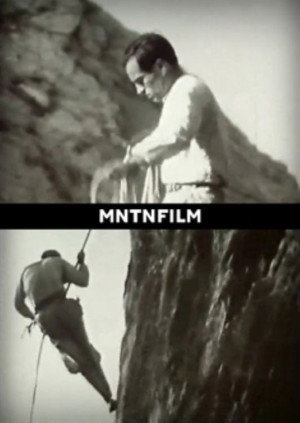
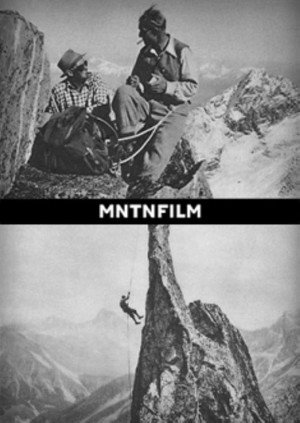
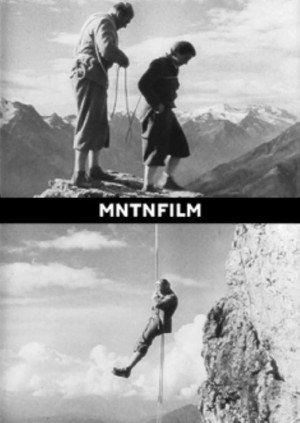
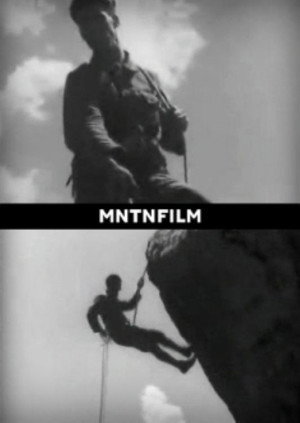
An exceptional cinematographic document on Emilio Comici, shot in 1938 in Val Rosandra by a MGM operator. The documentary shows Comici with the mountain guide Gianni Macor, in all the stages of the rock climbing technique, in the way of an instructional film. Comici, nicknamed the 'Angel of the Dolomites', is considered as the most extraordinary climber of the period between the two World Wars. He made over 200 first ascents in the Dolomites during his short career. Comici perfected the Bavarian technique of mountain climbing, and began the era of 'sixth grade' climbing. It was Comici who originated the concept of climbing direttissima routes, following the path a drop of water would take down the mountain.
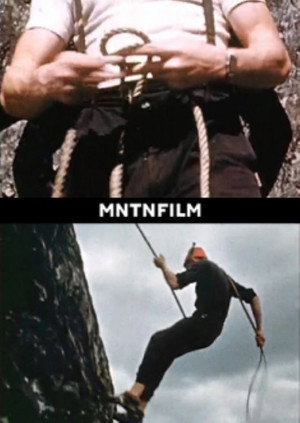
An ascent of 'The Tooth' via the South-east Face. The film was made by Burge Bickford and Lyman Boyer. It features Jim Crooks leading Fred Beckey on a rock climbing ascent of the southeast face of The Tooth, near Snoqualmie Pass, Washington. At the summit, the climbers find a brass tube with a Mountaineers register book inside. Illustrates Cascade Mountains climbing just before World War II. The leader never places any protection such as pitons or slings. The film focuses on the climbers' hand and foot work intermixed with mountain views.
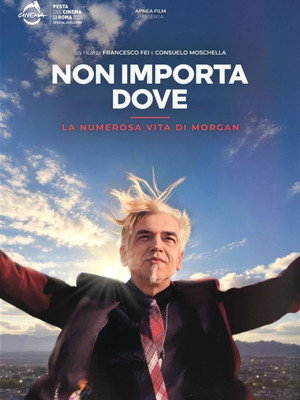
Non importa dove - La numerosa vita di Morgan
Nice looking Travelogue takes us to the Northeast corner of Wyoming as we visit Yellowstone National Park.
Released in 1922.
Klettern im Fels (in English, "Rock Climbing") is a German silent documentary about rock climbing. It was directed by the cameraman Hermann Schadock and produced by Defira-Film in 1934.
Released on August 10th, 1919. Produced by Burton Holmes.
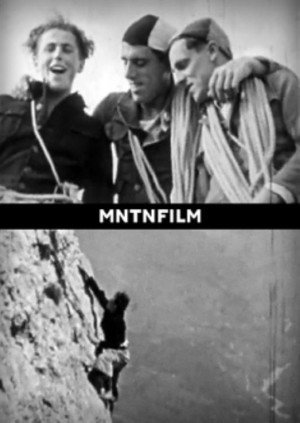
In September 1932, a party of climbers composed of Bruno Detassis, Gino Corrà and Nello Bianchini completed the first ascent of the Paganella direct route. After having reached the summit, the group is received with honors by the people who celebrate the feat. The movie also shows brief images of the inauguration of the 'Cesare Battisiti' refuge. The film, of great historical importance, was shot in 8mm by Aldo Pedrotti.
An alpine ascent around the snow-covered area of Monte Cevedale by a large group of mountaineers equipped with crampons and ice axes. The group departs from the old refuge 'Capanna Casati' and begin the climb through the glaciers. Finally, they camp on a rocky expanse. The film was produced in 1932 by the Instituto Nazionale Luce during the Italian Fascist regime.
An alpine ascent Monte Rosa glacier by a large group of mountaineers equipped with crampons and ice axes. The group ascends from the Gabiet lake to the Corno del Camoscio (3.024 meters) and up the Capanna Gnifetti hut at 3.647 meters. From there they continue the progression by the glacier up to the Capanna Regina Margherita hut at 4.559, the highest observatory in Europa at the time, from where they start the way back to the village of Gressoney. The film was produced in 1932 by the Instituto Nazionale Luce during the Italian Fascist regime.
The idea is a simple one: three alpinists climb in the Mont Blanc Massif. This situation brings one face to face with the dangers of the mountain: avalanches, crevasses, fog, the climbing of the rocks, roping up, etc. All of this is magnified, transcended by a remarkable and strong use of the language of cinema. One of the first films about high mountains with Roger Frison-Roche and magnificent music by Maurice Jaubert
Percy Wyn-Harris' filmic record of the 1933 expedition, led by Hugh Ruttledge. It features comprehensive footage of the 1933 Mount Everest Expedition. Opens on the team’s arrival in India and shows landmarks, then shots of the preparations in Darjeeling. Includes blessing ceremonies by the Buddhist Lama at Darjeeling and the Chief Lama at Rongbuk. Scenes of all six camps being established and the journey back to Darjeeling, when it became clear summiting would be impossible this time.
Il Caso Carretta
Three rock climbing ascents in Val Bregaglia, Italy by Karl Freimann and Philipp Wieland, who made the first ascent of Fiamma in 1936. The film starts with valley scenes. Wieland and Freimann climb up the waterfall to the old Albigna hut. Then they start the heavy climbing work on the extremely exposed needle of Fiamma in a repetition of their first ascent two years before. The team also climbs the needle of Ago di Sciora and Monte Sissone. A film by Werner Stauffacher and Swiss mountain photographer Andreas Pedrett.
The film is presented as a climbing film from Tirol's mountain world based on an idea by Kurt Maix, and it's a touristical film of the series 'Bilder aus Österreich' (Pictures of Austria). A man and a woman leave the city to go to the mountains of the Austrian Tirol to make some rock climbing. They spend one night at a mountain hut and next morning they walk up to the base of the wall and start climbing. The couple, with the man always leading, overcome a series of difficult passages and reach the summit. There they sign in the book of ascents with the names of Peter Martin and Lial, and start the descent doing several rappels.
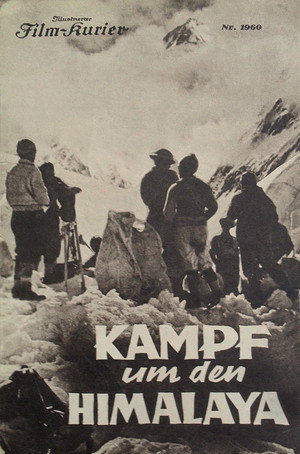
Epic documentary about the German expeditions to Nanga Parbat up to 1937. After a first unsuccessful attempt in 1932 and the tragic second expedition led by Willy Merkl in 1934, in 1937 Karl Wien led another expedition to the mountain following the same route as Merkl's expeditions. Progress was made, but more slowly than before due to heavy snowfall. About 14 June seven Germans and nine Sherpas, almost the entire team, were at Camp IV below Rakhiot Peak when it was overrun by an avalanche. All sixteen men died. The film was assembled in 1938 with rescued 16mm material shot during the 1937 attempt and footage from the previous expeditions.
The ascent of the spectacular needle Guglia Rudatis (2.202 meters), in the Italian Dolomites by a group of rock climbers. A group of six men leave a wood hut and approach up to the foot of the needle. We see them climbing and progressing on the steep rock face and finally making an overhanging rappel to descend. The film was produced in 1937 by the Instituto Nazionale Luce during the Italian Fascist regime.
"4100 Ascension à ski de la face nord des Ecrins" is a documentary about alpinism that takes place in Barre Des Écrins. It was directed by Marcel Ichac in 1936 and produced by Films Cinéka. It features André Jamet, Georgette Galtier, René Beckert, Jacques Charmoz and J.L. Deschamps
Produced by Burton Holmes. Released on June 15th, 1919.
"An early color film presented as 'Ascent to the Bernina Massif'. Two mountaineers break from the Forno hut and first climb the Punta Rasica and then the needle Fiamma. The mountaineers are equipped with canvas backpack, felt hats, hemp rope, woodpickel and cigarettes. Climbing is done in knickerbockers. The pictures give a good insight into the climbing style of the two men. Finally, they squat on the tip of the needle and enjoy the panoramic view, before they descend by rappel."