Desejo de Menina - Ao Vivo em Petrolina
Desejo de Menina - 10 Anos: Ao Vivo em Teresina
Desejo de Menina - Até Depois do Fim: Ao Vivo em Teresina
Desejo de Menina - Desejo Nostálgico
Desejo de Menina - Essência
Desejo de Menina - Ao Vivo em João Pessoa
Desejo de Menina - Cumplicidade: Ao Vivo em João Pessoa
Natália and Isabela are girlfriends and a sertanejo music duo, just starting out in Belo Horizonte. During a weekend dedicated to creating a new album, the pressure to make something commercially viable and the fear of failure bring out insecurities and resentments. Faced with the conflict between ambition and love, they will have to decide if it is still possible to reconcile their careers with their relationship.
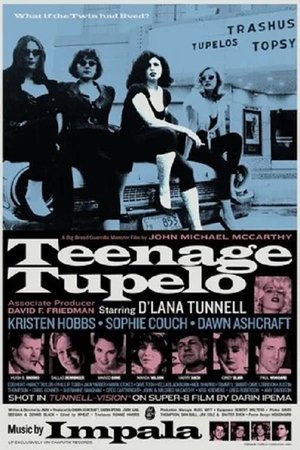
In Tupelo, Mississippi, in 1962, a poor, young, single mother is impregnated by a womanizing has-been singer. Her mother tries to force her to give the child away but our heroine isn't sure. As she tries to solve her problems she receives assistance from unlikely quarters: a lesbian gang and the feminist/nudist/stripper/adult film star they idolize.
This video work was made while Rist was still an art student at the School of Design in Basel, Switzerland. It was produced in an unlimited edition and is intended to be shown on a domestic-style monitor, although it may also be displayed as a projection with special permission from the artist. The video depicts the artist, an attractive young woman dancing manically around the room while repeatedly singing ‘I’m not the girl who misses much’. The phrase is an adaptation of the first line of the Beatles song ‘Happiness is a Warm Gun'. Referring to her childhood Rist has said, ‘In my village in Switzerland I had a small window on the art world through the mass media; through John Lennon/Yoko Ono I moved from pop music to contemporary art. In return, I will always be grateful to popular culture’ (quoted in ‘I rist, you rist, she rists, he rists, we rist, you rist, they rist, tourist: Hans Ulrich Obrist in Conversation with Pipilotti Rist’, Pipilotti Rist, p.16).
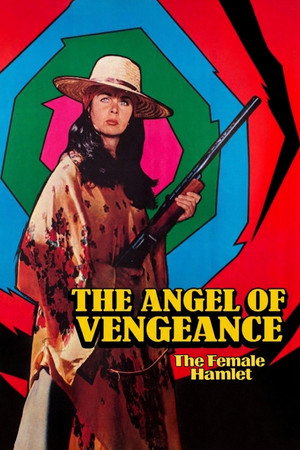
Hamlet returns home from drama school in United States, after the cold-blooded assassination of her father by her uncle, who has married Hamlet’s mother. After seeing her father’s ghost, Hamlet decides to feign insanity, in order to get to the truth.
The musical traditions of the eastern and western worlds are bridged through the improvisations of Bombay, India-born percussionist/vocalist Trilok Gurtu. Gurtu’s mastery of post-bop jazz has not gone unnoticed. Downbeat magazine named him “best percussionist” in three critic and popularity polls and proclaimed, “musically, the world is his stage”. Jazz magazine, Straight No Chaser took a similar view, writing, “this music has a transcendental quality and removes any obstacles that lie between western and eastern improvised music.” Gurtu’s eclectic approach has enabled him to collaborate with most of the world’s greatest musicians. Tracklist 01. Jhuleal 02. Peace of five elements 03. Africa con India 04. Pasana’s Love 05. Dance with my lover 06. God rhythm
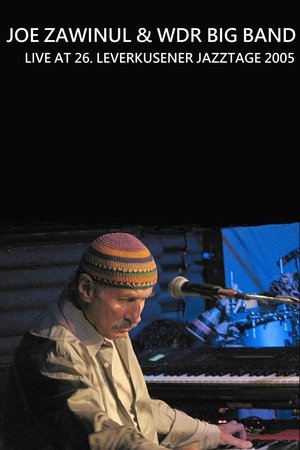
Zawinul is onstage with the WDR Big Band from Germany and a special international rhythm section. The music is a tribute to the pioneering 1970s fusion collective Weather Report, originally with Wayne Shorter on sax, Zawinul on keys, and later Jaco Pastorius on bass (among other personnel). Zawinul and the WDR play "Brown Street" and "Carnavalito." Arranger Vince Mendoza re-imagines this colorful, small-group music for Europe's longest-lived jazz orchestra. And they can play!
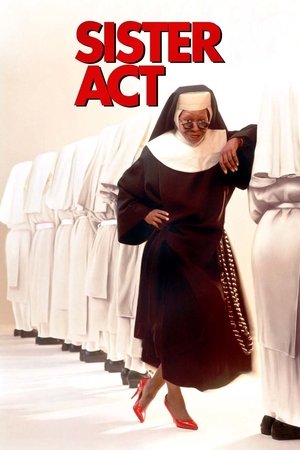
When lively lounge singer Deloris sees her mobster beau commit murder, she is relocated for her protection. Set up in the guise of a nun in a California convent, she proceeds to upend the quiet lives of the resident sisters.
Charlie Bereal plays an aspiring musician who arrives in Los Angeles, hoping to jump-start his music career. Staying with his fiancée, who’s been tirelessly working behind the scenes to connect him with industry people, Charlie’s life takes a turn when a once-in-a-lifetime opportunity presents itself. A competition offering a million-dollar prize and a Death Row Records deal. As Charlie pushes for his future, he navigates the complexities of love, ambition, and keeping faith.
If you're not one of the lucky fans who applauded the long-awaited pairing of Larry Carlton and Steve Lukather - Larry, who was named guitarist of the year so often that the title of player emeritus was created for him alone, and Steve (formerly of Toto), a flamboyant guitar hero in his own right - this DVD will blow away your reticence. The 2001 get-together of these two masters at their creative peak was an unforgettable experience fuelled by mutual love and respect, freedom of inspiration and the sheer pleasure of playing. Recording Date: July, 2001.
The Mighty-J. Geils Band. These guys in the early days were AKA: "The Bad Boys from Boston". They were one of the most exciting live bands ever. Peter Wolf's lead vocals powered the band to superstardom. They were together with same line-up for over 15 years. This DVD is of their SANCTUARY tour. The band is in their prime. This is a rare concert DVD of them performing in Germany. It's starts off with them having fun backstage. The concert starts and they rip into: YOU JUST CAN'T STOP ME I COULD HURT YOU SANCTUARY ONE LAST KISS TERESA NIGHTMARES WILD MAN LOOKIN' FOR A LOVE GIVE IT TO ME! WHAMMER JAMMER AIN'T NOTHING BUT A HOUSEPARTY WHERE DID OUR LOVE GO PACK FAIR & SQUARE FIRST I LOOK AT THE PURSE
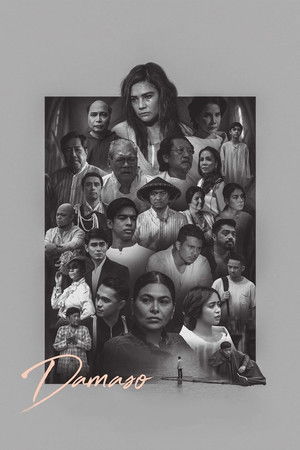
A musical film protraying Padre Damaso, Jose Rizal's famous villain in his book 'Noli Me Tangere.
Filmed at The Point in Dublin in 1990, this concert captures Jason Donovan at the very peak of his success, following the release of his second album Between The Lines in May of that year.
Suliman the Magnificent and his Ottoman army are on the march to Vienna. Only one fortified town lies in their way, but its Croatian commander and small garrison of men are determined to stand their ground. Ivan Zajc’s patriotic opera retells the story of Nikola Šubić Zrinjski’s daring leadership and heroic sacrifice during the real life Siege of Siget. Packed with powerful music – including the rousing male chorus 'U boj, u boj!' – it has held a treasured place in the Croatian repertoire ever since its wildly successful premiere in 1876.