A young woman achieves cone consciousness.
Documentary on one of the first editions of the Trofeo Mezzalama, the highest ski mountaineering race in Europe, at more than 4,200 meters above sea level, which takes place on the glaciers of Monte Rosa, from Breuil to Gressoney-La-Trinité, crossing the summits of Castor (4,199 meters) and Nez du Liskamm (4,100 meters). The film recounts the last hours of feverish preparation before the start, the teams preparing for the race linked in ropes, then follows the stages of the competition by following the groups of skiers from a plane. Created in 1933, the Trofeo Mezzalama was contested until 1938, before falling into oblivion during the war. A second version was organized from 1970 to 1973. A third biannual version has been organized since 1997.
The people of Unamenshipu (La Romaine), an Innu community in the Côte-Nord region of Quebec, are seen but not heard in this richly detailed documentary about the rituals surrounding an Innu caribou hunt. Released in 1960, it’s one of 13 titles in Au Pays de Neufve-France, a series of poetic documentary shorts about life along the St. Lawrence River. Off-camera narration, written by Pierre Perrault, frames the Innu participants through an ethnographic lens. Co-directed by René Bonnière and Perrault, a founding figure of Quebec’s direct cinema movement.
A group of filmmakers travel to a Kolla community in Salta to film their folkways. We see all aspects of their life: farming, herding, cooking, football, and making music during a Pachamama festival. In the course of filming, the leader of the Kolla community changes the filmmakers' view of what the documentary should be, and at the end of their visit they are changed. "La vida se puede ir amasando, como el barro": As life goes along, it becomes more pliant, like clay. An announcement at the beginning of the film states that this is neither fiction nor documentary, but I'd say it's closer to documentary.
Founding father of Anthropology, Bronislaw Malinowski's work raises powerful and disturbing questions today. This is a look at his legacy and the imprints it has made on the generations that followed.
Creature Catalogue
The Reef Islands Ethnographic Film Project was started in 1994 by the two anthropologists, Jens Pinholt and Peter I. Crawford, and village communities in Bekapoa, Ngasinue/Fenualoa and Vaiakau. Field and film visits took place in 1994, 1995-1998, 2005, 2010, 2015 and 2017. This film is based on one such visit in June 2015, by Peter I. Crawford and Birgitte Hansen, a nutrition expert. The focus was on a diachronic study of nutrition, collecting information in three villages and comparing it with material from the 1970s and the 1990s. Pileni was one of the villages.
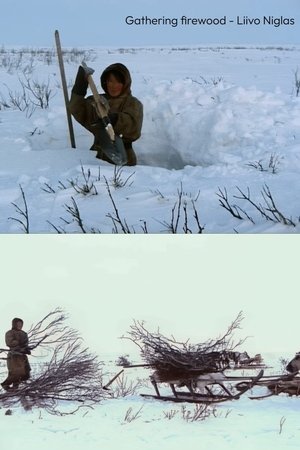
The film follows a group of Nenets women gathering firewood in a snow-covered tundra. This film is part of a larger Yamal Nenets Series, which explores the daily life of nomadic reindeer pastoralists on the Yamal peninsula in Western Siberia during the calving period in the spring. The footage for the series was captured during a three-month period of ethnographic fieldwork in 1999.
Diya
Forest of Bliss is an unsparing yet redemptive account of the inevitable griefs, religious passions and frequent happinesses that punctuate daily life in Benares, India's most holy city. The film unfolds from one sunrise to the next without commentary, subtitles or dialogue. It is an attempt to give the viewer a wholly authentic, though greatly magnified and concentrated, sense of participation in the experiences examined by the film.
The Greek shadow puppetry began 130 years ago. A student of Greek shadow puppetry travels to China, where shadow puppetry began over 2000 years ago. There he follows Chinese shadow puppeteer master He Shihong in Wushan of China. Watching his performances and listening to him talk about his art and his career in it, many parallels are drawn and he expresses them by including his Greek shadow puppetry teacher in the film. This documentary is a cultural bridge between Greece and China through the art of shadow puppetry.
Making of the cinematographic shooting of "Premier de cordée" directed by Louis Daquin in the Mont-Blanc massif. In 1943. Alain Pol films the risky adventure of filming in the high mountains with a team of seventy people. The images of the making-of reveal the technical constraints encountered by the actors and technicians: falling rocks, crossing glaciers and long approach walks at altitude to the filming locations. Six actors and technicians will also be injured and the main role - that of Pierre - will be reassigned to André Le Gall following a bad fall by Roger Pigaut.
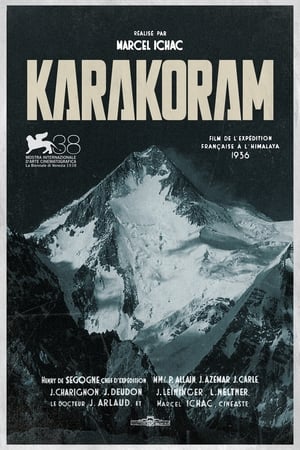
Account of the first French expedition to the Himalayas, which attempted to climb the hidden peak (Gasherbrum I) in 1936, from the preparations for the trip to the end of the ascent. After a long approach walk through quasi-desert regions, then on a huge glacier, the caravan of 700 porters arrives at the foot of Hidden Peak. The expedition was led by Henry de Ségogne, with Jean Charignon, Pierre Allain, Raymond Leininger, Jean Carle, Jean Deudon, Louis Neltner, Jacques Azémar, doctor Jeand Arlaud and director Marcel Ichac. Weather conditions, logistical problems and a strike among Sherpas forced the team to retire at 6900m on the south face. The film received the Silver Lion at the Venice Film Festival in 1938.
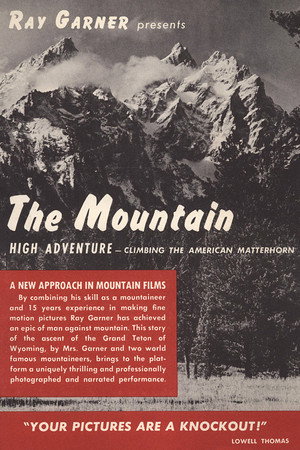
A film on mountain-climbing in Grand Teton National Park, Wyo. Glenn Exum, Virginia Garner, and Paul Petzoldt demonstrate mountaineering techniques and equipment. They reach the peak, shake hands, and rappel and glissade to base of mountain.
A unique 'direct cinema' feature length documentary (no narration or interviews) originally filmed in the Spring of 1970 and concluded during the Summer of 2017 (footage added, restored, and re-edited). A day in the life of an inner-city Harlem elementary school. In 2018 filmmaker Phil Gries reunited with seven of his former Harlem elementary students whom he hadn't seen in 50 years.
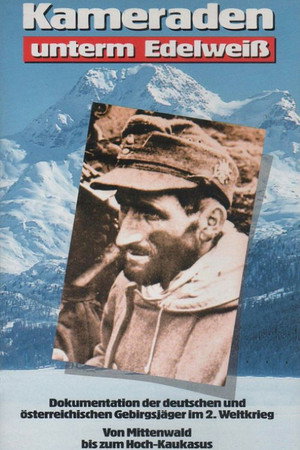
This rare documentary was filmed with the participation and personal camera of Wolfgang Gorther, a German military cinematographer of the 1st mining division, who participated in the legendary ascent of Elbrus on the night of August 21, 1942. From the beginning of the Second World War and the last international winter sports week in Garmisch-Partenkirchen follows the invasion of the German troops into the Soviet Union: Dnieper, Zaporozhy, Kharkov, Rostov-on-Don, Nogaean Steppe, Caucasus – fighting at 50 degrees below zero, military expedition into the world of ice and snow; – ascent of mountain arrows and subsequent hoisting of flags on the Elbrus at an altitude of 5,633 meters.
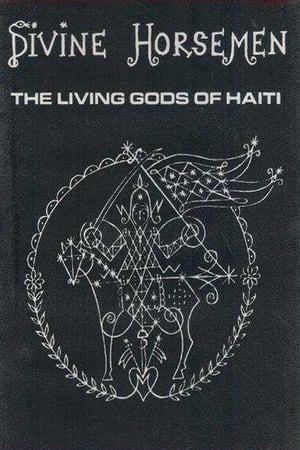
This intimate ethnographic study of Voudoun dances and rituals was shot by Maya Deren during her years in Haiti (1947-1954); she never edited the footage, so this “finished” version was made by Teiji Ito and Cherel Ito after Deren’s death.
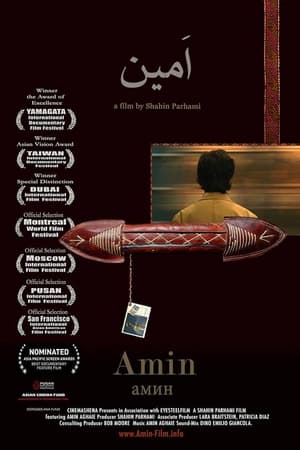
AMIN portrays Qashqai musician Amin Aghaie, a young modern nomad and his family who despite facing steep financial, cultural and political obstacles are dedicated to their art and culture. Amin travels to remote towns and villages to record the music of the surviving masters whose numbers decline each year. His nomadic family are selling their meager belongings to help support their son's education in performance and ethnomusicology at Tchaikovsky's Conservatory in Kyiv, Ukraine, but it is not enough. Amin, desperate to finish his academic education, sells his violins one at a time just to pay for his tuition.
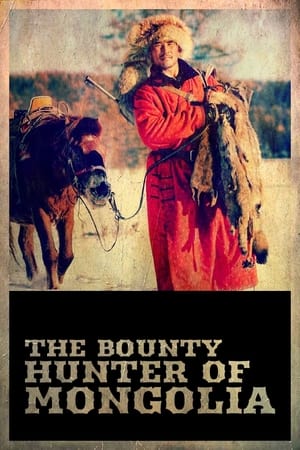
In the Darhat valley in northern Mongolia, the horses of nomadic tribes are stolen by bandits who then sell them to Russian slaughterhouses. Shukhert, a brave horseman, relentlessly pursues them through the Mongolian taiga, bordering Siberia.
Im Reich Des Squatters