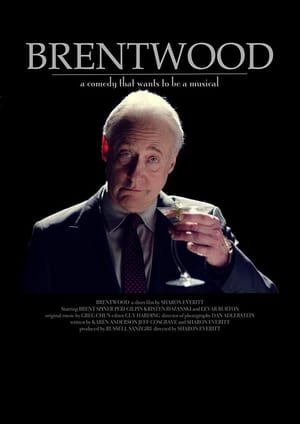
Diego and Luana are two best friends trying to make it into the musical theater world but it’s not as easy as they thought it would be. Now they need to challenge themselves and each other to guarantee that they’re not giving up onto their dreams.
In "Fidlovacka", the name of a Czechoslovakian festival, the proprietress of a cheese factory picks a fiancé for her orphaned niece in her desire to bring aristocratic blood into the family. THe niece has also picked the man she wants to marry and isn't the the rich aristocrat.
Cirque du Soleil presents KÀ, its new epic tale, an unprecedented theatrical production now playing at MGM Grand in Las Vegas. See what lies behind this theatrical adventure by plunging into KÀ Extreme! The documentary explores the journey of a remarkable production by following the show's evolution from early rehearsals through to its first public performance. KÀ Extreme exposes the unique creative process and demonstrates how a team of creators managed to turn inspiration into reality!
Guy meets his ex-girlfriend in a bar in his attempt to get her back.
The Gunslinger Nobody refuses to suck a bull's cock in Colonel Bajon's zoophilia movie, and a musical hunt begins.
Billy Bigelow has been dead for 15 years. Now outside the pearly gates, he long ago waived his right to go back to Earth for a day. He has heard that there is a problem with his family: namely with his wife Julie Bigelow, née Jordan, and his child he hasn't met. He would now like to head back to Earth to assist in rectifying the problem; but before he may go, he has to get permission from the gatekeeper by telling him his story. Adapted from the Rodgers and Hammerstein hit Broadway musical.
A young sailor Sergey is in love with Lena so he decides to join her during the Moscow Music festival.
Set in turn-of-the-century New England, this musical tells the story of orphan Jerusha Abbott of the John Grier Home and her mysterious benefactor who agrees to send her to college, who she dubs "Daddy Long Legs" after seeing his elongated shadow. Under the conditions of her benefactor, Jerusha sends him a letter once a month, describing her new-found experiences with life outside the orphanage.
Alice was sitting in the park one day. She sees a jogger called Rabbit. When she first meets him she thinks he's a jerk later she finds him nice and relaxing. She falls in love with him. He takes her to Queenie's party. Rabbit later finds out that Queenie wants to kill him. So Rabbit packs up to leave the country. When Alice finds this out she commits suicide which brings her into a fantasy world.
In a Maine coastal village toward the end of the 19th century, the swaggering, carefree carnival barker, Billy Bigelow, captivates and marries the naive millworker, Julie Jordan. Billy loses his job just as he learns that Julie is pregnant and, desperately intent upon providing a decent life for his family, he is coerced into being an accomplice to a robbery. Caught in the act and facing the certainty of prison, he takes his own life and is sent 'up there.' Billy is allowed to return to earth for one day fifteen years later, and he encounters the daughter he never knew. She is a lonely, friendless teenager, her father's reputation as a thief and bully having haunted her throughout her young life. How Billy instills in both the child and her mother a sense of hope and dignity is a dramatic testimony to the power of love.
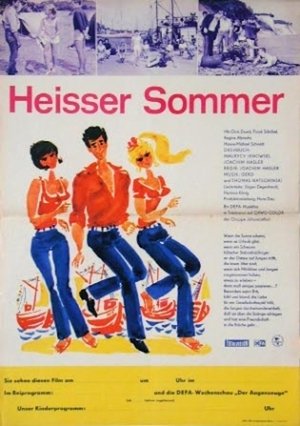
Hans Müller finds himself on a trip in Thüringen, accompanied by his loving female friend, Moritz. Hans doesn't understand much about trust, which constantly leads to problems between the two of them. During one of their fights, Lady Venus intervenes and sends the young man back to the Middle Ages - so he can learn the true meaning of love. Disguised as Tannhäuser, he has to stand his ground against a horde of minstrels. At a singing competition, he blunders, without the support of Moritz, who had also been thrown back into the 13th century. And with the help of Frau Venus, his adventure will surely turn out even worse...
For some time now, the residents of the placid little village of Sonnenthal talk only about one topic: Football! The ambitious mayor wants to promote the Sonnenthal team to the district league at any price because this success would also boost his own popularity. But he did not expect the resistance of the new head of school, Barbara, who is heavily annoyed by the one-sided focus. To bring Sonnenthal′s men and the mayor in particular to their senses, Barbara sets up a women′s football team that soon turns out to be a serious competition for the men′s team.
In the summer of 1953, Margaret Johnson, the wife of an American businessman, is touring Italy with her daughter, Clara. While sightseeing, Clara—a beautiful, surprisingly childish young woman—loses her hat in a sudden gust. As if guided by an unseen hand, the hat lands at the feet of Fabrizio Naccarelli, a handsome Florentine, who returns it to Clara. This brief episode, charged with coincidence and fate, sparks an immediate and intense romance between Clara and Fabrizio. Margaret, extremely protective of her daughter, attempts to keep Clara and Fabrizio apart.
A revisionist twist on Cinderella with an all-black cast and set in Harlem during WWII. Cindy is a country bumpkin who moves from South Carolina to live with her father and his new family. When her stepmother and two stepsisters refuse to take her to the Sugar Hill Ball, her draft-dodging, chauffeur neighbor whips up a little "magic" and at the ball she catches the eye of the richest man in Harlem.
The Will Rogers Follies is a musical with a book by Peter Stone, lyrics by Betty Comden and Adolph Green, and music by Cy Coleman. It focuses on the life and career of famed humorist and performer Will Rogers, using as a backdrop the Ziegfeld Follies, which he often headlined, and describes every episode in his life in the form of a big production number. The Rogers character also performs rope tricks in between scenes. The revue contains snippets of Rogers' famous homespun style of wisdom and common sense and tries to convey the personality of this quintessentially American figure whose most famous quote was "I never met a man I didn't like."
In the 1980s, the musical and futuristic teacher Clara Celeste arrives at a school surrounded by bullying problems driven by issues of ethnicity, sexuality, gender, physique, and behavior. With the teacher's help, a group of students are finally able to find their voice and experience empowerment, with the freedom to live as they wish. Despite this, prejudice still surrounds the school, always seeking to intimidate the students. To win this battle against intolerance and censorship, the group will need to stick together and believe in the power of change.
During World War II, all the studios put out "all-star" vehicles which featured virtually every star on the lot--often playing themselves--in musical numbers and comedy skits, and were meant as morale-boosters to both the troops overseas and the civilians at home. This was Universal Pictures' effort. It features everyone from Donald O'Connor to the Andrews Sisters to Orson Welles to W.C. Fields to George Raft to Marlene Dietrich, and dozens of other Universal players.
Ding Dong Williams, a clarinet player who can neither read nor write music is employed at a motion picture studio. The studio plans to use him and his six-piece band but his musical deficiencies are discovered and the plan scrapped. But the secretary of the head of the music department intercedes on his behalf and he is given a chance in the film.
Shot live from the Winter Garden Theatre in New York City, this presentation of the 1980 Broadway revival of the beloved Lerner & Loewe classic follows King Arthur, who founds the kingdom of Camelot and the Knights of the Round Table. Their goal: fight for justice and right, but Arthur only sees his ideal crumble when his wife Guenevere falls in love with his favorite knight, Sir Lancelot.
A fledgling producer finds himself at odds with his workers, financiers and his greedy ex-wife when he tries to produce live musicals for movie-going audiences.