At Sakurada Gate in 1860, the shogun’s chief minister and his retinue of bodyguards are ambushed and annihilated. Bearing the responsibility and shame for this failure is Shimura Kingo, master swordsman and chief of the guard. Forbidden to take his own life in atonement, he is instead tasked with hunting down the remaining assassins; however, fate intervenes and now only one is left. Devoted to his late lord and his duty, he relentlessly pursues the sole remaining assassin for the next thirteen years. But times are changing in Japan and the way of the sword has become outlawed. What does this mean for Kingo?
Mothra's dark counterpart, Battra, emerges to eliminate humanity on behalf of the Earth. Two tiny fairies called the Cosmos offer their help by calling Mothra to battle the creature. Unfortunately a meteorite has awoken a hibernating Godzilla as a three way battle for the Earth begins.
A mysterious extraterrestrial being resembling Godzilla rapidly approaches Earth. The monster, dubbed SpaceGodzilla, lands to challenge the King of the Monsters.
In an alternate timeline the original Godzilla is never defeated and repeatedly reemerges to feed on Japan's energy sources. A new inter-dimensional weapon called the Dimension Tide is created with the intent of eliminating Godzilla. However, the new weapon might also serve as a gateway to something far more sinister.
Mothra and her fairies return to Japan to warn mankind that they must return Kiryu to the sea, for the dead must not be disturbed. However Godzilla has survived to menace Japan leaving Kiryu as the nation's only defense.
A drug-addicted girl from an abusive family finds hope through kind people but her grim reality strikes back just as she sees a glimmer of light.
Originally released in Japan as "The Return of Godzilla" in 1984, this is the heavily re-edited, re-titled "Godzilla 1985". Adding in new footage of Raymond Burr, this 16th Godzilla film ignores all previous sequels and serves as a direct follow-up to the 1956 "Godzilla King of the Monsters", which also featured scenes with Burr edited into 1954's "Godzilla". This film restores the darker tone of the original, as we witness the nuclear destruction of giant lizard terrorizing Japan.
Inventor Goro Ibuki creates a humanoid robot named Jet Jaguar. It is soon seized by an undersea race of people called the Seatopians. Using Jet Jaguar as a guide, the Seatopians send Megalon as vengeance for the nuclear tests that have devastated their society.
An ever evolving alien life-form arrives on a comet from the Dark Gaseous Nebula and proceeds to consume pollution. Spewing mists of sulfuric acid and corrosive sludge, neither humanity nor Godzilla may be able to defeat this toxic menace.
Volunteering as a "comfort woman" on the Manchurian front, where she is expected to service hundreds of soldiers, Harumi is commandeered by the brutal Lieutenant Narita but falls for the sensitive Mikami, Narita's direct subordinate. Seijun Suzuki's Story of a Prostitute is a tragic love story as well as a rule-bending take on a popular Taijiro Tamura novel, challenging military and fraternal codes of honor, as seen through Harumi's eyes.
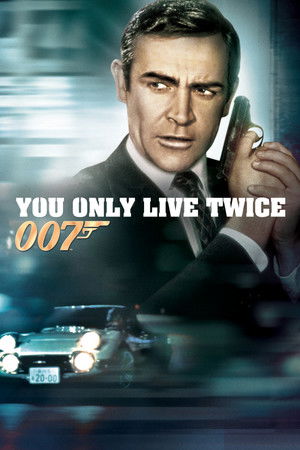
Rick, a down-and-out American boxer, is hired to transport a sword to Japan, unaware that the whole thing is a set up in a bitter blood-feud between two brothers, one who follows the traditional path of the samurai and the other a businessman. At the behest of the businessman, Rick undertakes samurai training from the other brother, but joins his cause. He also becomes romantically involved with the samurai's daughter.
An adaptation of the Rankin/Bass cartoon, "The King Kong Show". King Kong is brought in by the evil Dr. Who to dig for Element X in a mine when the robot Mechani-Kong is unable to do the task. This leads to the machine and the real Kong engaging in a tremendous battle atop Tokyo Tower.
Country bumpkin Haruko only ever wanted to become a maiko, an apprentice geisha. Initially rebuffed for lack of references, Haruko's strong accent intrigues a linguistics professor, who undertakes to coach her.
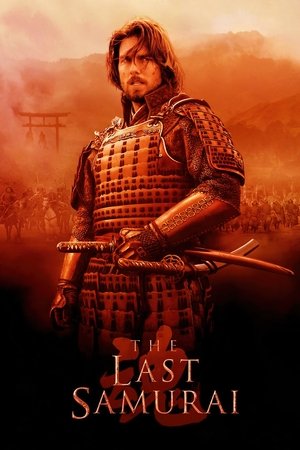
Nathan Algren is an American hired to instruct the Japanese army in the ways of modern warfare, which finds him learning to respect the samurai and the honorable principles that rule them. Pressed to destroy the samurai's way of life in the name of modernization and open trade, Algren decides to become an ultimate warrior himself and to fight for their right to exist.
Dolls takes puppeteering as its overriding motif, which relates thematically to the action provided by the live characters. Chief among those tales is the story of Matsumoto and Sawako, a young couple whose relationship is about to be broken apart by the former's parents, who have insisted their son take part in an arranged marriage to his boss' daughter.
The classic story of English POWs in Burma forced to build a bridge to aid the war effort of their Japanese captors. British and American intelligence officers conspire to blow up the structure, but Col. Nicholson, the commander who supervised the bridge's construction, has acquired a sense of pride in his creation and tries to foil their plans.
The Tale of Genji Museum in Uji City, Kyoto will be airing a short film blending history and fantasy, the story follows a modern high school girl named Hana who is transformed into a cat and transported back in time. She travels 1,000 years ago to the Heian Era as portrayed in The Tale Of Genji, arguably the most famous novel in Japanese literature. Guided by the novel's titular character Hikaru Genji, Hana experiences firsthand the emotions that the author Murasaki Shikibu depicted in her novel. The short features scenes based on The Diary of Lady Murasaki and other historical materials, such as the real-life noble Fujiwara no Michinaga swiping early drafts of The Tale Of Genji because he could not wait to read chapters as Murasaki wrote them.
Set 10 years after "Kids Return." Shinji and Masaru have graduated from high school with different paths in their lives. Shinji attempted to become boxer and Masaru a yakuza. They both tried to rise to the top of their respective fields.
Murakawa, an aging Tokyo yakuza tiring of gangster life, is sent by his boss to Okinawa along with a few of his henchmen to help end a gang war, supposedly as mediators between two warring clans. He finds that the dispute between the clans is insignificant and whilst wondering why he was sent to Okinawa at all, his group is attacked in an ambush. The survivors flee and make a decision to lay low at the beach while they await further instructions.
The Second Electronic Visualization Event took place at The University of Illinois Chicago Circle Campus in 1976. This documentation features Bob Snyder on EMU Synthesizer, Phil Morton on the Sandin Image Processor by Dan Sandin and Guenther Tetz on the GRASS (GRaphics Symbiosis System) by Tom DeFanti. In Morton's words these artists perform live realtime audio and video synthesis "using both analog and digital computers as 'visual instruments'..." Other artists credited with participation in the Electronic Visualization Events between 1975 and 1978 include Drew Browning, Larry Cuba, Barbara Latham, John Manning, Faramarz Rahbar, Ed Rankus, Michael Sterling, Barbara Sykes and Jane Veeder.