As powerful and complex as is AKRAN, 37-73 is more taut, richer in associative meaning .... 37-73 is about dreams, about memory and its associations with nightmare and magic.
Black Hole Radio is an installation that consists of taped confessions of callers of the New York City Phone Confession Line and video images. The Phone Confession Line is based on anonymous callers ringing to confess on things they had done or thought like adultery, theft, murder or regrets. Thereafter anybody could call and listen to the confessions. Although making a confession was free, listening to a confession costs money. After Cohen got his hands on the confessions, he used them as an audio heartbeat to accompany video-images of every day life in New York City he had taken over the years. This installation is a portrait of the city with its dark secrets, hushed voices and nocturnal images. In this way Cohen tries to bring across an experience to the viewer that relies on absence, waiting and the effort to hear something in the dark.
Gérard Courant applies the Lettrist editing techniques of Isidore Isou to footage of late 70's pop culture. Courant posits that his cinema offers an aggressive détournement to the French mainstream, reifying a Duchampian view of film: "I believe in impossible movies and works without meaning... I believe in the anti-movie. I believe in the non-movie. I believe in Urgent... My first full length movie that is so anti-everything that I sometimes wonder if it really does exist!"
In Idemitsu's seminal women's liberationist video, the image of a tampon swirling in a toilet bowl slowly appears, as the artist speaks about the troubling roles, responsibilities and expectations of women in a clinical tone. Minimal in composition, What a Woman Made is a candid critique of the treatment of women in Japanese society.
An odyssey through Beethoven’s lasting presence and influence in our modern world – viewed through the eyes of the composer himself.
A dark and magical visit to the fabled Parisian address Rue Fontaine 42. This was the residence of André Breton, the mastermind of surrealism, who surrounded himself with an impressive collection of modern, Western art and ethnographic objects from Oceania and North America. The collection was sold and divided up in 2003 at a controversial auction. 'The Trick Brain' is a delirious montage and a trip back in time to Breton's private art collection, where Atkins has been scouring the archives and come up with a possessing interior film of the place that once was, complete with surrealistic paintings, scores of Indian figures and hundreds of other displayed rarities. The film's soundtrack is provided by an observant narrator, who reveals to us that the objects shown are not necessarily what they claim to be - but instead are catalysts for some kind of wonderful linguistic virus which reveals the real identity of things.
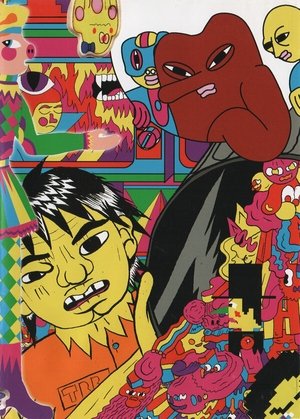
A showcase of Paper Rad's individual and group creations in the form of Trash Talking, a show for kids with bizarre characters trying to find their place in the world.
"Filmed in Cairo, in Al-Azhar Park, sunset during Isha'a praying time. The city becomes a Chorus. Dedicated to the people of Cairo. With love and hope." Part of the Azan series & the Cairo fieldworks.
In 1907, the Gaumont Films company in France made a slapstick comedy (silent, of course) with a title that would translate from the French as 'A gentleman who ate some bull'. Eugene Deslow got hold of that film and added an introduction plus a soundtrack, the latter consisting of commentary narrated by the single-named actor Bétove.
Trance dances and out of body projection. In front of the camera, Parvaneh Navaï becomes a mediator who enters in contact with and immerses into the energies of Nature, while her own energy radiates and echos in the forest ("selva"). The camera amplifies and expands her presence, transforming the forest into an imaginary space. The camera becomes a painter's brush.
In "Falling. Desert. Syn" there is the body of repetition—not of tautology but of smooth resurrection; a body dying and being resurrected in a dance without suffering. A body of the desert, which is not deserted, but instead possessed by a force of attraction towards the sky, a force as strong as the one towards the earth. A body for the stars, the same one which plunges into the underworlds.
A 30-year-old actress named María struggles with deep-seated dissatisfaction and emotional emptiness within her marriage. Seeking a remedy for her existential restlessness, she attempts to reconnect with a former lover. Her journey of self-discovery unfolds across the modernist architecture of Barcelona.
An experimental short film from Toshio Matsumoto featuring Mona Lisa.
The second half of Gustav Deutsch's experimental Film ist. series, constructing new narratives and moods out of existing footage, mostly from early silent era films.
A filmmaker gets lost in a world of his own creation, literally. He is plotted against by his outer demons, searches for his lost sex scene and contends with several other versions of himself. A joyful rule-breaking carnival ride through a filmmaker's dreamland.
The story means to develop through an uncovering of layers - strata. As writer Krumbachova stated: "With nature as a prison, an impassable barrier ... where every action is physically and psychically limited by the environment ... people are reduced to fragments of basic instinct and intelligence." Promoted as a psychological thriller, Strata provides little tension nor any real climax. The characters are ideas - not believably real.
Self shots are the optical Biographie of an unorthodox film producer. Director, cameraman and actor in a person, he directs the camera against itself. It plays with her, throws her into air, races over the meadows, films its movements, his face and his hands and demonstrates thereby its adventurous relationship to a 16 mm camera. Not an action thus, but filming becomes the action. The Godard' Bonmot of filming as ' truth 24 times in the second ' made Mommartz in his films conscious like hardly another. (Wilfried Reichart Kölner Stadtanz 4.1.68)
The ruins of paganism and the birth of Christianity portrayed by immobile people along with music.
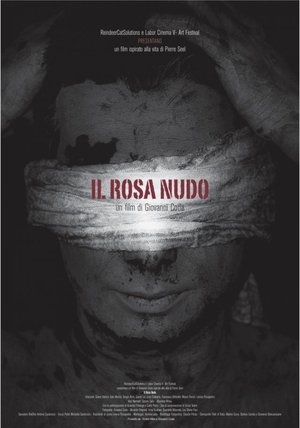
Among the millions of victims of the Nazi madness during the Second World War, Pierre Seel was charged with homosexuality and imprisoned in the Schirmeck concentration camp. He survived this terrifying experience of torture and humiliation, and after the war he married, had three children, and tried to live a normal life. In 1982, however, he came to terms with his past and his true nature and decided to publicly reveal what he and thousands of other homosexuals branded with the Pink Triangle had undergone during the Nazi regime. Il Rosa Nudo (Naked Rose), inspired by the true story of Pierre Seel, depicts in a theatrical and evocative way the Homocaust, focusing on the scientific theories of SS Physician Carl Peter Værnet for the treatment of homosexuality, which paved the way for the Nazi persecution of gay men.
In Prague, a professorial puppet, with metal pincers for hands and an open book for a hat, takes a boy as a pupil. First, the professor empties fluff and toys from the child's head, leaving him without the top of his head for most of the film. The professor then teaches the lad about illusions and perspectives, the pursuit of an object through exploring a bank of drawers, divining an object, and the migration of forms. The child then brings out a box with a tarantula in it: the professor puts his "hands" into the box and describes what he feels. The boy receives a final lesson about animation and film making; then the professor gives him a brain and his own open-book hat.