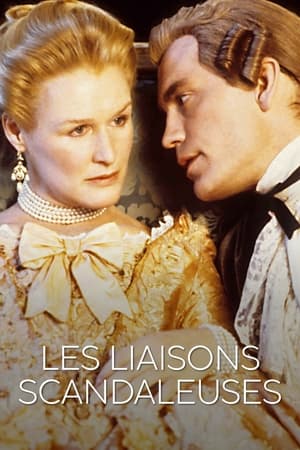
Well known for its exploration of seduction and revenge, the “Dangerous Liaisons” by Choderlos de Laclos caused a scandal from its first publication in 1782. Despite – or because of the scandal – the book was a top-seller. Since then, it stood the test of time. Combining eras, continents and people, the novel is adapted around the world. Marvelous tool for reflection on the female condition, social satire announcing the Revolution, remarkable work on the conflicting nature of love but also of the gender war, consecration of the power of the words, a libertine manual… “Dangerous Liaisons” is all of these at once.
The documentary is a true story of four real intellectual Europeans from different cultures who are worried about the decline of literature’s life and the destiny of the street level bookshops in every country. That is why they have a mission to save symbolically “the world's last quality books”.
An account of the life of the French poet Jean de la Fontaine (1621-95), author of more than one hundred fables and a model for many other European fabulists of later times.
Cartoneras is a documentary that grapples with Latin America’s urban realities, and the cardboard publishing movement that has emerged from these in the 21st century. Reflecting on the different contexts that propelled this form of community publishing, like Argentina’s 2001 economic crisis, the independent art scene, and the movements which formed around waste-pickers, the film’s narrative is developed through conversations with important actors from the cartonera world.
Mark Gatiss explores and celebrates Dracula, an icon of popular culture, asking just why we keep coming back to the count.
Hana Zelinová
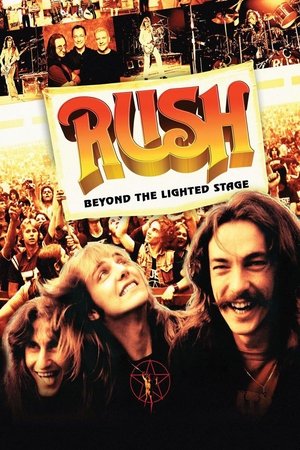
An in-depth look at the Canadian rock band Rush, chronicling the band's musical evolution from their progressive rock sound of the '70s to their current heavy rock style.
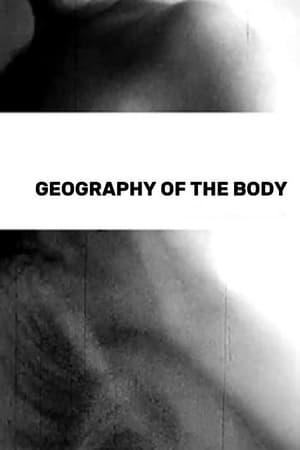
A quotation from Aristophanes, "The desire and pursuit of the whole is called love," precedes views of a man and a woman's bodies, often in extreme close up. Off-screen, a voice recites fragments of oracular literature and purple prose. We see an eye, an ear, a mouth, a tongue, bits of hair, a hand, the tips of fingers, toes. Occasionally, the frame includes a larger scape of a body: a chest, a back, a breast. Usually the camera is stationery; sometimes, it moves across a body, remaining in close up. They hold hands for one moment. The bodies are without clothes; no genitalia are visible.
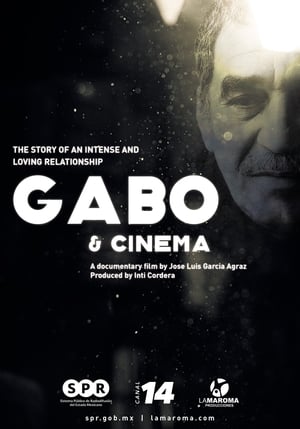
It is said that Nobel Prize winner Gabriel Garcia Marquez never allowed for a film adaptation of his singular masterpiece 'One Hundred Years of Solitude', arguably the most influential novel in any language of the second half of the twentieth century, to be produced. However, the prolific Colombian writer had strong ties to the movies.
Dangling from a high window, a young non-binary person is on the cusp of life and death. Flashes of film, literature, art (paintings) and cultural history pass them by, as if to tell a message. A postmodern treatise on connection to culture and the past.
An installation film that consists of a six-hour-long monologue performed by Edith Clever, who reads texts by Syberberg and many different authors, such as Johann Wolfgang von Goethe, Heinrich von Kleist, Plato, Friedrich Hölderlin, Novalis, Friedrich Nietzsche, Eduard Mörike, Richard Wagner, William Shakespeare, Samuel Beckett, and Chief Seattle.
In 1991, American Psycho, the third novel by controversial writer Bret Easton Ellis, provoked heated discussions among critics and readers alike; an extraordinarily disturbing book that transported its readers into the mind of Patrick Bateman, a cynical mergers and acquisitions executive obsessed with brands, inconsequential details, pop culture and brutal murder.
On January 31, 1857, the French writer Gustave Flaubert (1821-80) took his place in the dock for contempt of public morality and religion. The accused, the real one, is, through him, Emma Bovary, heroine with a thousand faces and a thousand desires, guilty without doubt of an unforgivable desire to live.
What does it mean to be Black in America in the 21st century? The recently formed Black American film group TNEG™ has set out to elucidate this very question. Hearing from the likes of fine artist Kara Walker and musical artist Flying Lotus, the film is based on a deceptively simple approach -- asking a refined list of black 'specialists' as well as 'uncommon folks' questions about what they think, and more importantly as lead director Arthur Jafa states, 'What they KNOW' -- the film is an unprecedented 'stream of the black consciousness' and a strikingly original and rarefied look at black intellectual and emotional life. What's so unorthodox about this simple approach is that the interviews were recorded separately from the images in the film. What results is a breathtaking, kaleidoscopic look of American black life from the dawn of three original filmmakers.
Divas
Swedish/Estonian writer Mare Kandre (1962-2005): "It's about life and death and it must always be." "She brought her the truth," says Johan von Sydow, referring to the rock mythos and artistic romantic law that is about to die young.
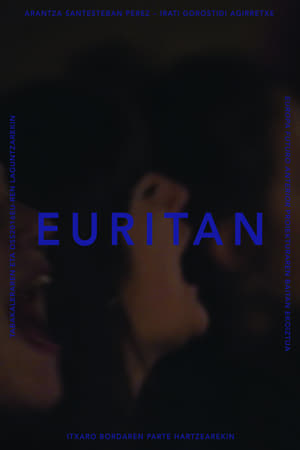
Euritan is a review of the narrative 'Klara eta biok', written by Itxaro Borda in 1985. Putting the author against the words of her past, it updates her view on the peripheral relationship around the Basque character.
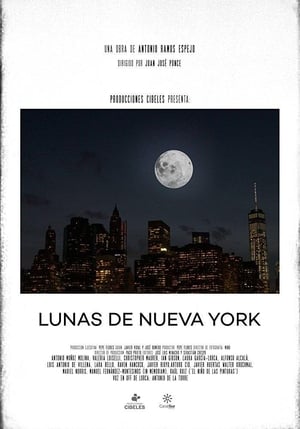
Second part of the trilogy about the Granada poet directed by Juan José Ponce, which focuses on the writer's journey to Argentina and Uruguay
The man who invented James Bond: The story of Ian Fleming, real-life spy, ladies' man and sportsman, who was there at the birth of MI-5 and the CIA, and gave the world one of its most enduring and iconic heroes: Bond. James Bond.
Cormac McCarthy has spent the last 25 years writing his novels at the mountain top retreat of the Santa Fe Institute (SFI) in New Mexico. An institute dedicated to the formal analysis of complex systems. In this documentary filmed at the library at SFI (and in the desert), Cormac in conversation with his colleague David Krakauer, reflects on isolation, mathematics, character, and the nature of the unconscious