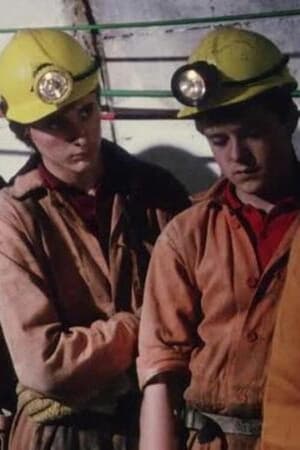
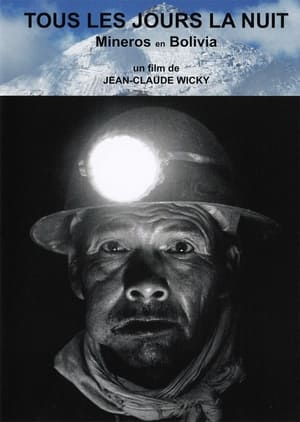
The darkness of the mine, invaded by the miners' light, by the noisy machines and the permanent and intense smell of ore in the air, leads us to an environment in which time and space become confused. A documentary film at Panasqueiras' Mine, between 2008/09. A reality captured by an eye-observer which does not interfere, but follows the compost that grows from the earth and is decomposed by man-machine.
Join the working men of a northern powerhouse: on the job in Gateshead workshops and at the long wall of a Northumberland pit.
An engineering feat: Second city civil engineers complete a new bridge to carry traffic over New Street's tangled railway intersections.
It's 1948 and hydro-electric power is transforming Scotland's Grampians.
Time-travel to a 1940s classroom with this exemplary educational film.
An overview on safety precautions that protect forklift operators on the job.
Art, auctions, huge valuations of individual works, a market full of enigmas. The inaccessibility of the art world and its business mechanisms, incomprehensible to many, have always worked on the imagination. However, the incredible growth of interest in buying art in Poland over the past few means that the curtain of mysticism must be slowly falling. A look at the Polish art market, which with the political transformation has changed from a marginal and obscure curio to a modern, professional machine, opening for some artists of the youngest generation the gates of success inaccessible to their predecessors.
The movie explores the origin of the Ukrainian language and persecution of those who defended its authenticity. Using examples of other countries, creators of the film prove that a nation cannot exist without a language.
You're asking for trouble when you play with fire - and this public information film is the stuff of nightmares.
Lee Anne Schmitt explores California's landscape and past to document the history of one-time boom towns built and abandoned by the industries that necessitated their creation. Sold as a limitless land expansive with free opportunity, California was actually, from its onset, fissured by the interwoven needs of private and public interests. Schmitt's film covers various locations through time, as the major industries of the early 20th century (mining, lumber, oil) give way to the military, eventually leading to multinational corporations, and the use of small towns as satellites for growing urban metropolises.
The film emphasizes the importance of safety during recreational activities, both at home and in nature. It shares various scenarios involving children using power tools, chemicals, and playground equipment, highlighting risks such as improper use of electric cords, unsafe play habits, and the dangers of firearms. The film also provides safety tips for outdoor activities like hiking and camping, stressing the need for caution around potentially hazardous elements like poisonous plants and proper gun handling. The overarching message is to always prioritize safety to prevent accidents while enjoying recreation.
This 1981 video magazine “For the Man Who Wants More…” contains Monte Hellman’s short portrait of Francis Ford Coppola discussing business and craft at home and on the set of his Zoetrope Studios, “Inside the Coppola Personality” (aka “Coppola: A Profile”). Also inside is “Modesty”, a self-portrait by Bob Rafelson, shot by Bruno Nuytten; a portrait of a pubic hair dye specialist; a travelogue on Bangkok; a candid camera with a planted hussie at a gas station. a.o.
A portrait of Highlights Magazine following the creation of the cultural phenomenon's 70th Anniversary issue, from the first editorial meeting to its arrival in homes, and introducing the quirky people who passionately produce the monthly publication for "the world's most important people,"...children. Along the way, a rich and tragic history is revealed, the state of childhood, technology, and education is explored, and the future of print media is questioned.
This 10-minute short documentary exploring the shifting state of the American poultry industry was preserved in 2015 from an original nitrate print. More information is available on the film's page in the National Film Preservation Foundation's website, where this version can be found featuring original music by Michael D. Mortilla.
An educational short made by the New Zealand National Film Unit for the National Mountain Safety Council to promote awareness of bush safety.
Enxame
A short film warning the unaware housewife of the dangers of “dry cleaning” with gasoline at home.
Det er godt at have sin egen konto
Capturing Americans in communities across the country as they wrestle with the legacy of the coal industry and what its future should be under the Trump Administration. From Appalachia to the West’s Powder River Basin, the film goes beyond the rhetoric of the “war on coal” to present compelling and often heartbreaking stories about what’s at stake for our economy, health, and climate.
In the cobalt mining areas of Katanga in the Democratic Republic of the Congo (DRC), babies are being born with horrific birth defects. Scientists and doctors are finding increasing evidence of environmental pollution from industrial mining which, they believe, may be the cause of a range of malformations from cleft palate to some so serious the baby is stillborn. More than 60% of the world’s reserves of cobalt are in the DRC and this mineral is essential for the production of electric car batteries, which may be the key to reducing carbon emissions and to slowing climate change. In The Cost of Cobalt we meet the doctors treating the children affected and the scientists who are measuring the pollution. Cobalt may be part of the global solution to climate change, but is it right that Congo’s next generation pay the price with their health? Many are hoping that the more the world understands their plight, the more pressure will be put on the industry here to clean up its act.