A unique visual journey through galaxies, deep into the subatomic world of elementary particles, and into the center of the sun. Witness the formation of the Earth and the beginning of life and the birth of thought. Shown exclusively at the Museu do Amanhã in Rio de Janeiro.
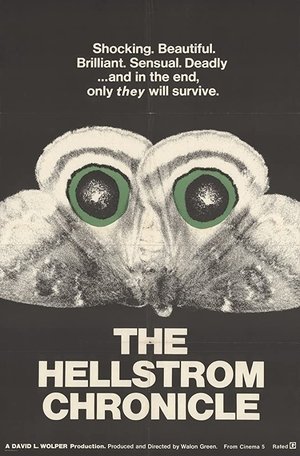
A scientist explains how the savagery and efficiency of the insect world could result in their taking over the world.
Earth teems with a staggering variety of animals, including 9,000 kinds of birds, 28,000 types of fish, and more than 350,000 species of beetles. What explains this explosion of living creatures—1.4 million different species discovered so far, with perhaps another 50 million to go? The source of life's endless forms was a profound mystery until Charles Darwin brought forth his revolutionary idea of natural selection. But Darwin's radical insights raised as many questions as they answered. What actually drives evolution and turns one species into another? To what degree do different animals rely on the same genetic toolkit? And how did we evolve?
In this two-hour special, NOVA captures the turmoil that tore apart the community of Dover, Pennsylvania in one of the latest battles over teaching evolution in public schools. Featuring trial reenactments based on court transcripts and interviews with key participants, including expert scientists and Dover parents, teachers, and town officials, "Judgment Day: Intelligent Design on Trial" follows the celebrated federal case of Kitzmiller v. Dover School District.
Richard Dawkins in a 1980's television special based on his book The Blind Watchmaker.
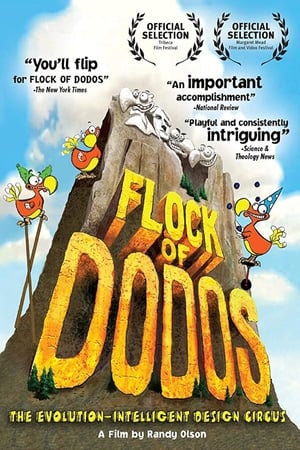
Filmmaker and evolutionary biologist Randy Olson tries to figure out if it is the Darwinists or Intelligent Design supporters who will become a flock of dodos.
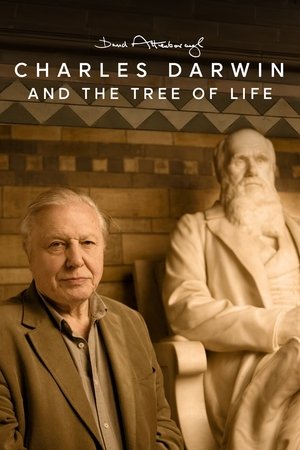
Darwin's great insight – that life has evolved over millions of years by natural selection – has been the cornerstone of all David Attenborough’s natural history series. In this documentary, he takes us on a deeply personal journey which reflects his own life and the way he came to understand Darwin’s theory.
An African narrator tells the story of earth history, the birth of the universe and evolution of life. Beautiful imagery makes this movie documentary complete.
A filmmaker revisits her evangelical roots to find connection with her estranged father.
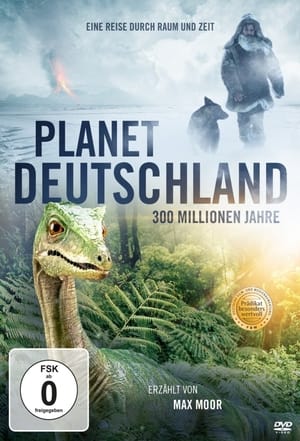
Documentary tells the story of Germany's origins from the Carboniferous period to the present day. It leads from the highest Alpine peaks to the rugged North Sea coasts - from the craters of the Eifel to the river labyrinth of the Spreewald. Back then - around 300 million years ago - giant dragonflies, for example, buzzed through dozens of meter-high fern forests. In the course of the Earth's history, however, we also encounter dying dinosaurs, meet rhinos and elephants on the Rhine and come across what is probably the first human in Heidelberg. Later, the Neanderthals appear and suddenly disappear again - for reasons that are still unknown. And finally, modern humans gradually spread and began to shape their environment.
A mind-bending, thrilling journey exploring the fragility and wonder of planet Earth, one of the most peculiar, unique places in the entire universe, brought to life by the only people to have left it behind – the world’s most well known and leading astronauts. This edit combined episodes one and ten to create a new movie.
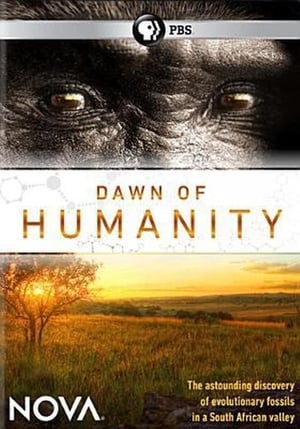
Nova and National Geographic present exclusive access to an astounding discovery of ancient fossil human ancestors.
Jellyfish blooms are making headlines around the world. This is due to the damage they cause to tourism, fishing and our health. How can these creatures, which are over 98% water and have no shell, skeleton or brain, expand so rapidly? Although this is a normal stage in the life cycle of these gelatinous animals, we have to admit that blooms have become much more frequent and massive in recent decades. We're even witnessing jellyfish populations appearing in more and more regions where fish have been replaced by them, such as off the coast of Namibia, in the Black Sea, in the Sea of Japan and in certain areas of the Baltic Sea. What causes this? Why has the role of jellyfish in the ocean been underestimated, even though they outlived the dinosaurs? Are jellyfish on their way to dominating the oceans as they once did? What if they were to be the only ones left?
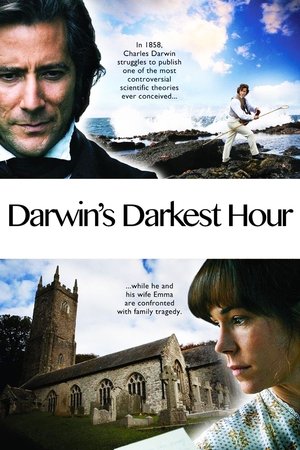
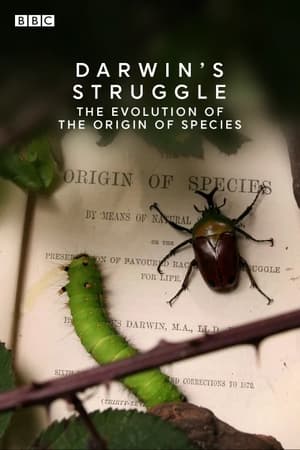
In 1858 Charles Darwin struggles to publish one of the most controversial scientific theories ever conceived, while he and his wife Emma confront family tragedy.
David Attenborough takes us on a guided tour through the secret world of plants, to see things no unaided eye could witness. Each episode in this six-part series focuses on one of the critical stages through which every plant must pass if it is to survive:- travelling, growing, and flowering; struggling with one another; creating alliances with other organisms both plant and animal; and evolving complex ways of surviving in the earth's most ferociously hostile environments.
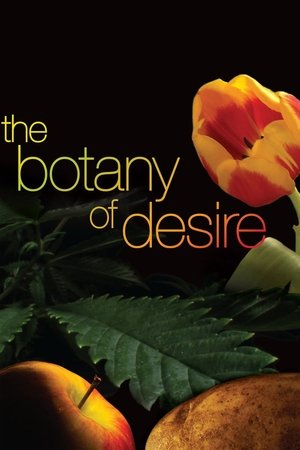
Featuring Michael Pollan and based on his best-selling book, this special takes viewers on an exploration of the human relationship with the plant world — seen from the plants' point of view. Narrated by Frances McDormand, the program shows how four familiar species — the apple, the tulip, marijuana and the potato — evolved to satisfy our yearnings for sweetness, beauty, intoxication.
How did your body become the complicated, quirky, amazing machine it is today? Anatomist Neil Shubin uncovers the answers in this 3-part science series that looks at human evolution. Using fossils, embryos and genes, he reveals how our bodies are the legacy of ancient fish, reptiles and primates — the ancestors you never knew were in your family tree.
A well-preserved mammoth carcass is found in the remote New Siberian Islands in the Arctic Ocean, opening up the possibility of a world-changing “Jurassic Park” moment in genetics.
The wolf of British Columbia is on a quest to master water, fishing and swimming. According to several specialists, the wolf is at the first stage of a process that could turn it into a marine mammal. How will its evolution unfold?
As France's first ZAC (Zone d'Aménagement Concerté, or concerted development zone), Grigny is the ideal place to describe how France transformed its dream of a happy suburb into an impoverished urban nightmare. The film aims to leave the camera rolling throughout the story, to discover the inhabitants and the labyrinths of yesterday and today, and to answer the essential questions. From the residents to the architects, including the city of Grigny, the mayor, the prefect, the landlords, and the ANRU (National Agency for Urban Renewal), the film examines and deciphers the consequences of what happened in Grigny and the state's housing policy. Through the analysis of Grigny's history, we see how the state has participated and continues to participate in the creation of social exclusion.