Two-time Tony Award–winning composer Jeanine Tesori’s powerful new opera Grounded, commissioned by the Met and based on librettist George Brant’s acclaimed play, wrestles with the ethical quandaries and psychological toll of 21st-century warfare.
Still healing from her grandmother’s death, Addison Moore finds herself checking into The Copper Queen Hotel in Bisbee, Arizona. Aware of the ghost stories and hauntings, Addison fearlessly elects to stay in Room 315, the location of the heartbroken Julia Lowell’s death a century ago.
The Marx Brothers take on high society and the opera world to bring two lovers together. A sly business manager and two wacky friends of two opera singers help them achieve success while humiliating their stuffy and snobbish enemies.
The gypsy Azucena (Fiorenza Cossotto) takes revenge for her mother who was accused of putting a curse on one of the old Count di Luna's two sons: she decides to abduct the younger child and throw it in the flames. But when she is about to carry out this fatal act, the gypsy sacrifices her own child and keeps the old Count’s son, whom she names Manrico (IL TROVATORE, Plácido Domingo). Later, as adults, the troubadour Manrico and the Count di Luna’s elder son (Piero Cappucilli) do not know each other, but become rivals for the beautiful Leonora (Raina Kabaivanska). Manrico succeeds in winning the young woman’s heart, and she sacrifices herself for him, deceiving the Count’s son. Mad with jealousy, the latter orders the execution of the troubadour in front of his mother. Azucena reveals to him that Manrico was his brother. This legendary performance of Giuseppe Verdi's most successful opera was recorded at the Vienna State Opera under the baton of Herbert von Karajan.
Dr. Hohner, theatre physician at the Vienna Royal Theatre, murders his mistress, the star soprano when his jealousy drives him to the point of mad obsession. Ten years later, another young singer reminds Hohner of the late diva and his old mania kicks in. Hohner wants to prevent her from singing for anyone but him, even if it means silencing her forever.
Live performance from Schwetzinger Festspiele, 1992. Based on Voltaire's tragedy, TANCREDI is a story of innocence wronged set against a backdrop of Turks at war with Syracuse. Amenaide, the daughter of Argirio, leader of the senate, is in love with the exiled knight Tancredi. Argirio offers Amenaide's hand in marriage to Orbazzano, the leader of a rival faction, as a token of reconciliation. Amenaide resists this and sends a letter to Tancredi, who is back in Syracuse in hiding. The letter is intercepted, and it is mistaken as an invitation to the Turk Solamir to enter Syracuse. Amenaide is sentenced to death for treachery, but Argirio allows a champion to fight for her vindication... will her beloved Tancredi save her? Bernadette Manca di Nissa, Maria Bayo, and Raul Gimenez star in this Rossini opera with Gianluigi Gelmetti conducting the Radio Symphony Orchester Stuttgart.
Donizetti’s timeless comedy shines in Otto Schenk’s enchanting production, conducted by James Levine and featuring a remarkable cast. The incomparable Anna Netrebko is Norina, the young widow beloved by Ernesto (a suave Matthew Polenzani), who is about to be disinherited by his miserly uncle, Don Pasquale (John Del Carlo). It takes the clever scheming of Dr. Malatesta (Mariusz Kwiecien) to set things right and to teach the old curmudgeon a lesson—fits of temper, mistaken identities, and all kinds of comic confusion included.
During World War I, in an unnamed country, a soldier named Tamino is sent by the Queen of the Night to rescue her daughter Pamina from the clutches of the supposedly evil Sarastro. But all is not as it seems.
Madcap physical comedy and impeccable coloratura come together for Natalie Dessay’s indelible portrayal of the feisty tomboy raised by a regiment of French soldiers. Juan Diego Flórez is the young Swiss villager who conquers her heart—and a slew of high Cs. Also featuring uproarious performances by Felicity Palmer and Alessandro Corbelli, as well as a cameo by Tony Award winner Marian Seldes, this laugh-out-loud production was a runaway hit that left audiences exhilarated.
Star soprano Anna Netrebko adds Donizetti’s hapless heroine to her growing list of Met triumphs in this production by Mary Zimmerman that updates the events to the 19th century. Rising young tenor sensation Piotr Beczała is Edgardo and Mariusz Kwiecien plays Lucia’s brother Enrico whose brutal authority forces her to deny her heart and marry for the sake of her family. The famous mad scene brilliantly depicts the cascading fragments of Lucia’s disintegrating mind.
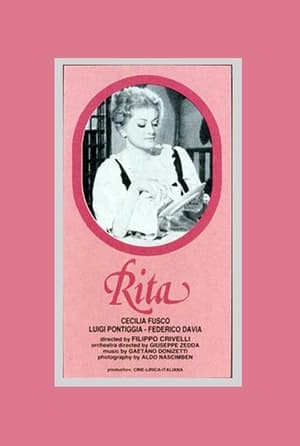
IL CAMPANELLO DI NOTTE, Farce in one act by Gaetano Donizetti, is set in Naples. Don Annibale Pistacchio, an old apothecary, have just married the young Serafina. Enrico, former lover of Serafina, interrupts constantly the wedding night showing on several disguises and calling at Pistacchio's drugstore by ringing the night bell, asking the unfortunate groom a preposterous list of prescriptions.
The Ballet de l'Opera National de Paris mounted this production of the late Pina Bausch's dance-opera Orpheus und Eurydike, which Bausch had adapted from composer Christoph Willibald-Gluck and Ranieri de' Calzabigi's 1762 opera Orfeo ed Euridice. As the title suggests, it takes its basic narrative from the myth of Orpheus, and his courageous but ill-fated attempt to rescue his lover Eurydice (also known as Eurydike) from the jaws of the underworld. This particular production finds Yann Bridard dancing as Orpheus and Marie-Agnès Gillot dancing as Eurydike , with mezzo-soprano Maria-Riccarda Wesseling accompanying Bridard and soprano Julia Kleiter accompanying Wesseling. Pina Bausch did the choreography and stage direction, while Rolf Borzik designed the sets, costumes and lighting. The Balthasar-Neumann Ensemble & Choir, under the direction of Thomas Hengelbrock, lend musical accompaniment.
In ancient Babylon, SEMIRAMIDE (Anderson) encourages her lover Assur (Ramey) to murder her husband, King Ninus. Her son, Ninius, disappears, believed dead, and Semiramide rules in her own right. 15 years later, as the opera opens, she is about to announce the name of her successor. Idreno (Olsen) and Assur are the leading candidates for the throne and the hand of Princess Azema (Shin), but Semiramide has taken a fancy to young Arsace (Horne), her victorious military leader who has been summoned back to Babylon. Only the high priest Oroe (Cheek) knows that Arsace is actually Ninius, spirited away to safety after the coup. As the queen announces Arsace as her successor, the ghost of her husband appears from his tomb, demanding that Arsace punish the late king’s murderers... Filmed at New York's Metropolitan Opera, John Copley's production of Rossini's last, longest and most elaborate dramatic opera brings together what many consider the definitive contemporary cast.
Brett Dean's multi-award-winning opera received its world premiere at Glyndebourne Festival 2017. The world premiere recording of Brett Deans new opera based on Shakespeares best-known tragedy: To be, or not to be. This is Hamlets dilemma, and the essence of Shakespeares most famous and arguably greatest work, given new life in operatic form in this original Glyndebourne commission. Thoughts of murder and revenge drive Hamlet when he learns that it was his uncle Claudius who killed his father, the King of Denmark, then seized his fathers crown and wife. But Hamlets vengeance vies with the question: is suicide a morally valid deed in an unbearably painful world?
"Irresistible" (Opera News) rising-star mezzo Elina Garanca triumphs as Rossini's Cinderella in this delightful Metropolitan Opera production. "As close to pure joy as you will find in a big-time opera house" (New Yorker), conquering audiences and critics alike, "Garanca has a gorgeous voice that she uses with exceptional skill, melting tenderness; but when the part calls for coloratura fireworks, she unleashes a flawless technique and ringing high notes of impressive power" (Associated Press). Filmed in High Definition Widescreen.
23-year-old Gioachino Rossini completed his masterpiece IL BARBIERE DI SIVIGLIA incredibly quickly – legend has it in just 13 days – which Rossini attributed to ‘facility and lots of instinct’. The opera, characterized by youthful energy and bold wit, has all the ingredients for comic chaos: an imprisoned young woman, her lecherous guardian and a young noble suitor. Skilfully plotting behind the scenes is Figaro, an irrepressible and inventive character in whom many have seen a resemblance to the young Rossini himself. The score fizzes with musical brilliance, from Figaro’s famous entrance aria to the frenzy of the Act I finale. This recording sees Joyce DiDonato (Rosina) bring literal meaning to the old theatrical motto Break a leg! She did just that in an earlier show but was determined to finish her commitment and was re-staged into the production to allow for the additional challenges that come when a leading lady in a lively physical role must wheel around the other performers...
Verdi’s IL TROVATORE again storms the Met stage in a star-studded, anvil-wielding cast , including Sondra Radvanovsky, Dolora Zajick and Dmitri Hvorostovsky. Marcelo Álvarez sings Manrico, the troubadour of the title. The story is well-known already: The gypsy Azucena has harbored a grudge for thirty years, but she is about to have revenge at last. Meanwhile, her son Manrico is in love with Leonora, but so is his arch-enemy, the Count Di Luna. A pot-boiler, where every tune is a hit.
LA PIETRA DEL PARAGONE (The Touchstone) concerns the Count Asdrubale who is wealthy and therefore of great interest to many women – notably Aspasia, Fulvia, and Clarice. Only Clarice, however, loves him for something other than his riches. There are also male hangers-on: the corrupt journalist Macrobio, the poetaster Pacuvio, and Giocondo, who is Asdrubale's true friend, but who has his own eyes on Clarice. To test his friends and would-be fiancées, Asdrubale pretends that he has been bankrupted. Sure enough, only Clarice and Giocondo stand by him, and when his fortune is "miraculously" saved, the three have the last laugh on everyone else... or do they? This production is set in what looks like the early 1960s. But the real innovation is the use of blue screen technology: using tiny cameras and sets, along gigantic screens hanging over the stage, a kind of video mixing makes the singers appear to inhabit any number of fanciful settings and perform a myriad of improbable actions.
Known as a creator of astonishing images, stage director and visual artist Robert Wilson delivers a magnificent production of Mozart’s adaption of Handel’s Messias. Mozart was commissioned by Gottfried van Swieten to modernise the score fifty years after Handel’s popular composition (1742), mainly by arranging the wind parts and partially re-composing them. With Marc Minkowski a conductor has been engaged who understands perfectly how to combine baroque style with the tonal possibilities of an orchestra of the classical period like the Musiciens du Louvre. The excellent soloist quartet with Elena Tsallagova, Wiebke Lehmkuhl, Richard Croft and José Coca Loza merges perfectly into Wilson’s enormous flood of images.
André Heller is staging "Der Rosenkavalier" (his first opera production) at the Berlin State Opera. The story of a young nobleman caught between two women in Maria Theresa's Vienna is full of bold twists and fantastic entanglements. And as if made for an imaginative realization with all the means of modern theater. André Heller can rely on a first-class ensemble... André Heller is a chansonnier, actor, circus founder, vaudeville maker and stager of spectacles in which a variety of genres are combined with exuberant fantasy. In Berlin, Heller follows in the footsteps of Max Reinhardt, who ruled the Berlin stages at the beginning of the 20th century and revolutionized the theater with a multitude of innovations. Reinhardt also staged the world premiere of "Der Rosenkavalier" in 1911. It will be interesting to see how today's multimedia genius deals with the legacy of the great theater genius of yesteryear.