Robert Paragot, a mountaineering legend, was also a great Bleausard. In addition to his far-flung alpine-style expeditions (the south face of Aconcagua, Tour de Mustagh, Jannu), he is the very image of the modest city dweller who devoted himself passionately to high-level mountaineering. Like any good Parisian climber, Robert Paragot began his climbing career in the Fontainebleau forest. A true rock school where he would open several boulders. His son, Christophe Paragot, paid tribute to him, a year after his death, by climbing all the boulders opened by his father in Fontainebleau in the same day. He tells us about an era, a spirit, an emblematic place through his memories and some delightful anecdotes. Far from spectacular images and sporting exploits, this film speaks of a passion, a story of climbing that was made accessible to all. In memory of a great name in mountaineering who, from the modest blocks of the forest, climbed to the highest peaks in the world.
SOAR
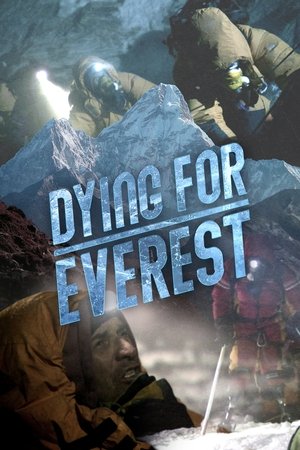
May 25, 1996 - Bruce Herrod, a South African mountaineer reached the summit of Everest at 5 p.m. On the radio, we urge him to come down as soon as possible because the descent is dangerous in the middle of the night. A few hours later, no news from him. From this South African expedition which turned into a fiasco and another expedition carried out in parallel, the testimonies of the members of these expeditions show to what extent the thirst for climbing to the top of certain mountaineers, combined with the lack of oxygen , can alter the lucidity of climbers to the point of changing their relationship to death and thus lead them to neglect other expedition members in order to ensure their victory or save their own life.
Průzkumníci
This documentary is a reconstruction, based on archive footage, testimonies, and filmed reconstructions, of the Vincendon / Henry tragedy. December 1956: Jean Vincendon and François Henry, two young mountaineers, aspire to join the High Mountain Group. Lacking experience, they set out to climb Mont Blanc via the Brenva spur in the middle of winter. The weather conditions deteriorated, and they decided to give up before meeting Walter Bonatti and Sylvano Gheser. They then decided to continue the climb and set off in two different roped parties. Bonatti decided to take refuge at the Vallot refuge higher up, rather than descend. The two young mountaineers, overcome by the poor weather conditions and fatigue, remained stuck for several days at 4,000 meters. What followed was a completely disorganized rescue operation that became, for more than ten days, a spectacle for all of France and a national tragedy.
Fly the Alps
Gaston Rébuffat is part of the history of mountaineering. Marseillais prodigy, high mountain guide of the Chamonix guide company and famous for the ascent of the most famous north faces: some are 1st rehearsals, others 1st French or 1st as a guide. Filmed by Georges Tairraz, this masterpiece released in 1955 reveals the beauty of effort and the pleasure of sharing in the mountains. Apart from the feat, the mountains are not there to satisfy egocentric ambitions. A classic !
Jean des Bossons is a documentary-fiction which recounts the activities of a high mountain guide in 1947. Around Chamonix Mont-Blanc, the guide Jean des Bossons, interpreter by the mountaineer Armand Charlet, accompanies on mountain hikes, Jean-Pierre, an apprentice guide. The novice, skis on the shoulder, is already clumsy. The professional taught him how to travel on skis uphill and downhill, then mountaineering in ice and rock parishes. By dint of training, Jean-Pierre has made it his job. Guides are also lifeguards. A group went to a glacier to rescue a man who had fallen into a crevasse. During this rescue, Jean des Bossons is the victim of an accident. A drama that prevents him from practicing the profession, but not climbing. The man sinks into the fog and Jean-Pierre cannot find him.
In March 2002, the Italian climbers of the Ragni di Lecco group embarked on an expedition across the Algerian Sahara. Mario Conti, Simone Pedeferri, Marco Vago and Massimo Bosetti, during a long journey, completed numerous ascents: Ihaghen, Adaouda, Tizouyag Sud, Dôme de l'Éléphant (Tesnou mountain range) and around thirty new boulders, including La Gazelle (7b) and Le Guépard (7c). But the main objective was the opening of a new climbing route on the face of Garet El Djenoun, in the Tefedest mountain range. The 400-meter route, named "Mariolino Fotonico", has 13 pitches (8 new, plus 3 spans with "Mosquitoes" and 2 with a "Voie des Espagnoles" from 1985), with a maximum difficulty of 8a/A1. This film has a special significance, as it is the first film of the rebirth of the Ragni group, after the 90s marked by tragedy, and at the same time the end of the tragic black decade in Algeria which raged between 1992 and 2002.
Transcending cultural barriers and consistently going against the grain, female Nepali climber Pasang Lhamu Sherpa attempted to summit Everest four times in the early nineties. Although she was not allowed to attend school as a child, Pasang did not let that stop her from pursuing her dreams. After founding her own trekking company in Kathmandu, she blazed a trail for Nepali women via her efforts to summit Everest. Proving how big you can dream and how far you can go to achieve those dreams, she left a legacy not only for the family she has left behind, but for the myriad women following in her footsteps.
In 1915, the First World War is in full swing and young men are called to military service in rows - including Franz and Peter. Both are sent to the Dolomite front, in order to fend off a threatened Italian attack. Comradeship and loyalty are needed in the fight, but Franz and Peter are ever enemies. Since Peter's romance with Anna, the competition between the two flares up more. But the circumstances of the war and the harsh weather in the mountains soon end those hostilities.
Some people think John Muir was a hero. Others: not so much. The Adventure Brothers hike the famous John Muir Trail (a.k.a. Nüümü Poyo) to investigate the conservationist's controversial legacy.
In the shady campgrounds of Yosemite valley, climbers carved out a counterculture lifestyle of dumpster-diving and wild parties that clashed with the conservative values of the National Park Service. And up on the walls, generation after generation has pushed the limits of climbing, vying amongst each other for supremacy on Yosemite's cliffs. "Valley Uprising" is the riveting, unforgettable tale of this bold rock climbing tradition in Yosemite National Park: half a century of struggle against the laws of gravity -- and the laws of the land.
Les Etoiles de Midi is an engaging docudrama about some of the more spectacular exploits of French mountain climbers over the last several decades. In one re-enacted story, there is a wartime escape through the mountains, and in another, a daring rescue of a pair of climbers who had been missing. The actors themselves are adept at the sport of climbing, and they give the scenes an immediacy and real daring that brings the stories alive. A combination of their acrobatics and skill and the outstanding episodes in the history of French climbing creates a winning 78 minutes.
"The ascent of the Aiguilles Ravanel and Mummery", climbed by young guides in cycling pants: The brothers Armand Charlet and Georges Charlet, Arthur Ravanel, Henri Couttet and Charles Balmat. The film was shot by Georges Tairraz II, Chamoniard mountain photographer, representative of the third generation of a family line of mountain photographers and filmmakers. George Tairraz II's film will lay the groundwork for a French vision of mountain film; In the 1930s, a French school of mountain cinema emerged, less expressionist, more stripped down and realistic than the German school. These are the films of Marcel Ichac, Roger Frison-Roche, Samivel, Georges Tairraz II, etc. It develops according to the principles set by Marcel Ichac, in opposition to the German school. It is both about getting out of the dramatic vision of the mountain and placing the mountain and the climbers at the heart of the plot.
Marcel Ichac accompanied the mountaineer Armand Charlet, in 1943, in the repetition of the first crossing of the Aiguilles du Diable that the guide of the Chamonix valley had made in 1925. A roped party joined on snow and ice the Col du Géant, reached at the Mont-Blanc-du-Tacul stop and on the Col du Diable. The men cross the needles by climbing chimneys, cracks and abseiling walls. They access the eastern slope of the Mont-Blanc massif which offers a panorama of the Grandes Jorasses and Mont-Blanc. Armand Charlet was the first to reach the summits of four needles above 4000 meters: the Devil's Horn, Pointe Chaubert, Pointe Médiane and Pointe Carmen; he also tells how he successfully climbed the furthest, the Isolated. Marcel Ichac shot these scenes as close as possible to his subject, he responded with this film with a “truth” cinema, the principle of which we find in his later productions.
For a century and a half, mountain images by their beauty have largely gained from its influence, its frequentation and its development. But they are also a tool in the service of science, fixing the transformation of landscapes, habitats... Over 150 years, the Tairraz dynasty photographed the mountain. Four generations of photographers have magnified the Mont-Blanc massif. From the first photograph taken at the summit of Mont-Blanc in 1861 to the present day, this art is at the origin of many mountaineering vocations and has largely contributed to the tourist development of these formerly ignored valleys. Here is the wonderful story of a dynasty of photographers, the Tairraz, which stretches from 1861 to the dawn of the 2000s.
Pseudo-ethnological documents about two villages which, without roads and electricity, "stopped existing".
Come fly with us in OVER ALASKA as we take off on a breathtaking tour of our 49th state. Soar over Mt. McKinley and through the craggy crevasses of electric blue glaciers. Follow the Iditarod and kayakers as they navigate past icebergs. Then touch down to Earth and get as close to bears, whales and wildlife as humanly possible.
Avid for steep slopes, Marco Siffredi (1979-2002) obeys only one rule: not to fall. This gifted kid with hair sometimes blond peroxidized, green or blue clashed in his valley: Chamonix, mecca of mountaineering. His thing was to go up and down on a snowboard. . 90 minutes September 8, 2002, altitude 8848 meters, rare oxygen, his head already brushing the sky and his snowboard running, Marco Siffredi, 23, rushes from the summit of Everest in the Horbein corridor and its slopes at 50 degrees . A year earlier, he had already made the first descent of the mountain on a snowboard. But there remains another corridor… more direct. It's not a challenge, just a reason to be... However, that day, at the top of the roof of the world, his trace is lost...