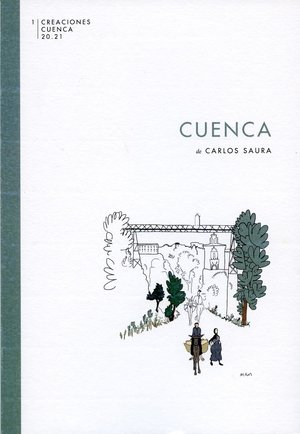
A medium-length documentary commissioned by the Cuenca City Council. The documentary shows an honest, sincere, although sometimes mere tourist portrait, of the lands of Cuenca and its people, without artifice or imposture, with feeling and authenticity and at the same time with marked coldness.
Gayoung, a director, expects to hear a farewell confession from her boyfriend, who's an actor. (Part of "100인 X 100초영화 프로젝트", a project dedicated to celebrate 100 years of South Korean cinema.)
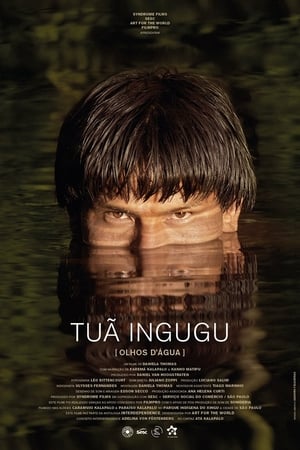
In the Kalapalo cosmogony (an ethnic group that lives in the Xingú Indigenous Park), water is as old as humans and is the source of life. That is where all their sustenance comes from, their food, their drink, their joy. The idea of using water as a dumpster, of poisoning water is a dystopia. In this documentary Chief Faremá —from Caramujo village on the banks of the Kuluene River— tells us about the birth of water and warns us about the consequences of disrespecting it.
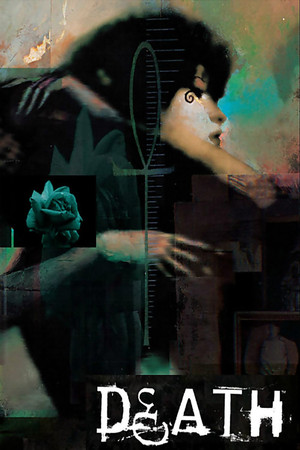
Vincent, an artist with unresolved inner demons, meets a mysterious girl who helps him come to terms with his creative legacy… and eventual death.
Blu animation takes a circular trip around a room
Dancing All Day
In the Parque del Retiro, in Madrid, Spanish writer Ramón Gómez de la Serna weaves a humorous and absurd monologue about a monocle without glass, the noises that can be heard in a chicken coop and the importance of gesturing correctly with a large hand if someone wants to succeed in the art of oratory.
Documentary film about artist Henri Matisse
the internal thoughts of a woman
Jéssica, Suyanne, Bruna and Nathália are detained in the Prison Unit, located in Aquiraz, Metropolitan Region of Fortaleza. A space, several stories, the same hope shared by all: resist and fight for the end of prejudice.
The Place is short film about Palestine that calls out the Palestinian suffering and what the people of Sheikh Jarrah neighbourhood are going through right now.
A comic allegory in which a runaway "city" on legs matches wits with a wily farmer. A farmer has an encounter with a runaway "city" (which devours its environs). He deserts his rural home for the imagined joys of urban life.
All kinds of people are waiting in seven different queues. The first person of each queue becomes the last of the next one, thus creating an enormous human line. But at the end of the line, it all begins backwards again.
Brought in by an ill wind, a stranger from another world falls to earth into the body of a young man. A glitch in this interchange hampers the alien consciousness to fully integrate in the new found carcass. We follow this being for a day in their muffled wander through earth.
Closing Doors
Following a rare punishment. Tomás, 10 years old, discovers himself as a human being. This punishment becomes the most precious gift of his life. His Freedom.
Mrs. Cho’s three daughters, Su-yeon, Ji-yeon and So-yeon, carry out their own busy lives. Upon the diagnosis of the terminally ill condition of their mother, they visit her after a long time. The three daughters bicker and compete against each other like children to win the love of their mother, and decide to use each of their skills to prepare a meal for their mother.
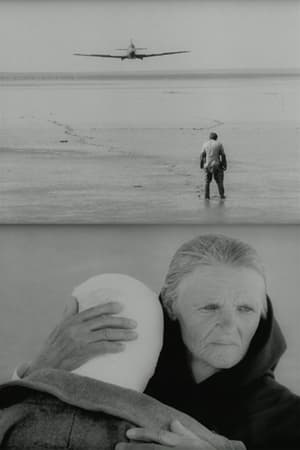
This film ballad is dedicated to those who never returned home from WW2. A group of retreating Soviet soldiers, crossing a lunar terrain in a desperate attempt to escape death, is attacked by a German fighter plane that appears like a bolt from the blue. One by one they are killed. Then suddenly, in an unlikely denouement bordering on the mystical, the attacker is shot down with a simple rifle. For ideological reasons that defy understanding this film, one of Viktor Hres’ earliest works, was shelved in 1967 by Soviet censors. In 2010, it was restored by the Debut Studio of the Oleksander Dovzhenko Film Studio with the support of the Ministry of Culture and Tourism of Ukraine.
A complicated friendship between a young Somali and Nigerian man unfolds against the chaos of gentrification and displacement in the small immigrant community in Cardiff known as Tiger Bay.
Set in the vibrant world of mid-century Bombay 1940s is one of the few non-fiction stories from Manto's life in a Bombay chawl that revolves around Brij Mohan - Manto's roommate and Peerun - a Parsi girl. Brij comes up with a strange theory that he loses his job every time he meets Peerun and blames her for his unsuccessful career. Then why does he want to be with her despite facing extreme poverty? Why does Peerun want to be with him despite being in a relationship with someone else? Manto tries to find this out revealing his own direct and indirect relationships with the characters.