In the fall of 1987, Philippe Haas accompanied the sculptor Richard Long to the Algerian Sahara and filmed him tracing with his feet, or constructing with desert stones, simple geometric figures (straight lines, circles, spirals). In counterpoint to the images, Richard Long explains his approach. Since 1967, Richard Long (1945, Bristol), who belongs to the land art movement, has traveled the world on foot and installed, in places often inaccessible to the public, stones, sticks and driftwood found in situ. His ephemeral works are reproduced through photography. He thus made walking an art, and land art an aspiration of modern man for solitude in nature.
Heartbeat
An experimental film about that one hypnotic moment on a regular, unassuming Tuesday when one realizes that time has stopped and the universe has been sucked into a single smile.
Cinema and painting establish a fluid dialogue and begins with introspection in the themes and forms of the plastic work of a woman tormented by the elongated specters, originating from her obsessions and nightmares.
A collage of newsreels, trailers, clips and other visionary and unseen fragments of sight and sound regarding the late plastic artist Helio Oititica.
A look at the various modes of transportation made for the Expo '86 World Fair in Vancouver, Canada.
This film is depicts early lesbian sexuality, using reenacted scenes from the experience of a 12-year old girl as the platform for a meditation on forbidden desire, transgression, and Lacanian psychoanalytic concepts of identity formation. Raw adolescent memories counterpoint staged scenes, exploring mechanisms of power and submission.
This film describes a psychological state "kin to moonstruck, its images emblems (not quite symbols) of suspension-of-self within consciousness and then that feeling of falling away from conscious thought. The film can only be said to describe or be emblematic of this state because I cannot imagine symbolizing or otherwise representing an equivalent of thoughtlessness itself. Thus the actors in the film, Jane Brakhage, Tom and Gloria Bartek, Williams Burroughs, Allen Ginsberg, Peter Olovsky and Phillip Whalen are figments of this 'Thought-Fallen Process', as are their images in the film to find themselves being photographed."
An anthology of one-minute films created by 51 international filmmakers on the theme of the death of cinema. Intended as an ode to 35mm, the film was screened one time only on a purpose-built 20x12 meter public cinema screen in the Port of Tallinn, Estonia, on 22 December 2011. A special projector was constructed for the event which allowed the actual filmstrip to be burnt at the same time as the film was shown.
6-18-67 is a short quasi-documentary film by George Lucas regarding the making of the Columbia film “Mackenna's Gold”. This non-story, non-character visual tone poem is made up of nature imagery, time-lapse photography, and the subtle sounds of the Arizona desert.
Drawing on VHS tapes of a programme hosted by her mother on Bulgaria’s national television, the filmmaker gives a pop-style and in-depth chronicle of the gentle – even “over-gentle” – 1989 revolution.
The rare short film presents a curious dialogue between filmmaker Julio Bressane and actor Grande Otelo, where, in a mixture of decorated and improvised text, we discover a little manifesto to the Brazilian experimental cinema. Also called "Belair's last film," Chinese Viola reveals the first partnership between photographer Walter Carvalho and Bressane.
"My last image of Jonas."—Ken Jacobs
Made on a wind-up Bolex camera, The Sound of Seeing announced the arrival of 21-year-old filmmaker Tony Williams. Based around a painter and a composer wandering the city (and beyond), the film meshes music and imagery to show the duo taking inspiration from their surroundings.
The title comes from Sergei Yesenin's last poem before comiting suicide. Using Virginia Woolf's last letters as a base, this film is meditation on the power of the word and its undertsanding and the the last moments before saying "goodbye".
In 1967, experimental filmmaker Jorgen Leth created a striking short film, The Perfect Human, starring a man and women sitting in a box while a narrator poses questions about their relationship and humanity. Years later, Danish director Lars von Trier made a deal with Leth to remake his film five times, each under a different set of circumstances and with von Trier's strictly prescribed rules. As Leth completes each challenge, von Trier creates increasingly further elaborate stipulations.
The Greek island of Syros is visited by a series of unexpected guests. Immutable forms, outside of time, aloof observants to human conditions.
On the Various Nature of Things
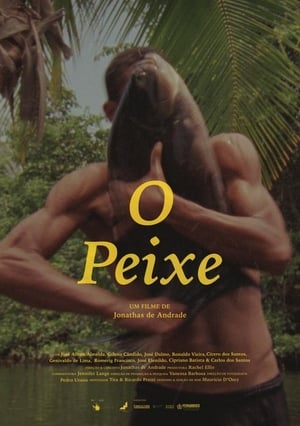
Roaming through the traditional Christmas stands of live carp fish on the street of Prague.
IJswee is a documentary film about an ice club, a village and the warm winters. In the film we follow Oringers, the inhabitants of Odoorn, through the winter. The Oringers all experience IJswee in their own way. You will also see the Icecounter (Rafael van der Ziel), who builds ice sculptures and drinks frozen milk. You see the Drenthe countryside changing with the weather. You see animations, archive material and you hear the mysterious sounds of IJswee in the music of Wietse de Haan. And there are two trumpet players, who welcome winter with their music and say goodbye to it.