Short film about Ankara, Turkiye
This inspiring documentary chronicles the extraordinary life of Ruby Duncan, an activist who fights the welfare system and becomes a White House advisor.
A Documentary on the Making of 'Gore Vidal's Caligula'
A remote and wild island on the west coast of Scotland is home to a small group of people that live in deep connection with the land, the sea and the weather. For different reasons, they left their city life to escape their inner demons and to live as eco-friendly and sustainable as possible.
Family and friends pay tribute to the funnyman, who was one of Britain's best-loved stars of stage, TV and film for more than 50 years - and also became a cult figure in Albania, where his films were ruled to be acceptable entertainment during the country's long years of isolation during the Cold War. Including contributions by Norman's son Nick, singer Vera Lynn and actress Honor Blackman.
A rewilding success story, ONE MILLION FISH chronicles the 8-year effort of a Maine community to restore a run of fish that had been blocked by dams since 1783.
Brian Hall has been living with Parkinson's since he was 14. He is now in his 60s. How do you fill the well of optimism when it's been drained progressively and constantly for well over 40 years?
A short, sharp, shock of a documentary detailing treatments for hysteria in Victorian Britain including clitoridectomy and genital massage. Not for the faint-hearted!
Sheep bound through a narrow opening, followed by a panoramic vista of the flock running through a meadow.
After his son is denied enrollment by the local elementary school for not identifying his "primary race," a multiracial father journeys through America's maze of Identity Politics to better understand our relentless preoccupation with race.
Eleven major film makers from Europe, America and Asia talk about Akira Kurosawa and discover surprising influences on their own work.
At a wildlife rehabilitation center in the Pacific Northwest, the steady, practiced, and gentle hands of veterinarians nurse dozens of convalescing animals back to health.
"[Hutton’s] latest urban film, New York Portrait, Chapter III, takes on a unique tone in relation to Hutton’s ongoing exploration of rural landscape. The very fact that Hutton is dealing with older footage, with archives of memory more than immediacy, gives it a different texture than his earlier New York films. Hutton always found the presence of nature in the city, not only in his many shots of sky and vegetation, but also in the geometry and texture of the city itself, which seemed to project an independence from the human." (Tom Gunning)
A look inside the Batanes traditional boat and how the Ivatans preserve their custom of constructing their tataya (boat).
Three people reckon with the legacy and impact of a tragic historical site with roots in their city. Meanwhile, a medium from out of town visits the site to see what she can learn from the energy of the land.
A short documentary on the "Harlem Street Singer," blues artist Rev. Gary Davis. Features footage of his neighborhood, Davis talking about his upbringing, and two performances including "Death Don't Have No Mercy." Benefiting from New York's folk revival in the 1960s, Davis influenced artists such as Dave Van Ronk, Bob Dylan, and the Grateful Dead.
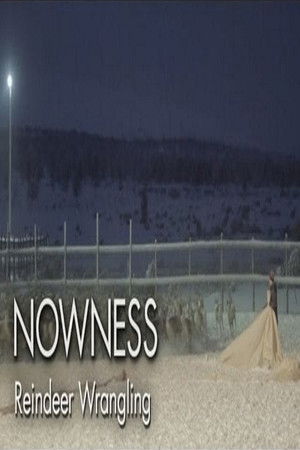
A lyrical and haunting portrait of reindeer herding in the twilight expanses of the Lappish wilderness.
In 2011, Maine State Prison launched a pioneering reform program to scale back its use of solitary confinement. Bafta and Emmy-winning film-maker Dan Edge and his co-director Lauren Mucciolo were given unprecedented access to the solitary unit - and filmed there for more than three years. The result is an extraordinary and harrowing portrait of life in solitary - and a unique document of a radical and risky experiment to reform a prison. The US is the world leader in solitary confinement. More than 80,000 American prisoners live in isolation, some have been there for years, even decades. Solitary is proven to cause mental illness, it is expensive, and it is condemned by many as torture. And yet for decades, it has been one of the central planks of the American criminal justice system.
The carnage in Sarajevo provides the focus of this French documentary which seeks to call attention to the terrible conflict in the hopes of finally ending it. The film is divided into five parts. Each part covers a time frame ranging from April 4, 1992, the beginning of the war, to the present. The major issues that occur are three-fold. It depicts the systematic genocide of Bosnians, the silence of Western countries, and the determination of the Bosnians to resist. They refuse to be seen as victims, even though the filmmakers portray them so. Also included are the origins and political aspects of the war. It offers interviews with participants. It also reveals how the U.S. State Department censored reports about Serbian death camps.
Documentary film that deals with the problems of the rock'n'roll scene in Niš, focusing primarily on the period after the collapse of the former SFRJ.