On the evening of April 30, 1971, a standing room only audience of local literati and feminists packed New York City’s Town Hall to watch Norman Mailer, who had just written “The Prisoner of Sex,” grapple with a panel of passionate feminists. The subject was Women’s Liberation, an issue on which Mailer seemed like the devil’s own advocate.
In 1944, two prisoners miraculously escaped from Auschwitz. They told the world of the horror of the Holocaust and raised one of the greatest moral questions of the 20th century.
Through intimate stories and day-to-day routines we get a naturalistic glimpse into the lives of individuals with disabilities in the bustling urban landscape of São Paulo. The film captures personal moments and how modern societies confront (or fail to confront) ableism and inclusion.
A documentary about the legendary series of nationally televised debates in 1968 between two great public intellectuals, the liberal Gore Vidal and the conservative William F. Buckley Jr. Intended as commentary on the issues of their day, these vitriolic and explosive encounters came to define the modern era of public discourse in the media, marking the big bang moment of our contemporary media landscape when spectacle trumped content and argument replaced substance. Best of Enemies delves into the entangled biographies of these two great thinkers, and luxuriates in the language and the theater of their debates, begging the question, "What has television done to the way we discuss politics in our democracy today?"
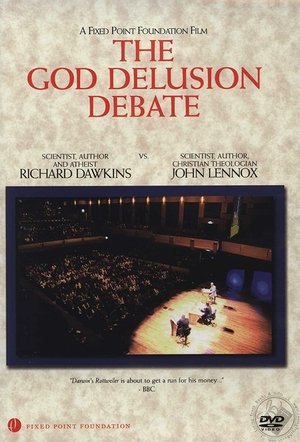
On October 3rd of 2007 in Birmingham, Alabama, Professor Richard Dawkins and his Oxford University colleague Professor John Lennox engaged in a lively debate over what is arguably the most critical question of our time: the existence of God. The debate centered on Dawkins's views as expressed in his best-seller, The God Delusion, and their validity over and against the Christian faith. Both presenters agreed to the format and topics of discussion. It was one of the great debates of the last 100 years and is well worth watching and studying.
Social experiment hosted by journalist and presenter Ben Zand in which a group of people come together to try to understand what constitutes sexual harassment.
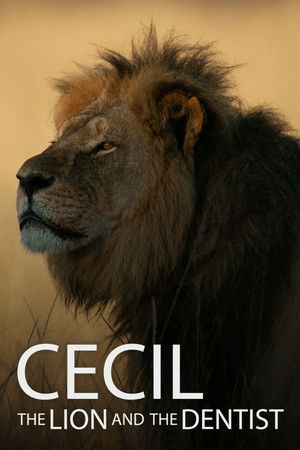
In 2015 a lion in Zimbabwe named Cecil was killed by Walter Palmer, an American dentist, provoking a global outcry. The story of Cecil’s death turns the gaze back on to us and our behaviour. The simplicity of the outrage is a stark contrast to the complexity of the reality.
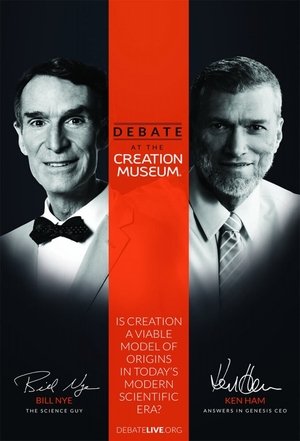
Bill Nye and Ken Ham debate whether creation is a viable model of origins in today's modern scientific era.
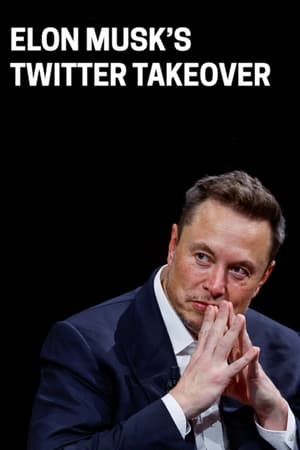
Compulsive Twitterer, Elon Musk bought himself his favorite social network in 2022, and brutally shaped it according to his desires. This punchy investigation relates the stormy relations between the platform and the billionaire, and their impact on the public debate.
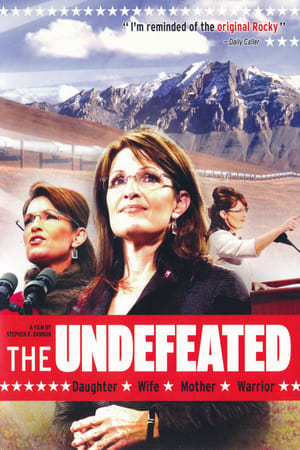
A documentary that chronicles Sarah Palin's pre-political life; her tenure as Governor of Alaska, and her time spent as John McCain's running mate.
"Jacobin founding editor, Socialist Manifesto author, and former co-chair of the Democratic Socialists for America Bhaskar Sunkara squares off with Libertarian Nick Gillespie, editor at large of Reason and host of the podcast, The Reason Interview, to determine whether capitalism is the best economic system for the country, or are we in dire need of revamp. Michael Moynihan Moderates" (Vice News).
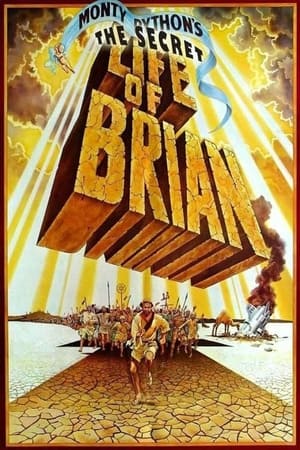
A documentary about the making of the controversial Life of Brian and the surrounding accusations of blasphemy.
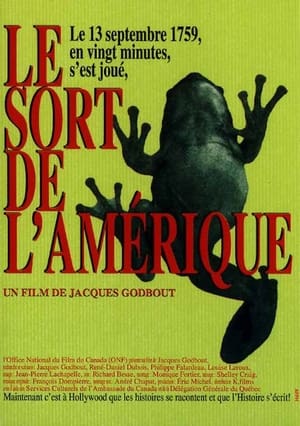
Two well-known Quebec artists (filmmaker Jacques Godbout and playwright René-Daniel Dubois) look at the Battle of the Plains of Abraham. Whose version of this historic event should prevail? Is history best served by documentary or fiction? We also meet Baron Georges Savarin de Marestan and Andrew Wolfe-Burroughs, direct descendants of Montcalm and Wolfe, both of whom died in the battle that would give birth to Canada and to the province of Quebec.
Writers and historians including Hilary Mantel and Philippa Gregory revisit the last days of Anne Boleyn, who in 1536 became the first queen in British history to be executed.
Jean-Marc Jancovici et Delphine Batho : blocages et solutions de la transition écologique
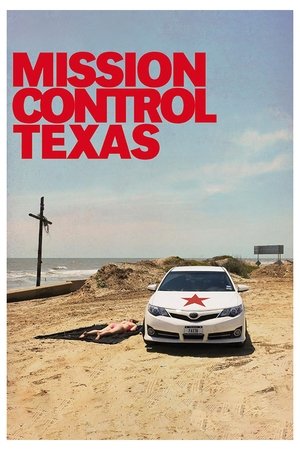
"The Atheist Experience," produced in Austin, Texas, is the only atheist TV show in the United States. Every Sunday afternoon, two atheists debate callers for one hour, on camera. "Mission Control Texas" portrays the show, its protagonists, and the discussions between the hosts and callers. The debates between believers and skeptics are funny, touching, and shocking in turn, and they're interspersed with footage of the very public religious displays common in the state of Texas. The film is an intimate, concentrated, and entertaining insight into the culture wars, and is sure to provoke inspiration as well as frustration, no matter which side of the divide you fall on.
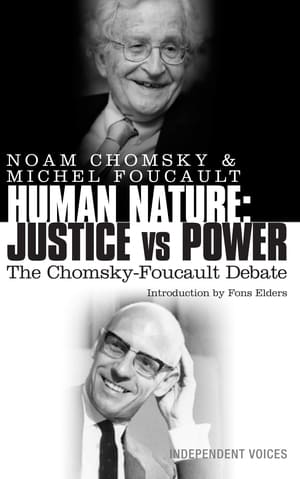
The Chomsky–Foucault debate was a debate about human nature, between Noam Chomsky and Michel Foucault in the Netherlands, in November 1971. Chomsky and Foucault were invited by the Dutch philosopher Fons Elders to discuss an age-old question: "is there such a thing as 'innate' human nature independent of our experiences and external influences?"
Pirated satellite feeds revealing U.S. media personalities’ contempt for their viewers come full circle in Spin. TV out-takes appropriated from network satellite feeds unravel the tightly-spun fabric of television—a system that silences public debate and enforces the exclusion of anyone outside the pack of journalists, politicians, spin doctors, and televangelists who manufacture the news. Spin moves through the L.A. riots and the floating TV talk-show called the 1992 U.S. presidential election.
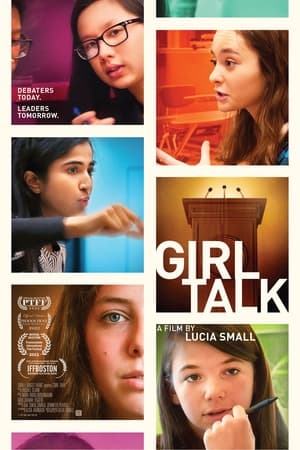
Set in the cutthroat, boy-dominated world of high school debate where tomorrow’s leaders are groomed, GIRL TALK tells the timely story of five girls on a diverse, top-ranked Massachusetts high school debate team as they strive to become the best debaters in the United States on their own terms.
European philosophers: Friedrich Nietzsche, Martin Heidegger and Jean-Paul Sartre. The theme revolves heavily around the school of philosophical thought known as Existentialism, although the term had not been coined at the time of Nietzsche's writing and Heidegger declaimed the label. The documentary is named after the 1878 book written by Nietzsche, titled Human, All Too Human: A Book for Free Spirits.