Michael Cockerell sheds new light on the tragi-comedy of the 1970s by focusing on some of its most controversial characters. With fresh filming and new interviews, along with a treasure trove of rare archive, the film presents the inside story of giant personalities who make today's public figures look sadly dull in comparison. The well-known journalist revisits some of his films on the big characters who helped shaped the 1970s in Britain. Both tragic and comic, it highlights just how much our world has changed in four decades.
Extranjeros de sí mismos
Buddhist monks open up about the joys and challenges of living out the precepts of the Buddha as a full-time vocation. Controversies swirling within modern monastic Buddhism are examined, from celibacy and the role of women to racism and concerns about the environment.
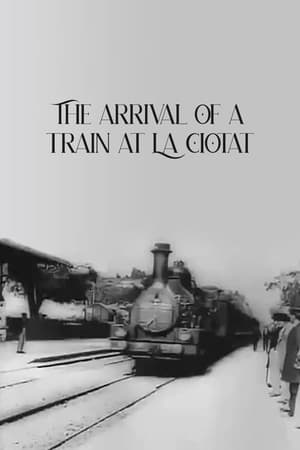
An experiment with three dimensions in a moment of clarity: the focus of the camera's lens towards the present, the speed of the train and the material world distorted by the movements of the train.
Film inspired by the beauty of medieval tombstones, stećaks, scattered around the mountains of Bosnia-Herzegovina and Mak Dizdar’s poem about them. Film explores the distant past immortalized in inscriptions on these ancient tombstones.
Using historically-accurate, battle-filled re-enactments and interviews with expert historians and noted authors, this two-part documentary series brings to vivid life the captivating true stories behind Britain's bloody civil wars.
Filmmaker Irene Lusztig unearths a dark family secret in search of answers and reconciliation in her breakthrough feature documentary, "Reconstruction."
Braunschweig im wandel der Zeit
Meet the crew of the Union Pacific Challenger No. 3985, the largest and most powerful steam engine in the world. This colorful documentary is a behind-the-scenes look at the conductors, engineers and mechanics who keep this fickle train running, an engaging history of steam power, and a scenic tour the Great Plains -- from Cheyenne, Wyo., through Denver and across Nebraska to the Omaha headquarters of the Union Pacific.
In the first half of the 20th century, America's railroads were radically transformed by the innovation of gargantuan steam locomotives. Pushed by the need to haul ever longer and heavier trains, the nation's locomotive works responded with the invention of awe-inspiring articulated engines. Delivering up to 7,500 horsepower, these steel behemoths could haul mile-long, 15,000-ton trains. In this riveting program, journey back to the golden age of steam for an up-close look at these legendary locomotives. See the Union Pacific's famed "Big Boy" in action and ride the rails of the Chesapeake & Ohio and Norfolk & Western railways. Meet the men who drove engines like the Allegheny and Yellowstone, and visit the museums and yards where the largest steamers ever built remain preserved in time. THE HISTORY CHANNEL' proudly presents this rollicking retrospective, sure to set any rail fan's heart pounding
100 Years of Wrigley Field celebrates a century of the greatest moments and best personalities of the ballpark on Chicago's North Side.
Kwaï
This is a film with music. Or about the music and texts that accompany, in a poetic way, a decisive battle between Unitarian and Federalists. The vicissitudes of the birth of a nation based on the play written by Mariano Llinás and Gabriel Chwojnik, whose images achieve some hypnotic strength.
The film interweaves the personal accounts of polio survivors with the story of an ardent crusader who tirelessly fought on their behalf while scientists raced to eradicate this dreaded disease. Based in part on the Pulitzer Prize-winning book Polio: An American Story by David Oshinsky, Features interviews with historians, scientists, polio survivors, and the only surviving scientist from the core research team that developed the Salk vaccine, Julius Youngner.
As Australian cinema broke through to international audiences in the 1970s through respected art house films like Peter Weir's "Picnic At Hanging Rock," a new underground of low-budget exploitation filmmakers were turning out considerably less highbrow fare. Documentary filmmaker Mark Hartley explores this unbridled era of sex and violence, complete with clips from some of the scene's most outrageous flicks and interviews with the renegade filmmakers themselves.
At the peak of Perestroika, in 1987, in the village of Gorki, where Lenin spent his last years, after a long construction, the last and most grandiose museum of the Leader was opened. Soon after the opening, the ideology changed, and the flow of pilgrims gradually dried up. Despite this, the museum still works and the management is looking for ways to attract visitors. Faithful to the Lenin keepers of the museum as they can resist the onset of commercialization. The film tells about the modern life of this amazing museum-reserve and its employees.
Director Agnès Varda and photographer/muralist JR journey through rural France and form an unlikely friendship.
During the Vietnam War, the CIA recruited Hmong tribesmen in the hills of Laos to fight the Communists, then brought them as refugees to America. Forty years later in California, someone who might be a CIA operative approaches a Hmong human rights activist about buying weapons to continue the fight.
The long-suppressed story of 12,000 Japanese Americans who dared to resist the U.S. government's program of mass incarceration during World War II. Branded as 'disloyals' and re-imprisoned at Tule Lake Segregation Center, they continued to protest in the face of militarized violence, and thousands renounced their U.S. citizenship. Giving voice to experiences that have been marginalized for over 70 years, this documentary challenges the nationalist, one-sided ideal of wartime 'loyalty.'
Built in 1923, the Flying Scotsman was the first steam locomotive to run at 100 miles an hour and to star in its own feature film. This is the untold story of the iconic Flying Scotsman-the very best in the engineering of its time.