When young dockworker Jude leaves Liverpool to find his estranged father in the United States, he is swept up by the waves of change that are re-shaping the nation. Jude falls in love with Lucy, who joins the growing anti-war movement. As the body count in Vietnam rises, political tensions at home spiral out of control and the star-crossed lovers find themselves in a psychedelic world gone mad.
Evan, a musically gifted orphan, runs away from his orphanage and searches New York City for his birth parents. On his journey, he's taken under the wing of the Wizard, a homeless man who lives in an abandoned theater. After discovering his talent, the Wizard gives Evan the name "August Rush" and devises a plan to profit from his talent. Little does Evan know that his parents, Lyla and Louis, are searching for him too.
Gruber is a normal 16-year-old growing up in Budapest in 1962, but he has a problem -- how does he get to know the opposite sex? At the Sunday afternoon dance classes the young "ladies and gentlemen" hold each other while dancing, and that makes the lessons worth something. Otherwise, the pianist's attention wanders and the orchestra does not exactly play with a single-minded dedication. In fact, everybody seems to have other things on their minds, except for the enthusiastic dance instructor and his ever-smiling assistant.
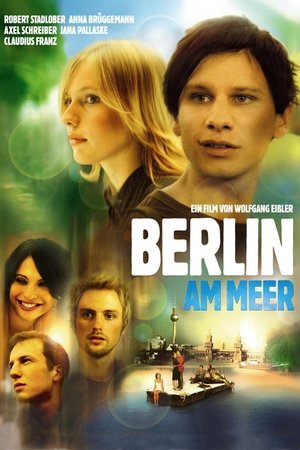
Tom and Malte are best friends; they make music together, DJ in Berlin clubs, dream of a career together, party until they drop, wait tables at a casting service and yet they are very different: Tom struggles with himself, his life and the future. When one day Mavie, Mitsch's "little" sister from Munich, moves into the Berlin flat share, Tom's emotional rollercoaster begins. Daredevil Malte, on the other hand, seems to have his luck in his pocket: Everything he touches succeeds. Tom sees no other way out than to escape: out of the city and into another life. His friends try to stop him, but even they know: Tom has to make this decision himself if he doesn't want to stand in the way of his happiness forever.
Award-winning comedian Rich Hall takes a country music journey from Tennessee to Texas to look at the movements and artists that don't get as much notoriety but have helped shape the genre over the years. With the help of prominent performers and producers including Michael Martin Murphey, Robbie Fulks and Ray Benson, Rich explores the early origins of country music in Nashville and Austin. He visits the rustic studios where this much-loved sound was born and discovers how the genre has reinvented itself with influences from bluegrass, western swing and americana.
An independent rockumentary that comprises first-hand testimonials about the history of Sentimiento Muerto, the most influential band in Venezuela, as well as the projects that came after its dissolution: Dermis Tatú and PAN.
The point of departure for this film is the 1981 composition De Tijd by Dutch composer Louis Andriessen. Van der Keuken leaves the music undisturbed as an autonomous soundtrack and has the images engage in a sort of battle with it. These images are associations, fragments of events, scenes and situations. The film is preceded by a text by Bert Schierbeek.
In 1940s France, a new teacher at a school for disruptive boys gives hope and inspiration.
A vacuum repairman moonlights as a street musician and hopes for his big break. One day a Czech immigrant, who earns a living selling flowers, approaches him with the news that she is also an aspiring singer-songwriter. The pair decide to collaborate, and the songs that they compose reflect the story of their blossoming love.
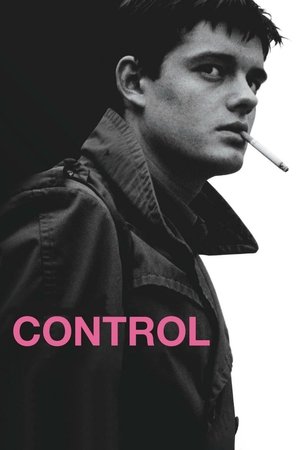
The story of Joy Division’s lead singer Ian Curtis, from his schoolboy days in 1973 to his suicide on the eve of the band's first American tour in 1980.
In the Swedish city of Lethe, people from different walks of life take part in a series of short, deadpan vignettes that rush past. Some are just seconds long, none longer than a couple of minutes. A young woman remembers a fantasy honeymoon with a rock guitarist. A man awakes from a dream about bomber planes. A businessman boasts about success while being robbed by a pickpocket, and so on. The absurdist collection is accompanied by Dixieland jazz and similar music.
An unprecedented collection by Afrobeat legend Femi Kuti, Live At The Shrine includes both a concert film/DVD documentary and a live concert CD, singularly conveying the beauty and joy of Afrobeat music – a combustible cocktail fusing jazz, funk, and traditional African music – while also communicating it’s fascinating roots and politics which began with Femi’s father Fela Kuti, the creator and godfather of Afrobeat. Live At The Shrine takes place in the Kuti family’s hometown of Lagos at the Africa Shrine, where every Sunday Femi plays to a packed house of revelers. With music as his weapon of choice and the Africa Shrine a temple of protest song, Femi continues his father’s fight, railing against the corrupt Nigerian government and staunchly defending PanAfricanism. Capturing this experience through interviews, street scenes, and the music itself, Live At The Shrine captures the spirit, passion, and hope, of a man and a people who are fighting.
The fifth "Afrikaans is Groot" concert. It is an annual concert where some of the biggest Afrikaans artist perform
Guang is a story about two brothers. The elder brother, Wen Guang is autistic. Wen Guang is often misunderstood. Above all, he lives with attention deficiency disorder, struggles with social interaction, and has difficulty performing day to day obligations. He also has a secret passion. To make ends meet, Wen Guang is coerced by his younger brother into looking for a job to share his burden on meeting their monthly expenses. Throughout the film, we see Wen Guang searching for a job, his daily routines and his secret passion as he searches for the final glass that will bring him a simple, pure, hard earned, fleeting moment of joy.
Live concert from the austrian Band "STS"
Backed by an echoed horn music, the light passes through a magnifying glass. On the walls, they portrait pans being held on top of a stove.
A behind-the-scenes look at "Viagens", one of the greatest portuguese records of the 1990s, in the year of its 20th anniversary.
Documentary portrait of José Domínguez Muñoz, better known as "El Cabrero" (French for "the goatherd"), Spanish libertarian flamenco singer born in Aznalcóllar, province of Seville, in 1944 and filmed over two weeks in 1988 in Seville, Aznalcóllar, La Carbonería de Sevilla and Marinaleda, and in concert at a recital in Bayonne. Politically committed, El Cabrero defines himself as a libertarian. Since the 1970s, he has been close to the anarchist movement. For many years, he was a member of the anarcho-syndicalist Confédération Nationale du Travail.
Peter Maffay: Deutschland '84 Live
A Pennsylvania band scores a hit in 1964 and rides the star-making machinery as long as it can, with lots of help from its manager. But behind the scenes, the group’s sudden fame tests their strength, their maturity and responsibility, and their ability to resist the temptations that money and notoriety always make possible.