A documentary featuring interviews with teachers and officials on the profession of teaching and what it means to them.
Winfrey speaks with Markle about everything from stepping into life as a Royal, marriage, motherhood, her philanthropic work and how she is handling life under intense public pressure. Later, the two are joined by Prince Harry as they speak about their move to the United States and their future hopes and dreams for their expanding family.
This horror documentary is not the same as the 1986 TV special Stephen King's World of Horror nor the 1988 VHS release of the same name, which runs 45 minutes, was distributed by Front Row Entertainment and is about King himself. Instead, This Is Horror (copyright 1989) was a TV special which ran in four 60 minute increments. This new special used some framing footage from the original 'World of Horror' but is primarily newer interviews and behind-the-scenes footage about what was hot in horror in the late 80s. Here in the U.S., a condensed 90-minute version made its way onto video courtesy of Goodtimes in 1990. Elsewhere, the entire special was released as 2 different tapes running 90 minutes apiece. In the UK these were titled This is Horror: A Video Encyclopedia of Horror (Volumes 1 and 2) and in Germany they were called Best of Stephen King's World of Horror (Parts 1 & 2).
Auguri Don Gesualdo
Germán Cipriano Gómez Valdés Castillo, a young radio announcer from Cuidad Juárez, succeeds in drawing attention to the pachuco movement through his character Tin Tan, laying the groundwork for a new form of binational and mass linguistic expression: Spanglish. He soon became a leading figure in theater and film on the American Continent. Singled out by critics as a destroyer of the language, he quickly won the approval of the public. His ability to improvise revolutionized the film industry. His talent as an actor, singer, dancer and comedian contributed to the Golden Age of Mexican Cinema. From El Hijo Desobediente to Capitán Mantarraya, from Cuidad Juárez to Havana, from mambo to rock, the legacy of Tin Tan makes him one of the great icons of Mexico today. This film tells his story as it has never been told before.
The Hugo's Brain is a French documentary-drama about autism. The documentary crosses authentic autistic stories with a fiction story about the life of an autistic (Hugo), from childhood to adulthood, portraying his difficulties and his handicap.
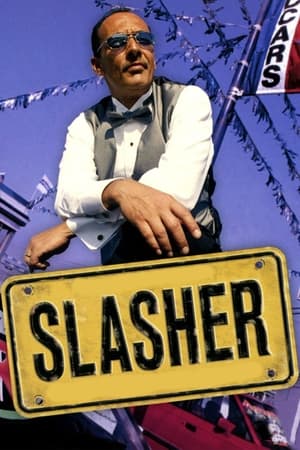
A documentary on a stereotypically shady used car salesman, one who convinces customers to buy vehicles that others have deemed unfit for sale.
A feature-length documentary focusing on the acclaimed work and eclectic career of maverick filmmaker Larry Cohen, writer-director of "Black Caesar," "It's Alive," "God Told Me To," "Q," "The Stuff," and many more.
Jacques Lemonnier of IBM France, Francois Dalle of L'Oreal and other ultrapowerful French moguls are surprisingly candid -- and cold-blooded -- as they discuss their attitudes about business in this startling 1978 documentary. After sounding off about unions, strikes, hierarchy and management, the subjects realized how callous they sounded and managed to convince the French government to suppress the film.
Nagisa Oshima interviews Akira Kurosawa, leading him to share his thoughts about filmmaking, his life and works, and numerous anecdotes relating to his films and his various film activities.
This beautiful and poignant film was commissioned by TENI (Transgender Equality Network Ireland) and is a conversational piece which explores gender identity and transgender experiences in Ireland.
Biography on the famous writer-director, Billy Wilder.
Eleven major film makers from Europe, America and Asia talk about Akira Kurosawa and discover surprising influences on their own work.
From the back rooms of Camden's pubs to the roof of Buckingham Palace at Queen Elizabeth’s Jubilee: the London band Madness enriched British pop music history with their cheeky style and spectacular performances. In this documentary, we look back on their illustrious career with interviews with band members, friends, and music industry figures. Featuring brand new recorded interviews with Suggs and Bedders from ‘Madness’. Alongside interviews with Lynval Golding, Rhoda Dakar, Clive Langer and many more.
For ten years, Raymond Depardon has followed the lives of farmer living in the mountain ranges. He allows us to enter their farms with astounding naturalness. This moving film speaks, with great serenity, of our roots and of the future of the people who work on the land. This the last part of Depardon's triptych "Profils paysans" about what it is like to be a farmer today in an isolated highland area in France. "La vie moderne" examines what has become of the persons he has followed for ten years, while featuring younger people who try to farm or raise cattle or poultry, come hell or high water.
When Harvard PhD student Jennifer Brea is struck down at 28 by a fever that leaves her bedridden, doctors tell her it’s "all in her head." Determined to live, she sets out on a virtual journey to document her story—and four other families' stories—fighting a disease medicine forgot.
Ludwig: A Journey to the End of the Night
Crownsville Hospital: From Lunacy to Legacy is a feature-length documentary film highlighting the history of the Crownsville State Mental Hospital in Crownsville, MD.
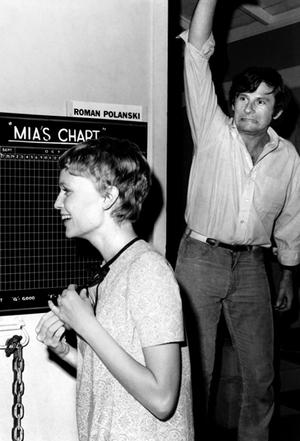
In 1982, Wim Wenders asked 16 of his fellow directors to speak on the future of cinema, resulting in the film Room 666. Now, 40 years later, in Cannes, director Lubna Playoust asks Wim Wenders himself and a new generation of filmmakers (James Gray, Rebecca Zlotowski, Claire Denis, Olivier Assayas, Nadav Lapid, Asghar Farhadi, Alice Rohrwacher and more) the same question: “is cinema a language about to get lost, an art about to die?”
TGV, 30 ans de vitesse