This film describes some of CC’s success stories and gives insight into where we’re headed.
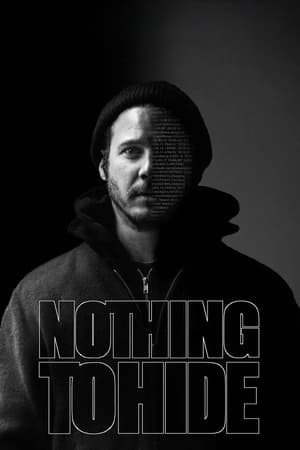
NOTHING TO HIDE is an independent documentary dealing with surveillance and its acceptance by the general public through the "I have nothing to hide" argument. The documentary was produced and directed by a pair of Berlin-based journalists, Mihaela Gladovic and Marc Meillassoux. It was crowdfunded by over 400 backers. NOTHING TO HIDE questions the growing, puzzling and passive public acceptance of massive corporate and governmental incursions into individual and group privacy and rights. After the emotion initially triggered by the Snowden revelations, it seems that the general public has finally accepted to live in a monitored digital world.
Good Copy Bad Copy is a documentary about copyright and culture in the context of Internet, peer-to-peer file sharing and other technological advances.
Paywall: The Business of Scholarship is a documentary which focuses on the need for open access to research and science, questions the rationale behind the $25.2 billion a year that flows into for-profit academic publishers, examines the 35-40% profit margin associated with the top academic publisher Elsevier and looks at how that profit margin is often greater than some of the most profitable tech companies like Apple, Facebook and Google.
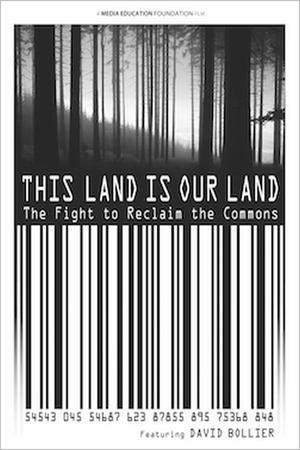
For more than three decades, transnational corporations have been busy buying up what used to be known as the commons -- everything from our forests and our oceans to our broadcast airwaves and our most important intellectual and cultural works. In This Land is Our Land, acclaimed author David Bollier, a leading figure in the global movement to reclaim the commons, bucks the rising tide of anti-government extremism and free market ideology to show how commercial interests are undermining our collective interests. Placing the commons squarely within the American tradition of community engagement and the free exchange of ideas and information, Bollier shows how a bold new international movement steeped in democratic principles is trying to reclaim our common wealth by modeling practical alternatives to the restrictive monopoly powers of corporate elites.
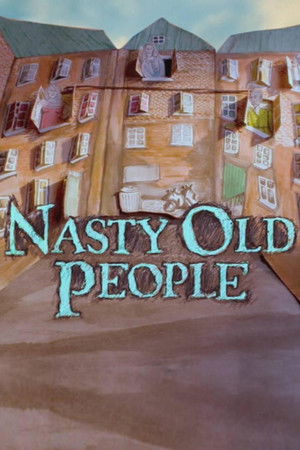
Member of a neo-Nazi gang, her day job is to take care of four crazy old people that all are just waiting to die. Her life becomes a journey into a burlesque fairytale, where the rules of the game are created by Mette herself. Mette is indifferent about her way of life, until she one night assaults a man, kicking him senseless. Waking up the day after, she realizes that something is wrong.
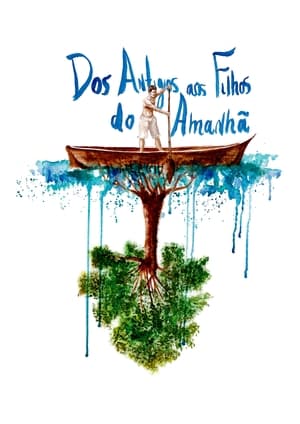
Dos Antigos aos Filhos do Amanhã
73 years after the birth of Israel and the “Nakba” (‘catastrophe’), Rothschild 16, where Israel’s declaration of independence took place, is still a popular location for different tour guides who highlight diverse narratives of the event.
Mishka is a boy of many faces – a petty criminal and a promising alpine skier who enjoys life to its fullest despite his physical disability and difficult living conditions. He is captured at a key moment when he enters adulthood and receives the last opportunity to take part in the Paralympics.
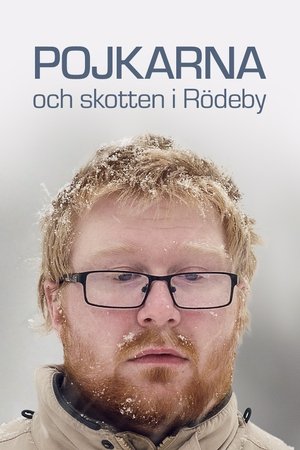
Mattis is different and was the target of bullies while growing up, while society looked the other way. His entire family was subjected to severe harassment by a gang of youths, and late one night in October 2007, his father took out his rifle and tragedy struck. One young boy was shot dead and another was seriously injured. Everyone was a loser, and Mattis and his best friend Stoffe were at the center of the drama. How could life go on?
Forty years after the bloodiest one-day encounter between Americans since the Civil War, the dead remain buried along with the truth. Until now. Based on interviews with eyewitnesses who just now are telling their stories, as well as access to newly discovered documents, the film sheds new light on exactly what happened at Attica between September 9-13, 1971. Criminal Injustice raises compelling new questions about the 39 deaths at Attica, White House involvement, and the corrupting influence of Nelson Rockefeller’s political aspirations before, during, and long after the deadly retaking of the prison. Former hostage Michael Smith said that “the cover up started as soon as the shooting stopped.” This film reveals that the truth actually may have been concealed long before that.
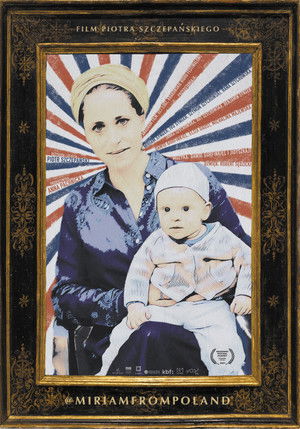
What does it mean to be a Jew in Poland now? Piotr Szczepański reveals another surprising piece of the cultural mosaic of Łódź in his documentary. The protagonists' lives prove that close ties with their religion and history do not exclude their relationship with counterculture and propensity for creative provocation. Thanks to people like them – open-minded and unconventional – the Jewish culture has a chance to last and thrive in our country. Besides, ‘@miriamfrompoland’ is a story, which presents a traditional, yet not quite typical, family with impressive observational virtuosity.
A beautifully illustrated story of a contemporary village and its unconventional dwellers who are of different age but have one thing in common – their strong attachment to folk culture. In this film, music is as important as images, since it accompanies the protagonists during key events in their lives.
The first Swedish film by photographer Ernest Florman. Kung Oscar II welcomes King Chulalonkorn of Siam, now Thailand, at Logårdstrappan. King Chulalonkorn visited Sweden in connection with Stockholmsutställningen 1897.
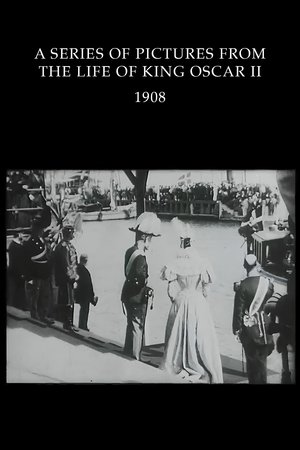
Compilation of actuality footage and short films capturing public and royal scenes from the life of King Oscar II of Sweden — including arrival at Expositions, jubilees, parades, naval activities, and official receptions. Serves as a visual tribute following his death.
A young filmmaker takes us on a walk through a rather peculiar neighborhood in the city of Maceió, where he meditates on his memories and the urban space from a sociological perspective.
A continually pendulating perspective of a tree on a sunny day.
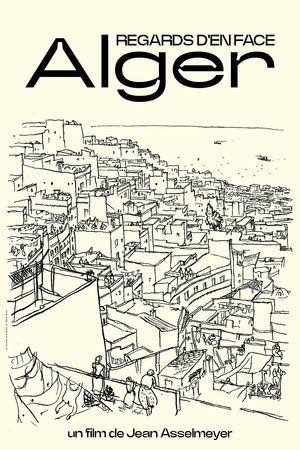
It is with the architect Jean-Jacques Deluz, that we visit Algiers, "his city" since 1960 and that he left only two years during the worst moments of terrorism. From the Casbah, in the 19th century center, including the cities of Fernand Pouillon and Bab El Oued to arrive at the new city of Maelma which he built today. Tender look, but without concessions at the same time architectural promenade and meetings with actors of art and culture: Djamel Allam, the singer Kabyle, Djamel Amrani, the poet, friend of Jean Sennac, Mohamed Ben Gettaf, Dramaturge and director of the theater of Algiers, Souad Delmi-Bourras, young designer Boudjemàa Kareche, director of the Algerian cinema, Amine Kouider, conductor, who relaunches the opera in Algeria, the painter Malek Salah, and others. A look at Algeria and the Algerians, far from the clichés of certain media, the bias being to seek signs of hope rather than "blood and tears".
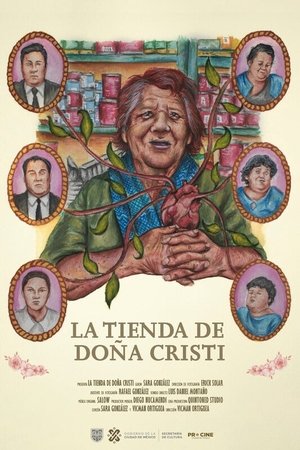
This documentary will take us into the home of Doña Cristi, a 74-year-old woman who has run her grocery store in Ecatepec for more than three decades. We will learn about her life story and the daily difficulties of raising her children, five of them with multiple disabilities, who are her driving force to get up every morning and face all adversity.
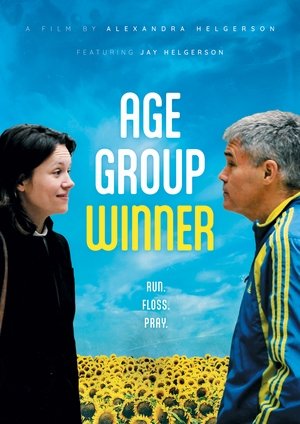
In 1980 Jay Helgerson shocked the world, becoming the first person to run a marathon a week for a year – each race completed in under three hours. For the last ten years, his daughter, filmmaker Alexandra Helgerson, followed him with a camera in order to understand the eccentric man who raised her. What she gets are his projected anxieties, his struggles with physical age and emotional distress, all while he endlessly trains for the Boston Marathon. But as Jay trains, the film is nearly derailed by Alexandra’s encounter with a life threatening illness. Ultimately, AGE GROUP WINNER is an affirmation of the will to live.