John and Yoko in the presidential suite at the Hilton Amsterdam, which they had decorated with hand-drawn signs above their bed reading "Bed Peace." They invited the global press into their room to discuss peace for 12 hours every day.
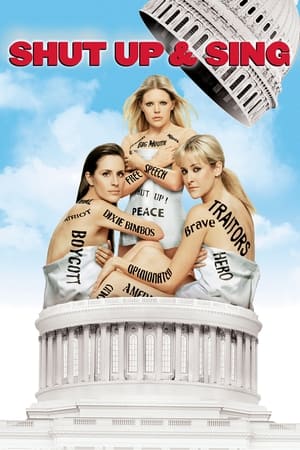
Shut Up and Sing is a documentary about the country band from Texas called the Dixie Chicks and how one tiny comment against President Bush dropped their number one hit off the charts and caused fans to hate them, destroy their CD’s, and protest at their concerts. A film about freedom of speech gone out of control and the three girls lives that were forever changed by a small anti-Bush comment
Documentary film about the protests against the 1968 Davis Cup tennis match between Sweden and Rhodesia, in Båstad, Sweden. In a series of interviews, demonstrators and members of the Swedish government give their views on sport, politics and civil disobedience.
Disobedience tells the David vs. Goliath tale of front line leaders battling for a livable world. Filmed in the Philippines, Turkey, Germany, Canada, Cambodia and the United States, it weaves together these riveting stories with insights from the most renowned voices on social justice and climate. Disobedience is personal, passionate and powerful - the stakes could not be higher, nor the mission more critical.
Police à bout de souffle
A variety of locals react to a napalm plant and an ensuing protest in Redwood City CA during the Vietnam War.
Christian, Ben and Jean-Marie are fighting for political change of power and free elections in their country, the Democratic Republic of the Congo. But the incumbent President refuses to relinquish power. How can the course of events be changed? Must they join forces with the historical opposition leader and his powerful party? Is dialogue still possible or must they resign themselves to a popular uprising and the risk of a blood bath?
Grand Saline, Texas, was a sleepy, unremarkable town—until a white preacher lit himself on fire to protest the town's racism in 2014. The subject of this film is deceptively straightforward: A minister commits suicide by setting himself on fire. He leaves behind a letter that frames his decision as a religious response to the intolerable racism of America's past and present, particularly in his Texas hometown. The aftermath is befuddling: There are townspeople who can recall incidents of racial violence and hate speech, and those who have never seen anything of the kind. Black folk in surrounding towns who share rumors and fears about acts of violence, and white folk who say you can't believe everything you hear. Fellow ministers who share the desire to be liberated from a racist past, and churchgoers who believe only mental illness could explain such a suicide.
For the first time in history people and machinery are working together, realizing a dream. A uniting force that knows no geographical boundaries. Without regard to race, creed or color. A new era where communication truly brings people together. This is the dawn of The Net.
On November 4th, 2008, three states - California, Florida and Arizona - voted to amend their constitutions, denying and revoking the rights of same-sex couples to marry. On May 26, 2009, with Canadian allies, gay American families rally at a Vancouver demonstration to protest these amendments that persecute the LGBTQ community. Demonstration organizer Roger Chin relays the California Supreme Court's infamous decision on Prop 8. Subsequent speakers talk about couples living in exile. Weaving elements of public protest and intimate interviews, four families share their stories of how they met, their decision to escape to freedom in Canada, their Canadian experience and their dreams of returning to their home country, family and friends. In the end, the organizer celebrates the freedoms to marry that exists in Canada.
A month after the Wall Street occupation, a number of protesters follow their example and set up their tents in front of the Ljubljana stock market. The protesters are united in the critique of representative democracy and global financial capitalism under the slogan ‘nobody represents us’. Their organisation is based on the principles of direct democracy. In absence of other social alternatives, a community starts to emerge in the camp in front of the stock market where everyone has an equal say, and everyone is united in their diversity. After the initial euphoria the great idea of direct democracy clashes against the contemporary individual; antagonisms surface, similar to those of the system which the protesters fight against. The story about the Slovenian version of the ‘occupy’ movement is portrayed with the stories of a few protagonists, who despite several defeats do not lose hope in a different world.
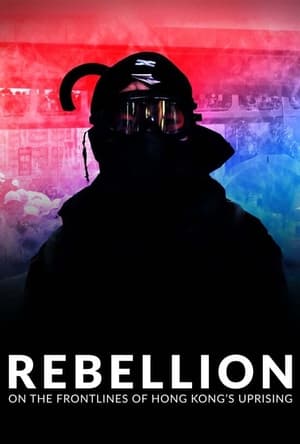
At the forefront of most of Hong Kong's demonstrations, 'frontliners' (aka 'the valiant', yung mo in Cantonese) are the black-clad, masked, often armed youth willing to use violence against the HK government and its heavily-armed police force. Willis Ho's remarkably revealing doc approaches from the inside, giving them voices and offering understanding, not judgment.
Believing he was sacked unjustly from his job as an engineer in a big Japanese corporation, Tanaka Tetsuro has protested outside the company gate every morning for 25 years. Is he an obsessive? Why does he do this? After meeting him on the Internet the filmmakers travel to Japan in time for the 25th anniversary of his protest. They discover that in a world that places a premium on conformity, Tanaka-san has found a way to become himself.
Black Snake Killaz is a feature-length documentary film about the resistance to the Dakota Access Pipeline. This film explores actions taken by water protectors to stop the construction of the oil pipeline and highlights actions taken by law enforcement, military, and corporate mercenaries to quell the months-long protest. Black Snake Killaz timelines the historical events that unfolded in Standing Rock throughout 2016 and brings you the raw experience from many frontline actions to protect the water. Although the Dakota Access Pipeline is completed, the impact of the movement will be long-lasting. As fossil fuel extraction projects continue to impact some of the most vulnerable communities throughout the United States of America, the importance of the water protectors story grows.
This documentary takes the viewer on a deeply personal journey into the everyday lives of families struggling to fight Goliath. From a family business owner in the Midwest to a preacher in California, from workers in Florida to a poet in Mexico, dozens of film crews on three continents bring the intensely personal stories of an assault on families and American values.
Hundreds of thousands of Indian men and women – indigenous inhabitants and landless farmers – demand their right to existence by making a 400 kilometre protest march from Gwalior to Delhi. How can one fight for one’s rights without using violence? With such an important contemporary question, the film spreads far beyond the borders of India. It shows the multiple facets of this imposing protest march and focuses as well on the daily realities of these proud people.
Spain, 1968. An analysis of the political and social situation of the country, suffocated by the boot of General Franco's tyrannical regime. (Filmed clandestinely in Madrid and Barcelona during the spring of 1968.)
J.T. Baily will demonstrate how to repair a broken window. Broken windows are never very picturesque, and at this time of the year extra ventilation is not at all welcome. After this demonstration, however, every viewer should be able to look forward to window breakages as a fine opportunity for a show of skill.
Filmed during the 2016 Standing Rock protests in South Dakota, Sky Hopinka's Dislocation Blues offers a portrait of the movement and its water protectors, refuting grand narratives and myth-making in favour of individual testimonials.
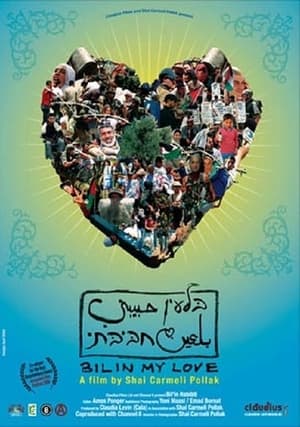
The Israeli filmmaker Shai Corneli Polak records the building of the 'security wall' through Palestinian territory at the village of Bil'in. The villagers protest mostly peacefully, while the Israeli army doesn't react peacefully. By now the Israeli High Court has ruled that the building of the wall was illegal.