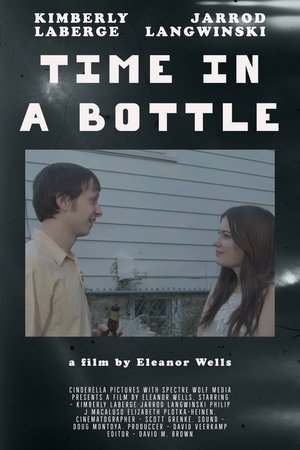
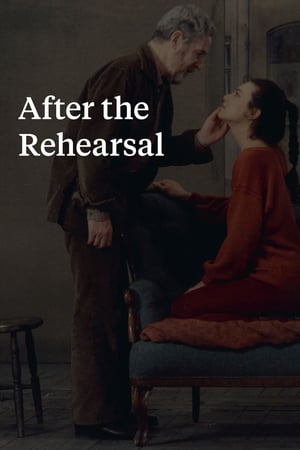
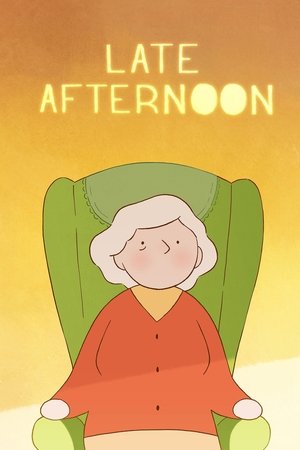
In the empty corridors of her abandoned Catholic school, a woman must confront the grief of a first love lost too soon, face the truth she has long avoided, and finally learn to forgive herself.
Paris, when a young artist discovers a mysterious drowned woman, his obsession to immortalize her in a portrait threatens his sanity. Decades later, the photograph resurfaces, consuming a young journalist whose pursuit of the truth blurs the line between memory, myth, and madness.
Quando abandonamos a humanidade, o que resta de nós?
On Halloween 1997, two estranged teen skaters embark on a surreal journey through their memories, dreams and fears.
When Andres and Natalia met by accident, she wasn't impressed. In time they gravitated toward each other. But Paulo, a troubling figure from Natalia's past felt otherwise.
The impressionistic story of a Texas family in the 1950s. The film follows the life journey of the eldest son, Jack, through the innocence of childhood to his disillusioned adult years as he tries to reconcile a complicated relationship with his father. Jack finds himself a lost soul in the modern world, seeking answers to the origins and meaning of life while questioning the existence of faith.
An impressionistic look at Irish emigrants in London, representing the emigrant's journey, a confusion of anticipation, memories and experience.
A man cannot escape his memories of the previous night and the woman who filled it.
After returning home from the Vietnam War, veteran Jacob Singer struggles to maintain his sanity. Plagued by hallucinations and flashbacks, Singer rapidly falls apart as the world and people around him morph and twist into disturbing images. His girlfriend, Jezzie, and ex-wife, Sarah, try to help, but to little avail. Even Singer's chiropractor friend, Louis, fails to reach him as he descends into madness.
Russian poet Andrei Gorchakov journeys through Italy with his interpreter Eugenia to research the life of an 18th-century Russian composer who once lived abroad. Isolated and consumed by an unrelenting longing for his homeland, Andrei becomes drawn to Domenico, a radical mystic obsessed with spiritual redemption. Through austere imagery and extended temporal rhythms, Tarkovsky examines exile, memory, and the profound melancholy of being unable to belong fully to either place or language.
On November 13, 2015, the attacks in Paris and Saint-Denis, carried out by three Islamist commandos and claimed by ISIS, were the deadliest in France since the end of World War II. In the months that followed, the November 13 Program was launched by the CNRS and Inserm to study the construction of individual and collective memory around an event that profoundly marked French society. Today, the testimonies of 27 volunteers—among some 1,000 people—who participated in the study form a mosaic of experiences that shows how trauma extends beyond the immediate circle to permeate the national collective memory.
Procissão de Memórias
An abstract exploration of memory and loss.
The phenomenon that occurs in a room full of objects from the past allows Ulises to temporarily recover his memory.
A former Prohibition-era Jewish gangster returns to the Lower East Side of Manhattan over thirty years later, where he once again must confront the ghosts and regrets of his old life.
Leo undergoes a modern form of therapy that allows patients to visually recall their memories in order to overcome underlying trauma. As his therapist guides him through forgotten moments from his past, Leo begins to question whether the process can be trusted.
Quem trocou as memórias de lugar
A man becomes involved in a memory manipulation operation to try and regain lost memories. He thinks the exercise may help repair his failed marriage, but accidentally ends up with the mind of a serial killer.
Melvin, a teenager, returns to his past in an attempt to remember who he truly was after feeling he left himself behind. He confronts his teenage and childhood selves to reflect on the pains and changes of growing up, realizing that "growing up means losing and leaving behind versions of ourselves." A nostalgic and reflective journey about time, childhood, and accepting the constantly changing self.
When reporter Jean Craddock interviews Bad Blake—an alcoholic, seen-better-days country music legend—they connect, and the hard-living crooner sees a possible saving grace in a life with Jean and her young son.