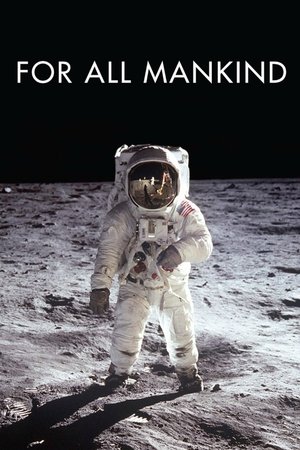
A testament to NASA's Apollo program of the 1960s and '70s. Composed of actual NASA footage of the missions and astronaut interviews, the documentary offers the viewpoint of the individuals who braved the remarkable journey to the moon and back.
Using original footage and interviews, this documentary tells the nail-biting story of Apollo 13 and the struggle to bring its astronauts safely home.
Nearly forty years after the moon landing the men on the mission reveal what really happened. On how close the mission came to disaster.
For 18-year-old Finnish–Kosovan Fatu, a simple visit to the grocery store feels as nerve-racking as a lunar expedition: for the first time in his life, he’s wearing makeup in public. Luckily his best friend Rai, a young woman on the spectrum of autism, is there to ferociously support him through the voyage.
Secrets of the Moon: Sous la Lumière de la Lune
A look at the Apollo 11 mission to land on the moon led by commander Neil Armstrong and pilot Buzz Aldrin.
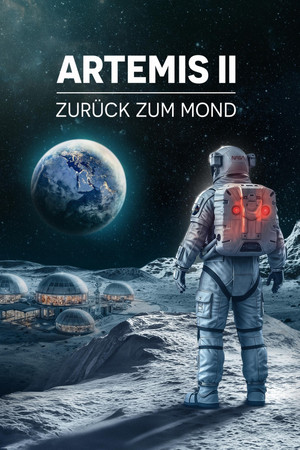
For the first time since the legendary Apollo missions, humans are once again setting out for the Moon. NASA’s Artemis II mission marks the beginning of a new era in space exploration, with Germany playing a key role. The documentary follows the four astronauts during their preparations and offers exclusive insights into the Orion spacecraft. German astronauts Alexander Gerst and Matthias Maurer, together with other spaceflight experts, explain how the mission works and why it is being carried out. A journey between science and adventure — and a search for answers to the question: Why do humans risk their lives to reach other worlds?
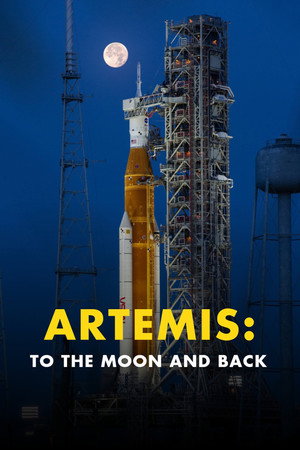
### Because of technical problems, the original broadcast date, intended as a companion program to the current mission, was postponed until at least March 2026. ### NASA’s Artemis II will mark the first crewed Moon mission since Apollo 17, set for early 2026. Four astronauts—Reid Wiseman, Victor J. Glover, Jeremy Hansen, and Christina Hammock Koch—will embark on a ten-day journey beyond Earth orbit, circling the Moon before returning home, reaching farther into space than humans have in over 50 years. Using the Space Launch System and Orion capsule, the mission tests every system for future lunar landings and a lasting human presence. This documentary provides exclusive, behind-the-scenes access—from astronaut training in Texas to rocket assembly in Florida—revealing the people, technology, and challenges behind this historic endeavor. Artemis II is a first step toward Artemis III and humanity’s next frontier: Mars.
On July 16, 1969, hundreds of thousands of spectators and an army of reporters gathered at Cape Kennedy to witness one of the great spectacles of the century: the launch of Apollo 11. Over the next few days, the world watched on with wonder and rapture as humankind prepared for its "one giant leap" onto the moon--and into history. Witness this incredible day, presented through stunning, remastered footage and interviews that takes you behind-the-scenes and inside the spacecraft, Mission Control, and the homes of the astronaut's families.
With only three weeks left in his three-year contract, Sam Bell is eager to return to Earth. Stationed alone at a Moon-based facility with his computer assistant GERTY, an unexpected accident sets off a series of unsettling events that shake his isolation.
The true story of technical troubles that scuttle the Apollo 13 lunar mission in 1970, risking the lives of astronaut Jim Lovell and his crew, with the failed journey turning into a thrilling saga of heroism. Drifting more than 200,000 miles from Earth, the astronauts work furiously with the ground crew to avert tragedy.
Soviet cinematographers created a progressively realistic image of a journey to the moon in these early days of special effects. Scientist Pavel Sedikh grows impatient with the restrictions of the conservative Soviet space institute in Moscow. Sedikh builds his own spacecraft, and accompanied by a female astronaut and a boy, he embarks on a the first human trip to the moon.
In preparation for the moon landing in 1969, NASA sent a team of astronauts to the lunar landscapes of Iceland. Their hi-tech training mission soon discovers what obstacles one can meet when facing an Icelandic sheep farmer.
An allegorical documentary about the workers of the world, whose common destinies and hopes for peace are symbolically united by the rivers that run through their respective lands. The film was shot on the Volga, the Mississippi, the Nile, the Yangtze, the Amazon and the Ganges and combines these images of five continents with the music of Dmitri Shostakovich and the poetry of both Bertolt Brecht and Paul Robeson.
Compilation of images by cameraman William Gericke (credited as producer and cinematographer), who for 50 years traveled around Brazil and recorded some rare images of the country's history in the 20th century.
This documentary by director Claire Billet and historian Christophe Lafaye details the massive and systematic use of chemical weapons during the Algerian War. Algerian fighters and civilians, sheltering in caves, were gassed by "special weapons sections" of the French army. The gas identified on military documents is CN2D, whose widespread use forced insurgents to flee "treated" sites, at the risk of dying there. The method is reminiscent of the "enfumades" used by the French expeditionary force during the conquest of Algeria in the 19th century. Between 8,000 and 10,000 such operations are believed to have taken place on Algerian soil between 1956 and 1962. This historical aspect is little known due to the difficulty of accessing archives, many of which are still classified, raising questions about memory, historical truth, and justice.
Filmed in Cordoba, Granada, Seville, and Toledo, this documentary retraces the 800-year period in medieval Spain when Muslims, Christians, and Jews forged a common cultural identity that frequently transcended their religious differences, revealing what made this rare and fruitful collaboration possible, and what ultimately tore it apart.
Whales have long been a profound mystery to us. They live in a world so removed from our own that we can barely imagine their lives. Their environment is different, their senses are different, their relationships are different. How might such almost alien creatures see the world?
The departure point for this film is a series of notebooks created during the Greek civil war of 1946-49 and first discovered years later, under an olive tree. Inside their pages, diary-like, deported women recount their experiences in Greek concentration camps. Many of them were active in the resistance under Nazi occupation. Actress Olympia Dukakis, who serves as the film’s narrator, was also the individual who originally called director Toska’s attention to the unique documents.
From the Barents Sea, a chill wind seems to blow constantly across a semi-deserted town at the edge of the world. Nevertheless, a little community holds out here. In a flawlessly filmed portrait of this extraordinary place, the theme linking the residents is their determination to chart their own course. Bardak was a marine, but his garrison broke up and his comrades sought a better life elsewhere. He stayed behind among the many empty buildings that are slowly but surely being consumed by the elements. Meanwhile, Dima, a young poacher, flouts as many rules as he can, but gives friendly directions to lost tourists and reads lovingly to his little daughter. Ferryman Alexander is locked in a silent generational battle with his teenage daughter Masha; her eyes are on the outside world. Further along, a little team of ships from the Second World War turns up, and a woman steadfastly runs a weather station.