Las Vegas: Climb On! Series - Volume III
Released on July 9th, 1917. Produced by Burton Holmes.
After arriving at his new, remote Army outpost, Capt. John Boyd and his regiment aid a wounded frontiersman who recounts a horrifying tale of a wagon train murdered by its supposed guide – a vicious U.S. Army colonel gone rogue. Fearing the worst, the regiment heads out into the wilderness to verify the gruesome claims.
The terrifying story of a group of former college classmates who get lost driving to a college reunion camp out in the Sierra Nevada mountains. After stopping for the night, they stumble onto something much darker. They must battle to escape the evil they unleashed to not only save their own lives but their souls as well.
After a group of convicts escapes from prison, they take refuge in the wilderness. While most of the crew are ruthless sociopaths, Jim Canfield is an innocent man who was jailed under false pretenses. When Canfield and his fellow fugitives reach an isolated farming settlement where the men are all away, it creates tension with the local women. Things get direr when rumors of hidden money arise, and Canfield discovers that the man who framed him is part of the community.
Jean Loring has her men illegally killing and selling game. Roy suspects her and gets himself invited to stay at her ranch. Investigating he finds the freezer where the slaughtered game are kept. But he is caught, tied up, and left to freeze.
Based on a true story, this tells the story of a young woman who is the only survivor of a plane crash in the Sierra Nevada mountains, and her struggle to get to safety despite her injuries, below-freezing temperatures and rough, and at times impassable, terrain.
Al is a young drag king dealing with his transgender identity daily. He tries to express it through his shows and share with us his story, feeling and thoughts about it.
It is a documentary about the memory of the transition to democracy in Spain built from certain pro ductions of militant cinema that contradict the official images that have formed our memory of the last years of Francoism and of the first years of democracy. "From the responsibility of memory", in the wards of Primo Levi, María Ruido deals with the construction of the historic memory of the Spanish state, but her approach it's not based on the recorded testimonies, but in the verification of the lack of images of certain events and problems.
Plan Rosebud 1 is focused on the recent social debate around "The Historical Memory Act" in Spain, and the current relations between the sites of memory and the politics of memory that are produced through cultural industries. They are studied in details, in our case, through war tourism and commemorative tourism.In Plan Rosebud 1 we visit Museums and Commemorative Historical War Sites and these materials form the main part of Plan Rosebud 1. This study, is not only limited to the Spain, and especially to the Spanish province of Galicia, but it is presented as a comparative study with war and commemorative tourism site in Great Britain and Normandy as the European memory policy site of the WWII.
Pemberton Forest, a karri forest in the southwest region of Western Australia, is the site of a youth camp for school children. In this film, forest officers explain various aspects of forestry and associated industries to the children.
Plan Rosebud 2 focuses on the Spanish Transition, the period that took place after the end of Franco's rule, placing it in its cultural context, as well as on the final years of the Labour Party's rule in Great Britain during the seventies and the rise of the conservative leader Margaret Thatcher. Through analysis of social movements and popular culture, the film attempts to dismantle the idea that a pact among the Spanish ruling elite, led by Adolfo Suárez and King Juan Carlos, "saved" Spain from a new civil war and paved the way for a "peaceful" transition to a democratic regime.
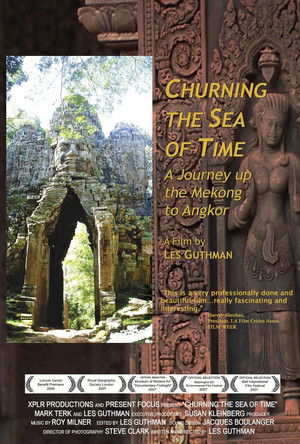
One of the mythic journeys of our time, through the exquisite, complicated, surprising terrain of Vietnam and Cambodia to the great ruins at Angkor - the magnificent Khmer temples being painstakingly restored deep in the Cambodian jungle. It is a high definition odyssey up a river far distanced in time from the corridor into the heart of darkness portrayed in Francis Coppola's "Apocalypse Now." In Angkor, the World Monuments Fund's John Stubbs and John Sanday describe their 15-year restoration of one of the jewels of a city called "the eighth wonder of the world." As we go inside the 12th Century temple complex of Preah Khan, along with the other major sites of Angkor Wat, Bayon and Banteay Srei, we learn that the story of their work in Angkor is not only a story of the rebirth of Angkor after the horrors of the Khmer Rouge Era, but it also is a story of the rebirth of Cambodia.
In a dense interrelation between intimate diary, cinema essay and anthropologic film, this film connects past and present, European policies for the management of migration flows to the history of the last colonialism campaign in Northern Africa, setting its point of view with an urgency that is opposed to any emergency rhetoric. Written words, voices, images are saved from the waters of oblivion, and linked together building a story that is incredibly short and, at the same time, tragically deep.
A historical look at the politics, people and process behind the original construction of the iconic span, featuring the untold stories of engineers, iron workers, divers, and the political players who brought the dream to reality
The visual essay presented here, which has been produced in Morocco, offer a interdisciplinary reflection on the role that the system of visuality acquires within colonial and neo-colonial proces ses, which are understood to mean not only forms of political and economic exploitation but also a ceaseless abyssal thinking that dorninates the global system.
This work in nine pieces is a portic experiment on intimacy, in which we play with n impossible space to explore the 'inner places of two characters without identity, who relate, me and act in an ambiguous way, creating a kinu of theatrical dance that can drown you.
The Flicker World Tour was the second concert tour by Irish singer Niall Horan, in support of his debut album Flicker (2017). The show was streamed from AFAS Live, Amsterdam, Netherlands on April 28, 2018.
Camın Teri
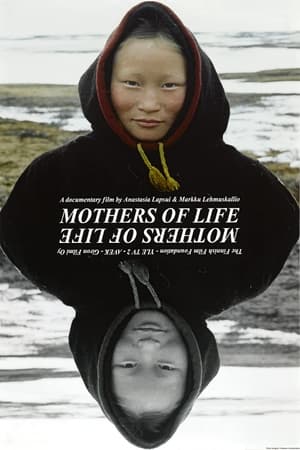
A documentary on the experiences of the Nubetya Yaptiks nomadic family in the Yamal Peninsula, Eastern Siberia, from 1992 to 2001.