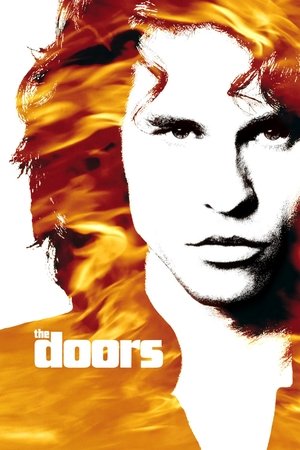
The story of the famous and influential 1960s rock band and its lead singer and composer, Jim Morrison.
Based on a Belarussian folk song, movie tells a story of a poor peasant who goes to serve the landlord and is not successful in it.
CGI collage short film originally premiered as part of the 'Extinction Renaissance' exhibition at the Loyal Gallery in Stockholm.
“After So Long // बरसों बाद” is a visual poetry set in Mumbai (India) and voiced by Simha and their parents to symbolise their connection with each other; a walkabout through time and memories. Directed by Varsha Panikar, the film takes inspiration from vintage-home-movie culture to create a contemplative and nostalgic vignette of an artist’s spiritual journey out of the darkness and into the light.
Hum lives in a refugee camp near Hamburg. He loves films and finances his visits to the cinema by selling lost properties from cinema visits in the refugee camp. One day he meets Anna and her friend Ida. At a dinner together in the shared flat of the two, they find out that they all share a love of music. Anna and Ida can sing great together and Hum shares the contact with his friends who play in a band. A timid and touching love story develops between Hum and Anna. Both are looking forward to the first performance of the band, in which Anna now sings. But shortly before the performance, Hum is to be deported. Neither his love for Anna and music nor his imagination can save him from the everyday life of a refugee.
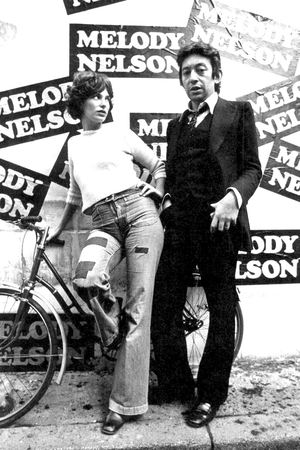
Although Gainsbourg and Birkin had appeared in a string of films since their magnetic collision in Pierre Grimblat’s Slogan, Melody was a bit of diversion from their collaborations since it’s a series of interwoven videos inspired by the Gainsbourgalbum. For '71 it’s a novel concept to bring visual life to an LP, but even more surprising are the short film’s amazing visuals that director Averty crafted using a wealth of video filters, overlays, camera movements and chroma key effects. Averty applies these in tandem with the increasing tone of Gainsbourg’s songs, which more or less chronicle an older man's affair with a young girl. Each song is comprised of steady, sometimes brooding poetic delivery, with refrains timed to the phrase repeats of each song, while Alan Parker’s buzzing guitar accompanies and wiggles around Gainsbourg’s resonant voice. The bass is fat and groovy, the drums easy but steady, and the periodic use of strings or rich vibrato makes this short a sultry little gem.
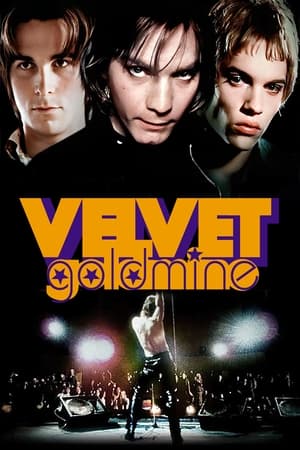
Almost a decade since larger-than-life glam-rock enigma Brian Slade disappeared from public eye, an investigative journalist is on assignment to uncover the truth behind his former idol.
This film was made out of the capture of a live animation performance presented in Rome in January 2005 by Pierre Hébert and the musician Bob Ostertag. It is based on live action shooting done that same afternoon on the Campo dei Fiori where the philosopher Giordano Bruno was burned by the Inquisition in 1600. A commemorative statue was erected in the 19th century, that somberly dominate the market held everyday on the piazza. The film is about the resurgence of the past in this place where normal daily activities go on imperturbably. The capture of the performance was reworked, shortened and complemented with more studio performances.
Over the course of a hot summer day in Los Angeles, the lives of 25 young Angelinos intersect. A skating guitarist, a tagger, two wannabe rappers, an exasperated fast-food worker, a limo driver—they all weave in and out of each other's stories. Through poetry they express life, love, heartache, family, home, and fear. One of them just wants to find someplace that still serves good cheeseburgers.
The plot begins with them and ends with humanity. This author wanted to show continuity: the first love and the supposed last is an indivisible whole of one eternal Love.
Starring Vehicle for Free Kitten. Kim Gordon, Julie Cafritz, & Mark Ibold lounge on suburban lawns, jamming a guitar effects box & Japanese beat boxes. Thurston reads lyrics off Public Service (early 80's L.A. hardcore compilation), and Saccharine Trust's "Pagan Icons". Mark, in English accent, reads bio penned by Byron Coley.
Childhood sweethearts from opposing social standings are separated when one's family moves elsewhere, leaving behind only a watch as a token of their friendship. Years later, as adults, they strive to meet again.
"Time" takes you through the city at night, capturing fleeting moments. With dynamic visuals and an atmospheric soundtrack, this short film explores the nature of existence and memory. Narrated by David Bowie, it invites you to reflect on the passage of time.
The Patti Smith Group's Rockpalast performance in 1979 was a live concert broadcast as part of the German Rockpalast series. The band at that time included Patti Smith, Lenny Kaye, Ivan Kral, Jay Dee Daugherty, and Richard Sohl. This performance is notable as it captured the band during a period of their career following the release of their album "Easter" in 1978.
Amiran is sold to a brothel by a corrupt cop after her father testifies against him. Many years later, she grows up to be an accomplished poetess and a renowned courtesan, Umrao Jaan.
A young woman goes on a cathartic journey through memory and imagination inspired by the performers at an open mic.
In his book "1984", George Orwell saw the television of the future as a control instrument in the hands of Big Brother. Right at the start of the much-anticipated Orwellian year, Paik and Co. were keen to demonstrate satellite TV's ability to serve positive ends-- Namely, the intercontinental exchange of culture, combining both highbrow and entertainment elements. A live broadcast shared between WNET TV in New York and the Centre Pompidou in Paris, linked up with broadcasters in Germany and South Korea, reached a worldwide audience of over 10 or even 25 million (including the later repeat transmissions).
Based loosely on a true story. Grieving his father, Mark is determined to power on and build his future, transforming his pain into song. In Loving Memory of Andrew Chappell.
This series comprised six lectures on music, which cumulatively took the title of a work by Charles Ives, The Unanswered Question. Bernstein drew analogies to other disciplines, such as poetry, aesthetics, and especially linguistics, hoping to make these lectures accessible to an audience with limited or no musical experience, while maintaining an intelligent level of discourse:Semantics is the study of meaning in language, and Bernstein's third lecture, "musical semantics", accordingly, is Bernstein's first attempt to explain meaning in music. Although Bernstein defines musical semantics as "meaning, both musical and extramusical" this lecture focuses exclusively on the "musical" version of meaning.
In a city inhabited by drawn beings, an indigenous boy witnesses a holographic appearance. It is the arrival of an entity of unknown materiality. With a mysterious presence and exotic allegories, it starts to enchant the residents, awakening their most insane senses.