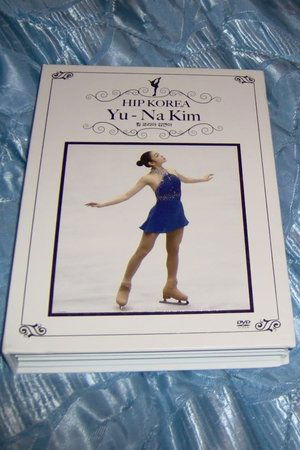
STEP INTO THE RINK WITH YU-NA KIM AS SHE AIMS TO MAKE HISTORY AS ONE OF THE WORLD'S GREATEST FIGURE SKATERS
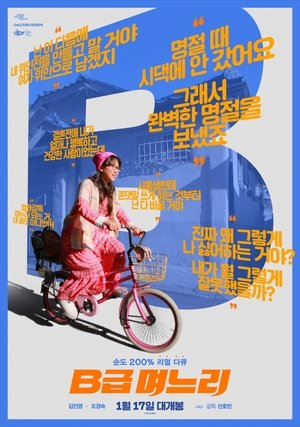
In our 3-year marriage, we have fought on every holiday, on parents' birthdays, during ancestral rituals, and even on Christmas. We argue all the time. The tension between my wife and my mother is killing me.
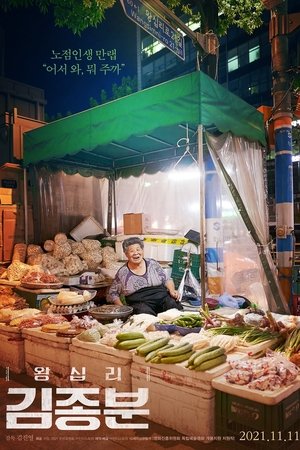
The life of Kim Jong-boon, who has been a peddler in Wangshimni for 50 years, is admirable. At the age of 83, she no longer has to earn a living at her street stall, but she keeps working because she still has customers.
A special documentary produced for the 30th anniversary of the Seoul Olympics, 88/18 looks back at South Korea in the 1980s as the nation raced toward the Games. Through archival footage and reflection, the film examines how the 1988 Seoul Olympics brought profound changes that extended far beyond sport, reshaping Korean society itself.
I, a lesbian filmmaker, encounter people yelling at me to disappear from this world. It is a time of hatred in South Korea. LGBTQ people are the easy targets for hatred. In searching for what makes a marginalized life livable, I embark upon a journey. I encounter a double life of Lee Muk, a 70-year-old Korean “Mr. Pants” and precarious lives of a Japanese lesbian couple, Ten and Non, after 3/11. As an ever-growing number of citizens are becoming the targets of 'witch-hunting' in Korea, true faces of the haters slowly begin to unfold.
My parents were real estate developers and dealers in the 1980s. They achieved the ‘middle class dream’ thanks to the development boom. However, the Asian financial crisis swept everything away.
I made June when I didn’t have any inspiration to create a feature film. The documentary is about the rarely known stories in the social movement in June. At first the clips of videos were kept for sorting out my feelings, but after being edited, they were made into a documentary and became a record of history. Six scenes and voices were used to tell what happened during that month.
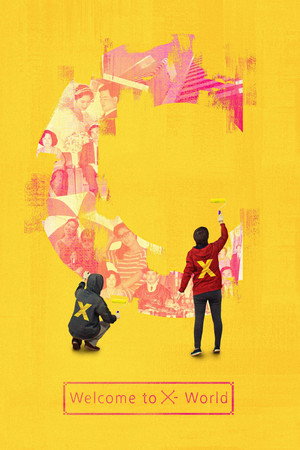
Three people live in Doosan Apartment in Guro-dong. Me, mom, and my grandfather. Even though it has been 12 years since dad died, we are still living under the same roof. I thought it was because of the financial situation that we could not move out of grandfather’s house. But when I found out that mom already had enough money to get a house, I became confused. Why didn’t mom move out from the “x-world” when she could? From a marriage that didn’t work out well, to a father-in-law with a temper. Why has she been enduring it, unchanging, for all the time I had witnessed her life to become a woman against marriage? One day when my anxiousness was at its peak, grandfather suggested that we live separately. Mom, reluctant to leave Guro-dong that she’d been living in for 20 years and her marriage life, will she be able to find herself and move out well?
Maboul de Séoul
A documentary covering the 1988 Summer Olympic Games in Seoul.
South Korean cinema is in the throes of a creative explosion where mavericks are encouraged and masters are venerated. But from where has this phenomenon emerged? What is the culture that has yielded this range of filmmakers? With The Nine Lives of Korean Cinema, French critic, writer and documentarian Hubert Niogret provides a broad overview but, nevertheless, an excellent entry point into this unique type of national cinema that still remains a mystery for many people. The product of a troubled social and political history, Korean cinema sports an identity that is unique in much modern film. Niogret's documentary tells of the country's cinematic history - the ups along with the downs - and gives further voice to the artists striving to express their concerns, fears and aspirations.
Kim Dae-jung's Days
Over 98 days from August 20th to November 25th 2013, 2821 people from around the world sent 11,852 video featuring many different faces of Seoul. 154 were selected, edited, and made into a movie.
An investigative reporter seeks to expose the whereabouts of a slush fund belonging to the former president of South Korea, Lee Myung-bak.
On December 3, 2024, in Seoul, the President of South Korea Yoon Sukyeol declares the martial law. Troops move toward the National Assembly to seize control. Meanwhile, citizens rush to the National Assembly to block the troops, while lawmakers break through police's barricades at the main gate, climb over the walls to attend the session that lifts the martial law.
Project 1 _ Hong Hyung-sook The children who are enthusiastically painting and cutting a doll. What stories will be told at the Square? - Project 10 _ Kim Jeong-geun The janitorial worker from the Busan Subway Station, Kim Young-ja talks about how she hopes to see a clean world, just like how she cleans everywhere in the subway.
BIASes follows BIAS NYC, a party that uniquely fuses K-pop & underground club music while spotlighting queer & trans culture, as they prepare to make their debut in Seoul. Co-founders Sammy & Julian have poured everything into creating the inclusive community they've always yearned for, but will it embrace them back?
A story about 4 gay men who try to lead a normal life in Korea, the conservative and harsh country for LGBT in Asia. In the middle of making a queer film Jun-moon, a director, loses his self-confidence due to social scrutiny regarding his sexual orientation. Byung-gwon, a gay rights activist, has been participating in movements to establish equal rights for homosexual laborers. Young-soo, a chef who moved from the countryside 15 years ago, lived a lonely life but he finds happiness after joining a gay choir. Yol, who works for a major company, dreams of the day him and his partner, can have a legal wedding with overcoming the prejudice against people living with HIV/AIDS.
BTS is back. The iconic group returns to the stage for a live reunion concert to perform legendary hits and unveil brand-new tracks.
Cheonggyecheon is a small industrial area in the city of Seoul where small metal workshops are located. Cheonggyecheon had played a key role in the industrialization of South Korea from the remnants of colonialism and war. Following the liberation of the country from Japanese rule in 1945, many industrial complexes became abandoned, resulting in a flood of scavenged machine parts on the market.. In the 1960s, Vietnam War veterans brought many machines into Cheonggyecheon, initiating small-scale production and what’s now considered “copy” production unique to the economies of developing nations. In the past five years, the business on Cheonggyecheon has declined as the surrounding neighborhood is in the process of renovation and gentrification, as part of a beautification initiative by the Seoul Metropolitan Government.