Marion Ravinel is trapped in an abusive spousal relationship. She forms a plan with her husband's former lover to kill him. However, the outcome turns out to be more than she planned on as she begins to believe that her husband has come back from the dead to get her.
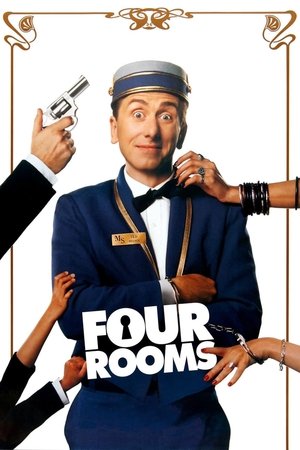
It's Ted the Bellhop's first night on the job...and the hotel's very unusual guests are about to place him in some outrageous predicaments. It seems that this evening's room service is serving up one unbelievable happening after another.
Martina lives in the Rome's zoo, because her father is the guardian. She becomes friend with a young Slavic escaped from a gypsy camp. When the police arrives searching for the kid, they run away riding an elephant!
The film follows the story of Jamie, a struggling butch lesbian actress who gets cast as a man in a film. The main plot is a romantic comedy between Jamie's male alter-ego, "Male Jamie," and Jill, a heterosexual woman on set. The film's subplots include Jamie's bisexual roommate Lola and her cat actor Howard, Lola's abrasive butch German girlfriend Andi, and Jamie's gay Asian friend David.
The '40s and '50s were a classic period in New York City nightlife, when the saloonkeeper was king and regular folks could drink with celebrities like Frank Sinatra and Jackie Gleason. In this documentary, Kristi Jacobson profiles her grandfather, the king of kings: Toots Shor of the eponymous restaurant and saloon, which was once the place to be seen in Manhattan. Edward R. Murrow called Toots Shor the owner of America’s greatest saloon. He became the unlikely den-mother to the heroes of America's golden age. Politicians and gangsters, sports heroes and movie stars - Sinatra, Gleason, DiMaggio, Ruth, Costello, Eisenhower, Nixon, Warren - for 30 years, they all found their way to Toots' eponymous saloon on New York's West 51st Street.
After discovering that her son faked his report cards, a single mother uses a device to grant her utter control over his life -- but at a great cost.
Follows three young millennials as they form a wholehearted ménage à trois, each of them going through a moment of transition: Fun-loving Marcello from under the thumb of his Italian soap star father, soulful French-Iranian actor Nassim toward a more fulfilling career, and artist Christine through the grief following the death of her grandfather. The trio finds joy together by joining political protests, making art, and falling deeper into their unconventional love, until Marcello must return to Italy.
Jimmy Muir comes from a typical gritty, northern town where there are only two options: working down the pit or in a factory. But Jimmy has other ideas — he dreams of becoming a professional footballer. Confronted by a bitter and unsupportive father, hard-drinking friends and a lifetime of bad habits...has Jimmy the will to achieve his ultimate goal?
"Plastic Paradise" is an independent documentary film that chronicles Angela Sun's personal journey of discovery to one of the most remote places on Earth, Midway Atoll, to uncover the truth behind the mystery of the Great Pacific Garbage Patch. Along the way she encounters scientists, celebrities, legislators and activists who shed light on what our society's vast consumption of disposable plastic is doing to our oceans -- and what it may be doing to our health.
A very skilful young architect from Berlin, Lea Winter, who has a promising career, is pregnant with Klaus Arnheim, her head of department, a long-time lover but married and father of a family. At the announcement of this unexpected pregnancy, of course, he only envisages abortion for Lea. However, the young woman hesitates. On the advice of her gynecologist, she decides to leave Ireland for a few days to think and make a decision without any pressure. She finds there a simple, authentic life and is confronted with another rhythm of life, with other values and with herself.
After a disfiguring leg injury, a young woman develops an unsettling secret relationship with her own body in which pain is pleasure, mutilation is love and hungers of the flesh have a mind of their own.
Marie, who works as a successful door-to-door encyclopedia salesperson, has been married to her husband Francois for 12 years and has a two-year-old son. Though she is relatively content with her life, she feels something is wanting. Enter 50-year old African-American Bill. Initially she is annoyed by his insouciance, but she finds that she is irresistibly attracted to him. Soon the two are in the midst of sordid illicit affair. She knows little about her new lover, and he seems uninterested in learning about her, but the long sessions of lovemaking are something else entirely. Feeling out of control, Marie is increasingly repelled by her own actions. Psychologically, she struggles to reconcile her torrid encounters with Bill and mundane domestic chores such as bathing her son. Moreover, she finds herself incapable of hiding her adulterous behavior, rather she comes home with scratches and hickeys all over her body, to the devastation of Francois.
On her birthday, Juliette is too upset to worry about the strange cleaner who imitates her every move and lusts after her clothing.
Anna is persuaded by her boyfriend Paul to move from Berlin to his home town of Imma. What the notorious soccer hater doesn't know, however, is that joining his best friend Steffen's law firm is just a pretext. In reality, Paul and his buddies are there to save the soccer club he co-founded, Eintracht Imma 95, from relegation. Anna soon realizes that the players' wives have nothing to say to their soccer junkies: Artificial turf in the bedroom, Effenberg bedding and weekends on the soccer pitch. When she finds out the real reason for the move, she mobilizes her fellow sufferers to counter-attack after a fierce bout of frustration and challenges Paul and his friends to the ultimate duel on the soccer pitch. The bet is on: women against men. If the women win, soccer is over - and Paul has to go back to Berlin with Anna. Forever. If the men win, there will be no more complaining.
Or shoulders a lot: she's 17 or 18, a student, works evenings at a restaurant, recycles cans and bottles for cash, and tries to keep her mother Ruthie from returning to streetwalking in Tel Aviv. Ruthie calls Or "my treasure," but Ruthie is a burden. She's just out of hospital, weak, and Or has found her a job as a house cleaner. The call of the quick money on the street is tough for Ruthie to ignore. Or's emotions roil further when the mother of the youth she's in love with comes to the flat to warn her off. With love fading and Ruthie perhaps beyond help, Or's choices narrow.
Fiona and Grant have been married for nearly 50 years. They have to face the fact that Fiona’s absent-mindedness is a symptom of Alzheimer’s disease. She must go to a specialized nursing home, where she slowly forgets Grant and turns her affection to Aubrey, another patient in the home.
Father and son 'minutemen' patrol the American/Mexican border near their home in Nogales, Arizona.
In 1561, Mary Stuart, widow of the King of France, returns to Scotland, reclaims her rightful throne and menaces the future of Queen Elizabeth I as ruler of England, because she has a legitimate claim to the English throne. Betrayals, rebellions, conspiracies and their own life choices imperil both Queens. They experience the bitter cost of power, until their tragic fate is finally fulfilled.
Eleven directors from eleven countries each contribute an eleven-minute short reflecting on the events of 11 September 2001: A village teacher in Iran tries to explain to her young students what's happened; city kids in Burkina Faso think they've spotted Osama bin Laden; a deaf Frenchwoman in Manhattan writes a Dear John letter to a man who left that morning for work at the World Trade Center; a Chilean remembers Allende; events recall other deaths; a mother endures more than her son's death. Tones vary, as do the locales. Most concern coming to terms with the events of the day, but at least one confronts the viewer with tragedy and death.
Louise, who has just written a novel, comes to Paris to meet with a potential publisher. While in the city, she stays with her older sister, Martine, who in many ways is the exact opposite of Louise: she lives in a fashionable neighborhood, is cold to others, and has snobby friends, while Louise lives in a small town and is thoroughly unpretentious. Louise's apparent happiness -- and similarities to their mother -- gradually gets on Martine's nerves.