Balifilm was originally commissioned as a stage performance, created from diary images and sounds collected in 1990 and 1992 by Peter Mettler on the island of Bali. The soundtrack is a live recording of eight Gamelan musicians playing the bronze and wooden instruments of Indonesia during the projection of the film. balifilm is a personal, lyrical observation and expression of the creative pulse of an extraordinary culture.
In May of 1982 Julio Cortázar, the Argentinean writer and his companion in life, Carol Dunlop set out in their VW bus on a journey along the highway from Paris to Marseille that, for each of them, was to be their final one. Twenty-five years later, Océane Madelaine and Jocelyn Bonnerave set out to undertake the journey again.
An intimate portrayal of the everyday lives of Carthusian monks of the Grande Chartreuse, high in the French Alps (Chartreuse Mountains). The idea for the film was proposed to the monks in 1984, but the Carthusians said they wanted time to think about it. The Carthusians finally contacted Gröning 16 years later to say they were now willing to permit Gröning to shoot the movie, if he was still interested.
Swiss artist Markus Raetz has a sixth sense for apprehending the extraordinary. His works are as astonishing as a magician's sleight of hand: they shake up visual habits and show things from a completely different perspective. To further surprise the viewer, this perceptive Swiss artist makes use of the most diverse techniques, materials and media. His installations and sculptures change their appearance according to their own movement or that of the viewer contemplating them. For example, a rabbit becomes a man in a hat, evoking Beuys, or a yes turns into a no. This document presents us with a highly personal view of the world and the man behind these exceptional works.
How can structures, which take up defined, rigid portions of space, make us feel transcendence? How can chapels turn into places of introspection? How can walls grant boundless freedom? Driven by intense childhood impressions, director Christoph Schaub visits extraordinary churches, both ancient and futuristic, and discovers works of art that take him up to the skies and all the way down to the bottom of the ocean. With the help of architects Peter Zumthor, Peter Märkli, and Álvaro Siza Vieira, artists James Turrell and Cristina Iglesias, and drummer Sergé “Jojo” Mayer, he tries to make sense of the world and decipher our spiritual experiences using the seemingly abstract concepts of light, time, rhythm, sound, and shape. The superb cinematography turns this contemplative search into a multi-sensory experience.
The extraordinary destiny of two people. After the Second World War, Lois is an actress in Broadway theatre, television and Hollywood films. Her husband, Edgar Snow, is world famous. A pioneer fascinated by China, he is the first journalist to film and interview Mao Tse-tung. Suspected by the American authorities of Communist sympathies, Ed and Lois are blacklisted. Together with their two small children, they go to Switzerland, mid-way between China and America, where they find a new home. A story of revolution, utopia, disillusionment, and hope.
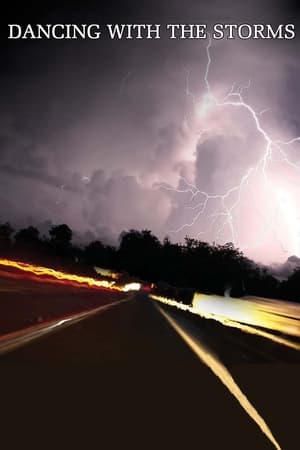
A documentary of an expedition to Churchill, Manitoba to film the Northern Lights.
Women bring children into the world. But when, as in the case of Sandra, Jasmine and Jennifer, you're not yet eighteen and your belly is starting to round out, that's when people look at you sideways. And once the baby's here, life with a child is a far greater challenge than we ever imagined in our rosy teenage dreams. A long-term study of three very young mothers, their children and their fathers. A film about their first great love, their professional futures and their dreams for the future.
Filmmaker Peter Mettler embarks on a mission that takes him around the world. He is determined to record the diverse modes of transcendence that people in different cultures adopt in order to live life to the fullest. As he traverses civilization and wilderness and encounters a range of lifestyles and ideas, the filmmaker's mind-expanding trip around the world grows into a poem of images and sounds, reflecting the fragmented but alluring worlds it attempts to capture.
It is winter at an emergency shelter for the homeless in Lausanne. Every night at the door of this little-known basement facility the same entry ritual takes place, resulting in confrontations which can sometimes turn violent. Those on duty at the shelter have the difficult task of “triaging the poor”: the women and children first, then the men. Although the total capacity at the shelter is 100, only 50 “chosen ones” will be admitted inside and granted a warm meal and a bed. The others know it will be a long night.
Synopsis - For god's sake Isabella and Nando are two militant atheists. They live in Italy, a country where the Church still plays a strong political role. T hey are among the 4000 members of UAAR (Union Atheists Agnostics Rationalists), an association that keenly defends the fundamentals of the secular state, giving trouble even to the Vatican. Among the various actions of the association: the campaign for the de-baptize and the "atheist bus", ads that should have spread the slogan: “The bad news is that God doesn't exist. The good one is that you don't need him”
She was a muse, model and performer – a star, dazzling and intense. Lady Shiva managed to rise from street prostitution to the top. She lived in the fast lane and died tragically young. Her dream was to become a singer. With her companions, we trace her life during a vibrant time that kindles a yearning and provokes until today. The story of a woman’s meteoric fate and a great dream. An irrepressible desire for freedom in all its beauty and destructive force - and a stirring friendship and love.
While managers of Swiss banks in the USA ruefully apologize for their tax evasions practices and customer data is disclosed to the American authorities, Rudolf Elmer, former auditor at bank Julius Bär, is indicted for violating the Swiss banking secrecy law on the Cayman Islands. Rudolf Elmer: from insider to critic.
From August to October 1942, over 2250 Jews were deported from the internment camp of Rivesaltes to Auschwitz by way of Drancy. Among them were 110 children. Friedel Bohny-Reiter, a nurse with the Swiss Aid to Children, worked in this camp in the South of France. Like many others in the formerly unoccupied zone, it was run by the French. Once a military camp, it had been converted in 1941 into a transit camp regrouping Jewish, Gypsy and Spanish people living in the area or who had fled to the free zone as refugees. Thanks to the young nurse from Basel, many children were probably saved from certain death. The film follows the nurse on a visit to that still intact site as well as through the pages of the journal she wrote in those dark days, published by Editions Zoë, Geneva in 1993.
A documentary. David Sieveking takes the advice of his idol, David Lynch and tries out Maharishi Mahesh Yogi's transcendental meditation technique.
The personal stories of the people from all around the world waiting for a decision in an asylum-seekers centre in one of most restrictive countries in the world, Switzerland.
Ultime luci rosse
The incredible story of how the mummified corpse of a 40-year-old man was discovered by a hunter in one of the most remote parts of the country. The dead man's detailed notes reveal that he actually committed suicide through self-imposed starvation only the summer before. Liechti's film is a stunning rapprochement of a fictional text, which itself is based upon a true event: a cinematic manifesto for life, challenged by the main character's radical renunciation of life itself.
Tracing the emigrations of his family over more than half a century, this riveting documentary epic from acclaimed expatriate Iraqi filmmaker Samir pays moving homage to the frustrated democratic dreams of a people successively plagued by the horrors of dictatorship, war and foreign occupation of Iraq.
«Nel giardino dei suoni» («In The Garden of Sounds») is a touching, poetic exploration of the relationship between mind, body and sound, and a cinematic journey to the borders of communication. Nicola Bellucci tells the extraordinary story of Wolfgang Fasser, a blind musician and soundscape artist who works with severely handicapped children, helping them to find their place in a world not made for them. On his own way into the darkness, Fasser discovered the world of sounds, a parallel universe to our visual world. His far-reaching explorations of sound’s effect on mind and body led him to the field of music therapy.