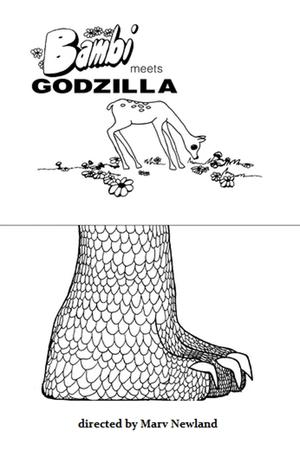
A deer, disillusioned by the consumerism that defines his life. A lizard, ostracized from society, forever wandering. A chance meeting in the middle of a field. Who will survive? And who will transcend existence? Preserved by the Academy Film Archive in 2009.
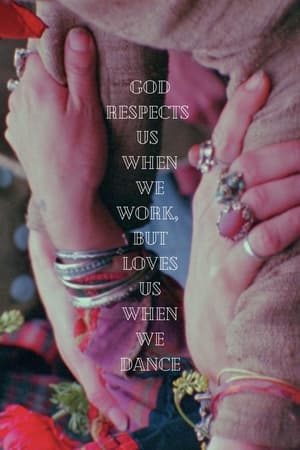
Les Blank's poetic documentation of 1967's Los Angeles Easter Sunday Love-In. Preserved by the Academy Film Archive in 2002.
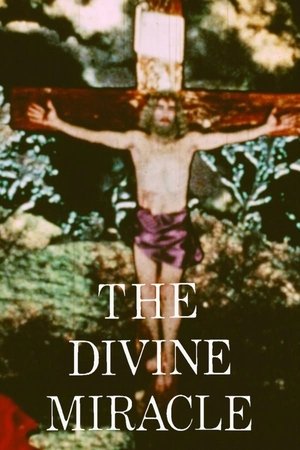
A surrealist translation of Catholic devotional postcard imagery set into unsettling motion. Preserved by the Academy Film Archive in 2008.
Nelson sets minimal, repetitive imagery against a looping recording of his daughter Oona, which goes gradually from sweet to curious to mysterious to cacophonous as the loops overlap each other. Since its premiere alongside The Great Blondino and other shorts in April 1967, the film has rarely been seen. It stands out as a more textural piece from Nelson, which, rather than retreating into pure abstraction or bland trippiness, subtly transmits an undercurrent of its ominous source material. —Mark Toscano. Preserved by the Academy Film Archive in 2010.
Coming in the wake of a whole movement of wild, ecstatic, psychedelic films loaded with unchecked energy and abandon, Throbs demonstrates a remarkable subtlety and restraint, as Fred explores variations in loops and cycles, weaving unlikely combinations of found and original footage to envelop us in a free associative dream world. —Mark Toscano. Preserved by the Academy Film Archive in 2008.
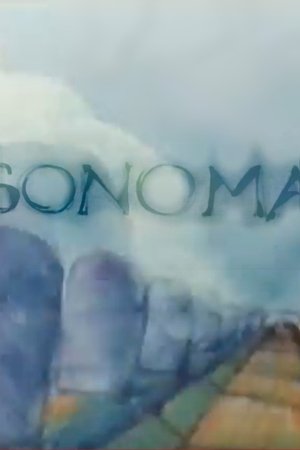
"I relocated to the Redwoods of Sonoma County upon graduation and in that relocation process the animation for Sonoma began. The design was built around the concept of the long wide horizontal 'pan' shot to express the concept of a dynamic landscape that passes across the screen like a traditional Chinese Scroll Painting. The deep personal meaning relates to the 'relocation' that was occurring within my own being after having done 2½ terms of active combat in the jungle as a carrier enlisted with the 82nd Airborne Division of the Army" -D. Pies. Preserved by the Academy Film Archive in 2012.
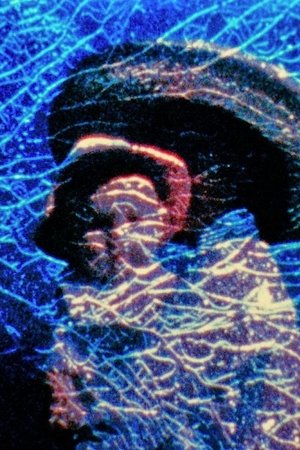
Color UCLA Student Film, Preserved by the Academy Film Archive in 2012. The film melds still photos, Hollywood film, television footage, and speeches with a solarized color overlay to portray Plains Native American life during the period of the United States settler military occupation of the North West. 'Described by the filmmaker as 'an elegy to the lost heritage of the plains Indians,' this is a moving and intricately made work utilizing still photos, film clips, television footage, bits of old speeches, solarized color, and stroboscopic effects.' - Media & Methods.
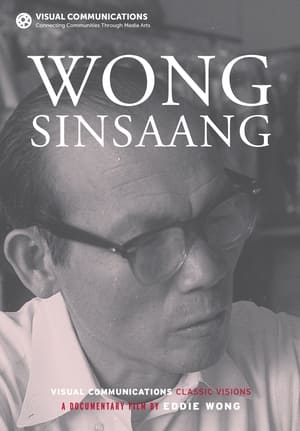
Short film produced by Visual Communications, the United States first Asian American film production company. Preserved by the Academy Film Archive in 2012.
Agitprop short made in West Germany. Preserved by the Academy Film Archive in 2005.
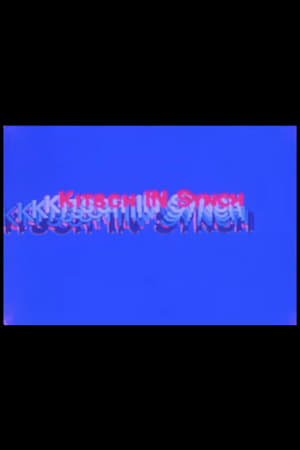
The animation, music, and optical printing of Kitsch in Synch was produced by Beckett and the students in two classes he was teaching at CalArts. Although a group project, it is clear that Beckett was the director. The playful, catchy soundtrack is used to create a cycle of building tension and release. The brightly colored shapes create approximate symmetrical formations and become more densely layered, with glimpses of iconographic objects and even live footage near the end. Preserved by the Academy Film Archive, in partnership with the iotaCenter, in 2007.
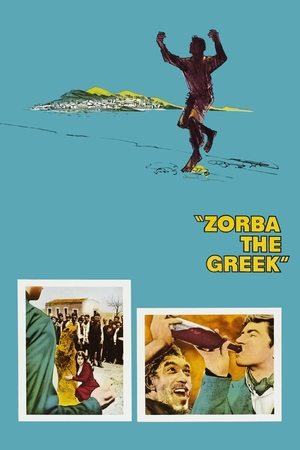
An uptight English writer traveling to Crete on a matter of business finds his life changed forever when he meets the gregarious Alexis Zorba.
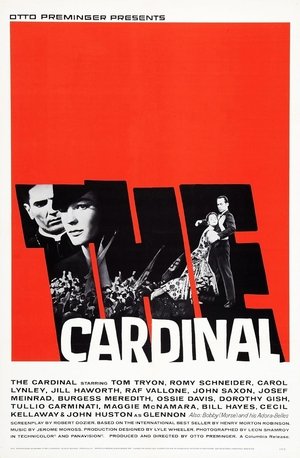
A young Catholic priest from Boston confronts bigotry, Nazism, and his own personal conflicts as he rises to the office of cardinal.
A “found object of paint and mold” given to Brakhage by the poet David Meltzer. According to Jane Brakhage, Stan did nothing to it but see it, splice it, and add titles. (From Barrett and Brabner. Stan Brakhage: A Guide to References and Resources)
A little nachtmusick, a deep blue overture to the series. Breathing in the cool night airs, breathing out a children's song; then whispering a prayer for a night of easeful sleep. Preserved by the Academy Film Archive in 2012.
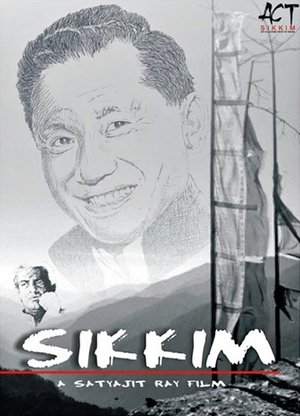
Satyajit Ray's poetic documentary was commissioned by the Chogyal (King) of Sikkim at a time when he felt the sovereignty of Sikkim was under threat from both China and India. Ray's documentary is about the sovereignty of Sikkim. The film was banned by the government of India when Sikkim merged with India in 1975. The ban was finally lifted by the Ministry of External Affairs in September 2010. Preserved by the Academy Film Archive in 2007.
An mutoscope motion picture installation commissioned for the 86th anniversary of the Guggenheim museum. Later preserved and turned into a short film. Preserved by the Academy Film Archive in 2000.
Is it happening in the screening room or on the screen; in a snowstorm or inside; what isn't surrounding and what is? From filming Ann sewing, on a grey winter day. Preserved by the Academy Film Archive in 2016.
Adopting its title from a poem by Edna St. Vincent Millay, What’s Out Tonight Is Lost is an elegiac film sifting through the unrecoverable. The film is a reflecting pool where vision breaks up. Preserved by the Academy Film Archive in 2010.
‘A beautiful, mysterious yet satisfying optical illusion…celebrates the early passing of a steam on the Thames. Using freeze-frame techniques, elaborate dissolves, and most of the resources on the optical table, this picture is, amongst other things, a Turner come to life. Rimmer’s concern with the surface nature of the film is most evident in this work which, in spite of its filmic complexity, is incredibly simple.’ — Donald Richie. Preserved by the Academy Film Archive in partnership with Pacific Cinematheque in 2013.
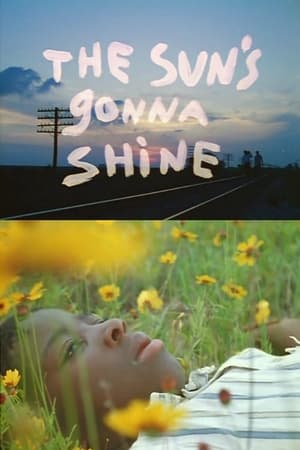
A lyrical recreation of Lightnin’ Hopkins’ decision at age eight to stop chopping cotton and start singing for a living. Preserved by the Academy Film Archive in 2013.