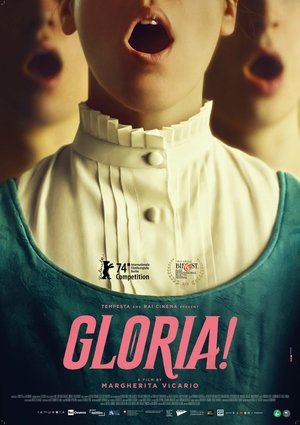
Jenny is young. Her life is over. She killed someone. And she would do it again. When an 80-year-old piano teacher discovers the girl’s secret, her brutality and her dreams, she decides to transform her pupil into the musical wunderkind she once was.
The historic Toscanini television concerts with the NBC Symphony Orchestra. Broadcast #9 was of a concert on March 22, 1952, at Carnegie Hall, featuring Beethoven's 5th Symphony and Respighi's Pines of Rome. (Concerts #8 and #9 were released on "Vol. 5" in the DVD series.)
The historic Toscanini television concerts with the NBC Symphony Orchestra. This concert, broadcast in two parts, on 26 March and 2 April 1949, from NBC Studio 8H, features the opera "Aida" by Giuseppe Verdi. (Both broadcasts were released as "Vol. 3" in the DVD series.)
Lyrical biography of the classical composer, depicted as a romantic hero, an accursed artist.
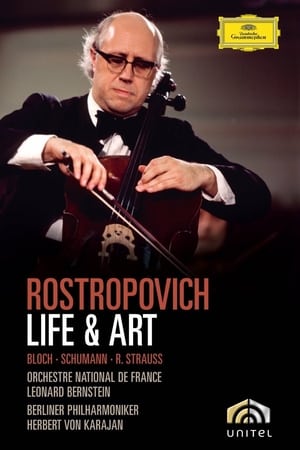
A documentary that explores the challenges that a life in music can bring.
1992, Eliott is an ambitious young pianist, son of a renowned conductor. Making electronic music without much faith in it, he will discover a way to satisfy his ambition.
A popular production from 2021, straight from the historic building of the National Theatre. This star-studded title is directed by experienced director Magdalena Švecová, with soloists, the National Theatre Orchestra and Choir, and conducted by Jaroslav Kyzlink. The Barber of Seville was composed by the then 23-year-old Gioachino Rossini in just three weeks, resulting in a witty and dynamic work that perfectly captures the genre of Italian opera buffa. Rossini based his work on the 1772 play The Barber of Seville, or The Misguided Precaution by French dramatist Pierre-Augustin Caron de Beaumarchais. The two-act opera tells the story of the young love between Rosina and Count Almaviva. However, her guardian Don Bartolo also has his eye on her. Almaviva does not give up and asks the local barber Figaro for help, who comes up with a daring plan to bring the couple to their dream wedding.
Abbado Conducts Mahler No. 1 & Prokofiev Piano Concerto No. 3
A thoroughly researched biopic of Charles Ives, America's greatest and most innovative composer (and insurance executive), who combined strikingly futuristic experimentalism with gentle nostalgia. Includes narration taken directly from Ives's own writings, and reminiscence from those who knew him.
Recording of a concert from the St. Wenceslas Music Festival. The program of the St. Wenceslas Music Festival offered listeners a treat of spiritual music, the oratorio La Resurrezione (The Resurrection) by German composer George Frideric Handel. The work is one of Handel's early oratorios. When Handel failed to conquer the opera stronghold of the time – Venice, Italy – he returned to Rome and composed the oratorio to a libretto by Sigismondo Capace. It premiered during Easter in 1708. In this musical documentary, we will take you to the orchestra rehearsals with soloists and then to St. Wenceslas Church in Opava, where the oratorio was performed by the top Czech musical ensemble Collegium 1704, which focuses on Baroque music in its original interpretation. This time, in addition to other great soloists, it invited Martina Janková, a native of Orlová and star of the opera scene in Zurich, to collaborate.
Distinguished Bach specialist Sir András Schiff returned to the BBC Proms in 2018 to present Book II of The Well-Tempered Clavier. Bach's effortless brilliance and new-found sonorities push harmony and counterpoint further than ever with a combination of ancient and modern styles, church austerity and galant lightness. Schiff has said that no-one combines the sacred and the secular as Bach does, and this is comprehensively demonstrated in Bach's fascinating and challenging sequence. This performance in the Royal Albert Hall was described as a musical meditation for our troubled times by the Independent.
Das Mauerkonzert
The Triple Concerto is one of Beethoven's less frequently performed works - probably also because it requires three soloists and makes considerable demands on them. ARTE presents the Concerto for Violin, Violoncello, Piano and Orchestra in C major at the Gewandhaus in Leipzig, performed by an excellent trio of soloists. It is accompanied by the Gewandhaus Orchestra under the direction of Herbert Blomstedt.
Beethoven spent three years composing the Eroica, an intimate journal of his emotional crises and his dramatic emergence as an original master. Michael Tilson Thomas and the musicians of the San Francisco Symphony help you make sense of this voyage into life as it really is.
The Montreal Symphonic Orchestra (MSO) and Kent Nagano share the stage with Fred Pellerin, a colorful character whose imagination seduces as much as it surprises. He tells Christmas in his own way, through his stories featuring the protagonists of the small village of Saint-Élie-de-Caxton. An unprecedented encounter of the symphonic world and the universe of this artist of words. Concert recorded on December 16 and 17, 2011 at the Maison symphonique de Montréal.
The story of young composer, Johannes Brahms, and his relationship with, Robert and Clara Schumann, the famous music couple that aided in his rise to fame.
We meet the young violinist Erik Smith in the lap of his family with his wife Lise and his little daughter Lone. Erik is a young, aspiring musician who dreams of one day making a career as an interpreter of the great masters of music. At a concert where a well-known solo violinist has to interrupt, Erik Smith suddenly jumps in and gets his big breakthrough.
Priya, an exceptional yet obsessive pianist at Berklee School of Music, struggles to meet the demands of her professor’s unorthodox senior showcase assignment: to compose a piece that encapsulates her greatest fear.
Can the darkest moments of life also lift our souls? Drawing on his own experience in a Siberian prison in the company of misfits, murderers and theives, Dostoevsky was inspired to write his novel Notes from a Dead House, telling his brother at the time: ‘Believe me, there were among them deep, strong, beautiful natures, and it often gave me great joy to find gold under a rough exterior.’ In Janáček’s hands, Dostoevsky’s inspiration and the raw material drawn from an appalling world of incarceration find an even more powerful form of expression in his last opera, From the House of the Dead. Unfettered by conventional story-telling, Janáček wrote his own libretto, freely weaving together a series of stories of everyday prison life and of the fates of individual convicts.
Tom Cat is a concert pianist who plays beautifully until he is interrupted by Jerry Mouse.