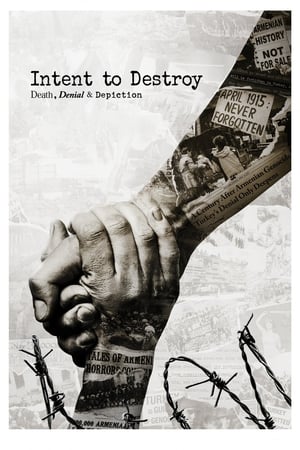
INTENT TO DESTROY embeds with a historic feature production as a springboard to explore the violent history of the Armenian Genocide and legacy of Turkish suppression and denial over the past century.
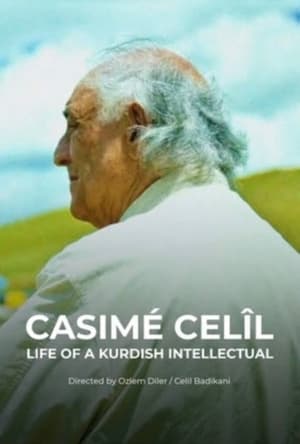
Casimê Celîl was born into a Yezidi Kurdish family in 1908, in a village called Kızılkule, located in Digor, Kars. The village and family life, which he longed to remember throughout his life, ends with the massacre they endured in 1918. During his long road to Erivan, Armenia, he lost all his family members. Left all alone, Casim was placed into an orphanage and was forced to change his name. To remember who he was and where he came from, every morning he repeated the mantra “Navê min Casim e, Ez kurê Celîlim, Ez ji gundê Qizilquleyê Dîgorê me, Ez Kurdim, Kurdê Êzîdî me”, which translates to: “My name is Casim, I am the son of Celîl, I come from the village of Kızılkule in Digor, I am a Kurd, and I am Yezidi”. He clings to every piece of his culture he can find, reads, and saves whatever Kurdish literature or art he comes across. As the year’s pass, Casim finds himself with an impressive collection of Kurdish culture and history.
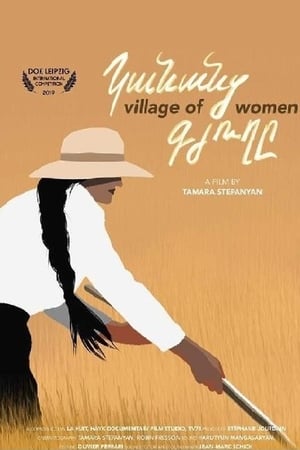
Only women, children and old people live in this Armenian village, while the men work in Russia. A life with a rhythm of its own, an independent daily life marked nonetheless by exile.
Turkey's history has been shaped by two major political figures: Mustafa Kemal (1881-1934), known as Atatürk, the Father of the Turks, founder of the modern state, and the current president Recep Tayyıp Erdoğan, who apparently wants Turkey to regain the political and military pre-eminence it had as an empire under the Ottoman dynasty.
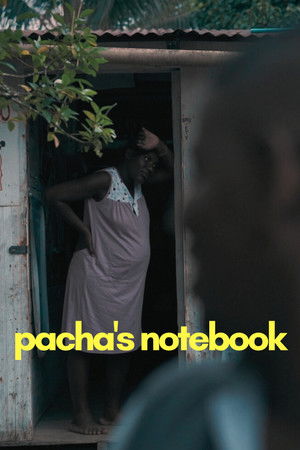
Pacha works as a midwife in a war zone in Colombia. The intimate portrait of her life and profession, is the jump off point for a larger portrayal of life lived despite insurmountable obstacles in a world ravaged by war.
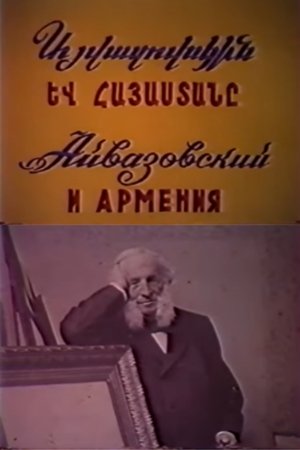
Aivazovsky's paintings on historical Armenian themes. His works were not only on marine subjects. In this short we can also see the church of St. Sarkis, where the artist was baptized. He was married within the walls of this ancient temple, and his funeral service was held there in 1900. Modern photos of Armenia and Western Armenia, where Aivazovsky's ancestors were from, harmoniously complement the film. And at last, the picturesque views of Feodosia, the city where the artist lived and worked for many years.
The last collaboration of Artavazd Peleshian and cinematographer Mikhail Vartanov is a film-essay about Armenia's shepherds, about the contradiction and the harmony between man and nature, scored to Vivaldi's Four Seasons.
A revealing account of Pen Farthing's evacuation of an Afghan animal shelter during the West's chaotic withdrawal of 2021. We examine why a nation was so vocal, both for and against, the idea of saving animals when so many humans were at risk.
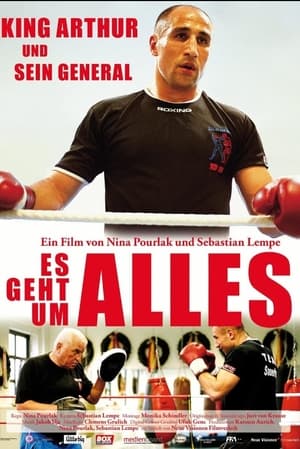
Es geht um Alles
On Easter 2018, a man put on a backpack and began to walk across Armenia. His mission: to inspire a velvet revolution and topple the corrupt regime that enjoys absolute power in his former Soviet nation. With total access to all key players, this documentary tells the story of what happened in the next 40 days.
In the competitive world of tourism, there are very few experiences that are out of bounds. “Danger Zone” explores the world of war tourism, catering to a growing market for ever more rare and extreme experiences.
Humans transform the world. In a stone mine, huge majestic rocks are blasted into pieces and after passing through the stone processing line, they gradually transform into pebbles.
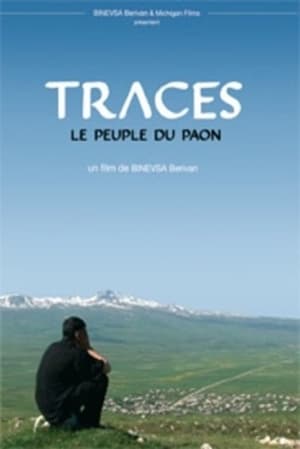
Filmmaker Binevsa Bêrîvan travels to Armenia to capture the daily life, customs, and history of the country's Yazidi Kurdish community.
When a British-born actor abandons his Hollywood career to volunteer to Join the Kurdish YPG to fight ISIS in Syria, many see him as a selfless hero battling America's most insidious enemy. But others think he's a hot-tempered narcissist, staging a publicity stunt to further his career - and when his service ends, neither the UK nor the US welcome him back. Through incisive interviews with the actor, his supporters, his detractors, and top-tier experts - and featuring the actor's own jaw-dropping helmet-cam video of deadly battles with and interrogations of ISIS fighters - Heval gives viewers unprecedented access into a war against evil and one man's controversial role in it.
The Falcons is an intimate, observational documentary that delves into the world of the Tshakhruk Ethnoband, a remarkable musical ensemble in the Armenian highlands. Comprised of special-needs children that reside at the state orphanage, these young musicians find solace, strength, and self-expression through the transformative power of music.
The Winning Generation is a documentary filmed over 12 years, following Shahen Harutyunyan from a 14-year-old activist to an emerging political leader. Carrying the legacy of his father and grandfather in Armenia's long struggle for independence, he transforms their tradition of resistance into a new democratic vision. As Armenia navigates political instability and strong Russian influence, Shahen seeks to forge his own path while redefining what a new generation's fight for freedom could look like.
A feature documentary presented and directed by former Royal Marines Commando Emile Ghessen. The documentary tells the story of the 2020 war between Armenia and Azerbaijan over the disputed region of Nagorno Karabakh. In the fall of 2020, Armenia and Azerbaijan fought a brutal bloody war. Azerbaijan won, decisively. The feature documentary 45 Days: The Fight for a Nation tells the story of this conflict, from the Armenian perspective, focusing on the human cost of war and its impact on the large Armenian diaspora.
Raphael, Yervant Gianikian's father, survived the Armenian genocide in 1915 in Eastern Turkey. In April 1988, while living in Venice, he sat for his son's camera and read an excerpt from his memoirs, translated from Armenian into Italian.
Stone, Time, Touch is a documentary made by Gariné Torossian about the relationship of three Armenian women from the diaspora with the land of Armenia. The young woman (played by Kamee Abrahamian) is visiting Armenia for the first time. The older woman, Arsinée Khanjian has a more conflicted and analytical perspective of her identity and her relationship with the fledgling democracy, one of the former Soviet Union republics. She has been to landlocked Armenia many times and comments on photos taken by French photographer Marc Baguelin. The third trajectory is more subtle and is represented by Gariné Torossian herself whose face is super imposed from time to time in this stylistically-layered documentary.
Garod means longing in Armenian. Longing for a land that lost its people. Longing for the homeland. Longing for a time that is eternally lost. “Garod” is a story of longing. It is about the lives and the musical stories of two Armenian musicians - a father and his son, Onnik Dinkjian and Ara Dinkjian. It tells the story of the remaking of a musical tradition and life in diaspora, passes through different geographies and countries following the traces of a musical tradition. In this documentary, Garod means not only longing for loss but also remaking of a musical tradition and the life itself.