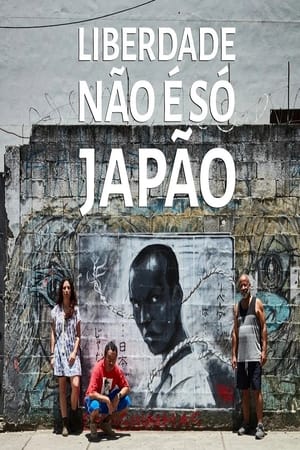
The film deals with the process of globalization based on the thought of geographer Milton Santos, who through his ideas and practices, inspires the debate about Brazilian society and the construction of a new world. Santos discusses his views on the importance of respecting difference and his belief that an alternative globalisation model could wholly enfranchise all citizens of the world. An illustrious presence in 20th century social sciences, the man dubbed as ‘geography’s philosopher’ eloquently elucidates a developing world perspective on the global age.
The last shots had been fired in the First World War — but peace had yet to be made. Inspired by Margaret MacMillan’s acclaimed work of popular history, Paris 1919 takes us inside the most ambitious peace talks in history, revisiting the event with a vivid sense of narrative. Evoking a pivotal moment when peace seemed possible, director Paul Cowan reflects upon the hard-learned lessons of history.
Somewhere in Myanmar is a forest rich in amber and controlled by the Kachin Independence Army (KIA). Most of its inhabitants work in a mine, digging the earth night and days in the hope of finding the precious ore that will get them out of poverty. But on top of the excruciating hardship of the work, they also have to fear an attack from the army.
In 1900, the eyes of the whole world are on Paris. The World's Fair welcomed 50 million amazed visitors, and the city celebrated itself in a glamorous era. This period went down in history as the "Belle Époque." Elaborately restored and colorized historical photographs bring to life the exciting life in Paris between the end of the 19th century and the beginning of World War I in 1914. Bicycles, cars, airplanes, moving pictures, newly founded film studios, revolutionary composers and painters, avant-garde ballet performances, fashion houses, summer resorts on the Atlantic coast – life was intoxicating. People celebrate in the variety shows, cabarets, and revue theaters of Paris. Moulin Rouge, Folies Bergères, Bal Tabarin—in Paris, the nights are long and life is too short to sleep through. It is a dance on the volcano, given the political developments in the world.
In their feature film debut, CARTERLAND, the Pattiz Brothers examine the tragic, yet inspiring story of America's most misunderstood president. While leading the nation through a series of unprecedented crises, Jimmy Carter also confronted climate change and championed social justice at home and abroad. This groundbreaking film draws on archival footage, experts, and insiders to reveal how Carter's selfless leadership and moral integrity ultimately cost him the presidency.
This video, The Road to Mass Incarceration, by Greenhouse Media summarizes criminal justice policy decisions dating back to the 1960s. Although the effects often took decades to manifest, each of these policy shifts increased the rate of incarceration in the U.S. The video ends with many of the architects of these changes, Democrats and Republicans alike, admitting the failure of these policies and suggesting that it is time for real change.
In an age of revolution, Marie Antoinette and her protector Oscar François de Jarjayes face tough choices as women growing into their distinct roles.
For Serbian filmmaker Mila Turajlic, a locked door in her mother's apartment in Belgrade provides the gateway to both her remarkable family history and her country's tumultuous political inheritance.
A shocking political exposé, and an intimate ethnographic portrait of Pacific Islanders struggling for survival, dignity, and justice after decades of top-secret human radiation experiments conducted on them by the U.S. government.
When a planeload of Pakistani orphans are shipped to his state for permanent relocation, the governor of Idaho defies the president and closes the state's border. News Net Television, a cable news program that makes hay by reporting on political scandals, quickly spins the racist act into an overnight media sensation, creating a divide in national opinion over the issue.
Project 1 _ Hong Hyung-sook The children who are enthusiastically painting and cutting a doll. What stories will be told at the Square? - Project 10 _ Kim Jeong-geun The janitorial worker from the Busan Subway Station, Kim Young-ja talks about how she hopes to see a clean world, just like how she cleans everywhere in the subway.
Commissioned by the journal Présence Africaine, this short documentary examines how African art is devalued and alienated through colonial and museum contexts. Beginning with the question of why African works are confined to ethnographic displays while Greek or Egyptian art is celebrated, the film became a landmark of anti-colonial cinema and was banned in France for eight years.
This is a documentary linking ecological and political problems. The planet has come to be less important than the multinational earnings, and with it politicians earnings as well. With this project we bring foreward this problem, witch not only affects the third world, but is a worldwide situation witch needs to be adressed.
Published in Paris in 1954, Story of O was an immediate bestseller and literary scandal: an elegantly written S&M fantasy that had all the hallmarks of being an autobiographical account by the pseudonymous Pauline Réage. In 1994 Dominique Aury, a mild-mannered, dowdy editor for France’s prestigious Gallimard press, revealed her authorship. Pola Rapaport explores Aury's inspiration, recreating the world of '50s literary Paris and setting it against dramatic sequences that bring the infamous book to life. The author as well as various French intellectuals expound on the thorny relationship between sexuality and power, submission and freedom, liberation and non-being.
La Garoupe, a beach in Antibes, in 1937. For one summer, the painter and photographer Man Ray films his friends Pablo Picasso, Dora Maar, Paul Eluard and his wife Nusch, as well as Lee Miller. During these few weeks, love, friendship, poetry, photography and painting are still mixed in the carefree and the creativity specific to the artistic movements of the interwar period.
The First Lady
Following a national crisis, the citizens of Iceland rallied together to collectively write the first ever crowdsourced constitution. A deeply touching account of an eclectic group of individuals reinventing democracy through the rewriting of the nation's constitution, proving that Iceland is not a broken country but instead an intricate web of concerns, ideas, and ultimately creative solutions.
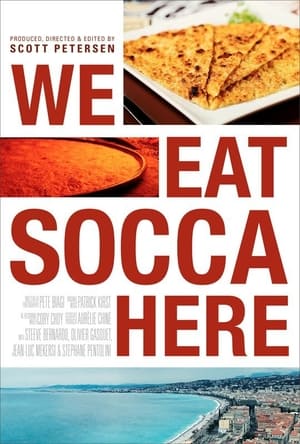
What starts off as a conventional travelogue turns into a satirical portrait of the town of Nice on the French Côte d'Azur, especially its wealthy inhabitants.
For decades, the United States has been fixated on incarceration, building prisons and locking up more and more people. But at what cost, and has it really made a difference? FRONTLINE goes to the epicenter of the raging debate about incarceration in America, focusing on the controversial practice of solitary confinement and on new efforts to reduce the prison population, as officials are rethinking what to do with criminals.
A made-for-cable-TV docudrama about the trial of the men accused of conspiring to cause protesters to riot at the 1968 Democratic National Convention in Chicago. Combines in an innovative manner dramatic recreations (largely faithful to the actual trial transcripts) with documentary footage and interviews with the actual defendants.