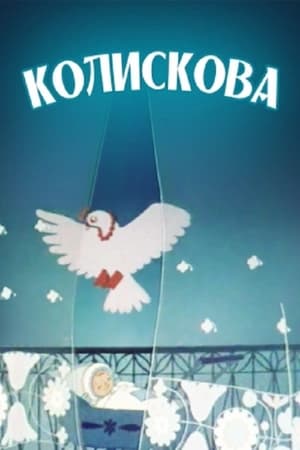
The cartoon is based on one of the famous Ukrainian lullabies. It tells the story of a newborn baby, which is surrounded by the maternal care and affection. In the video sequence, unusual ornament is replaced by fairy tale characters and animals that appear near the baby lying in his cradle.
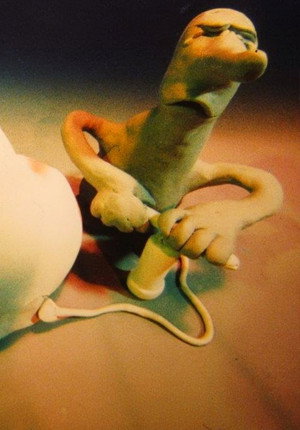
Animated hijinks of a man whose car just will not start, no matter what he does.
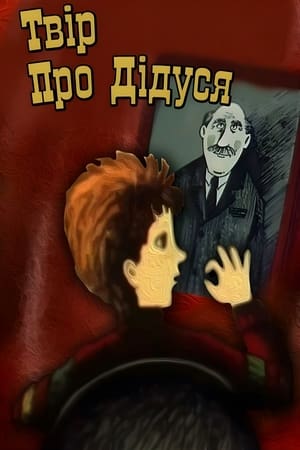
Doing homework, the student writes an essay about the early years of the life of his grandfather, who was accompanied by his faithful friend, the horse Grey. Together they attended courses of cab drivers and being newcomers they got acquainted with the urban way of life. Description of ancient streets, interesting people and unexpected events before the revolution were the focus of the story.
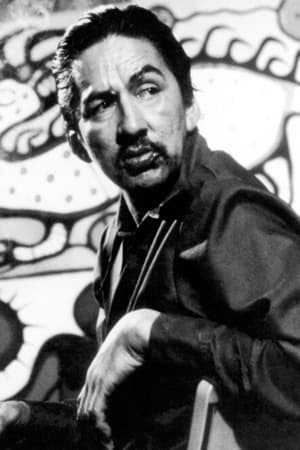
In this revealing study of Norval Morrisseau, filmed as he works among the lakes and woodlands of his ancestors, we see a remarkable Indigenous artist who emerged from a life of obscurity in the North American bush to become one of Canada's most renowned painters. Morrisseau the man is much like his paintings: vital and passionate, torn between his Ojibway heritage and the influences of the white man's world.
A man is imprisoned for life on a remote Pacific island for a crime he didn’t commit…is there any way out?
Aitana organizes a big Halloween party in her huge apartment in Madrid in the hope that her friend Cleo will come.
Handmade, direct animation film using rubber based masking material and colored dye. Rhthmic colored linear patterns of abstract grids move in syncopation to the allegro from the Brandenburg Concerto #3 in G Major by J.S. Back. Inspired by the handmade films of Norman McLaren, who once told Larry over milkshakes that Allegro was the best film he had seen made in 16mm.
A man does everything in his power to not fall asleep in an attempt to escape certain death.
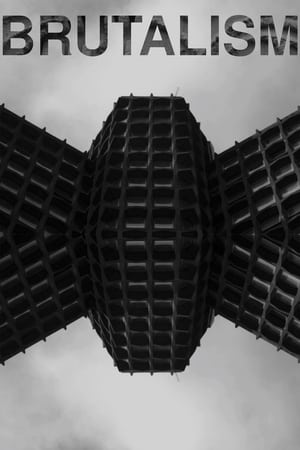
Beneath towering Brutalist architecture, a man is driven to do what must be done.
A late-night cable access show goes to hell!
An intimate look at the Woodstock Music & Art Festival held in Bethel, NY in 1969, from preparation through cleanup, with historic access to insiders, blistering concert footage, and portraits of the concertgoers; negative and positive aspects are shown, from drug use by performers to naked fans sliding in the mud, from the collapse of the fences by the unexpected hordes to the surreal arrival of National Guard helicopters with food and medical assistance for the impromptu city of 500,000.
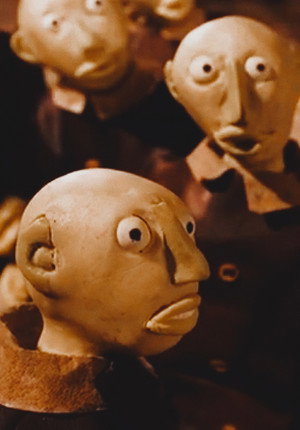
In a bizarre and decadent society, faceless characters are tirelessly trying to appeal to a body of bureaucrats in order to finally be allowed to have a face. Will they be happy when they can get a nose, a pair of eyes and a mouth?
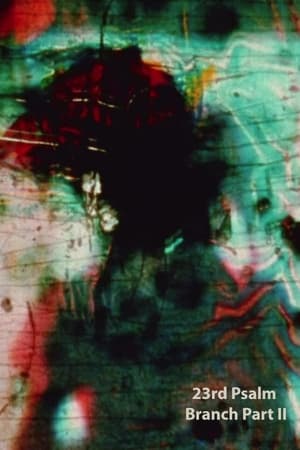
The second part: Brakhage’s layering of images spends less time with images of war, and begins filtering in scenes of Vienna and his home in Colorado. He sets up a comparison between “Kubelka’s Vienna” and his own.
In recent decades, humans have lost 25 to 40 percent of the world's corals due to seawater temperature rise and ocean acidification. Dr David Vaughan has been studying corals his whole life, but until eight years ago, could only watch the crisis unfold. After an accident one day in the lab, Vaughan discovered a secret of coral reproduction, and is now working to replant dwindling coral reefs at an astonishing rate. The Atlantic visited Dr Vaughan in the Florida Keys to uncover how the process works and understand how much hope there is to revitalize our reefs.
A suicidal accountant drunkenly puts a hit on himself online. Regretting his decision in the morning he must take every precaution necessary to survive.
A man gives a piece of his food he just ordered to a poor man standing near his table. The poor man getting a taste of what he was craving for so long, slowly turns into something he wasn't Before.
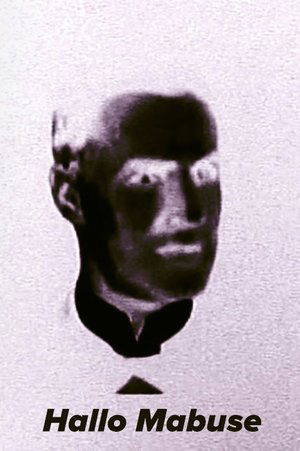
Hallo Mabuse captivates through its reduction, in which a conspiratorial narrative takes place, but even more so, the images themselves appear ambiguous, obscure, untrustworthy. A nod of the head, which seems treacherous in its mechanical repetition, meets the profile of a bearded man who does not appear to react at all in a suggested counter shot. The slight flickering of the image further intensifies the impression of an illicit agreement, of witnessing a crooked handshake. The ringing of the unseen telephone and the constant ticking of a clock lend the events a limited temporality. Something is running out, and in doing so, is also already reaching its end, a ghostly final act, which is anticipated by an explosion and breaks off with the sound of a falling guillotine.
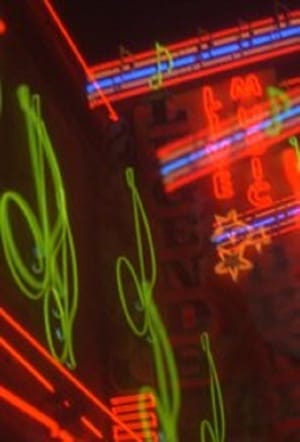
All images were shot on 16mm film in the shadow of the Ryman Auditorium on Lower Broadway, a section of Nashville that has for decades attracted country music fans to its honky tonk bars. The visual effects were composed in-camera, while shooting on the street. This film was supported in part by the Tennessee Art Commission.
As an asteroid hurtles towards the earth, two friends journey through the forest in search of a mythical safe haven to escape the impending apocalypse. But is Groundswell truly their salvation or just a fairytale?
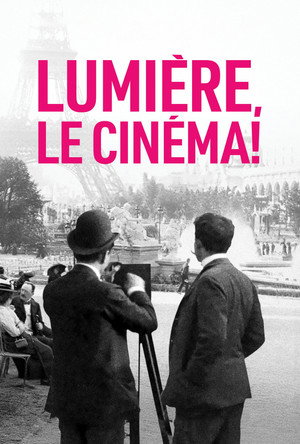
In one of those wonderful coincidences of history, lumière, the French word for “light,” was also the last name of brothers Auguste and Louis, whose brilliant invention, the cinematograph, helped to inaugurate the most beloved art form of the last 130 years. Institute Lumière director Thierry Frémaux uses Lumière, Le Cinema! to guide the viewer through over a hundred shorts—some famous, some forgotten, some never before seen—directed by Lumière and company. In the process, Frémaux illuminates how the brothers employed the camera as a creative instrument as they (and their operators) mastered framing, staging, and subject selection for quotidian and exotic microdocumentaries as well as the first ever fictional motion pictures. The result is not only a glorious re(telling) of the genesis of cinema but a profound meditation on the beautiful world captured—and the mysterious world imagined—by the Lumières.