Siegfried is the third of the four operas that constitute Der Ring des Nibelungen (The Ring of the Nibelung), by Richard Wagner.
A young woman, married to a wealthy man, but miserably lonely; trapped within a world ruled with an iron fist. Katerina is driven by a lust for life and for love. Her husband, though, is impotent; her father-in-law a tyrant. No wonder, then, that she longs to free herself from this yoke. When Sergei starts work on the family estate, she sees in him a chance for salvation. However, their subsequent affair marks the beginning of a descent into crime.
The gorgeous and evocative Otto Schenk/Günther Schneider-Siemssen production continues with this second opera in Wagner’s Ring cycle. Hildegard Behrens brings deep empathy to Brünnhilde, the favorite daughter of the god Wotan (James Morris) who nevertheless defies him. Morris’s portrayal of Wotan is deservedly legendary, as is Christa Ludwig, as Fricka. Jessye Norman and Gary Lakes are Sieglinde and Siegmund, and Kurt Moll is the threatening Hunding. James Levine and the Met orchestra provide astonishing color and drama. (Performed April 8, 1989)
Alone in the woods, a young man is pursued by a horrifying specter and by visions of his deceased sisters. A meditation on the precarious uncertainty of the American Dream and the role that uncontrollable forces play in our lives, The West is a Land of Infinite Beginnings is inspired by a harrowing scene from the opera Proving Up, by composer Missy Mazzoli and librettist Royce Vavrek.
This first film of Cyprus' first director, Giorgios Filis, depicts music and dance customs in the form and style of a folk opera, with traditional Cypriot dances and songs. The film consists of a folkloric inventory based on the folk culture of Cyprus, as well as on similar ritual happenings. The narration and dialogue are entirely in the Cypriot dialect and are characterized by a rhetorical and poetic mood.
Tosca returns to the Teatru tal-Opra Aurora in a completely new production, under the direction of the renowned Vivien Hewitt, following the recent successes of 2011 (Aurora's own production) and 2014 (a Gaulitanus chorus production). Attracting the greatest names in the opera world since its first performance in Rome in 1900, Tosca 2011 brought the Aurora its largest ever international cast, featuring soprano Michele Crider, tenor Neil Schicoff, and baritone Juan Pons. This time, the Aurora has made a point of enhancing the star-quality element in the cast beyond just the three leading roles. It is with pleasure, and a good dose of enthusiasm, that we announce our stellar cast, composed of Amarilli Nizza (Tosca), Stefano La Colla (Cavaradossi), Marco Vratogna (Scarpia), Frano Lufi (Angelotti), Matteo Peirone (Sacristan), Cliff Zammit Stevens (Spoletta), Joseph Lia (Sciarrone), and our own Mattia Grech (Shepherd Boy).
The grand scale and magnificent acoustics of the Roman arena in Verona are ideally suited to the pageantry of Verdi's Egyptian opera, presented here in a staging that is true to the original 1913 production, framed by obelisks and sphinxes and filled with chorus and dancers. Chinese soprano Hui He has won international acclaim for her portrayal of the eponymous slave girl whose forbidden love for the war hero Radamés (Marco Berti, the experienced Verdi tenor) brings death to them both.
Arabella, Op. 79, is a lyric comedy or opera in three acts by Richard Strauss to a German libretto by Hugo von Hofmannsthal, their sixth and last operatic collaboration.
In Rigoletto, the deformed figure of the hunchbacked jester at the Mantuan court acts as a foil to his cynical and powerful master, an unscrupulous philanderer contrasted with his cruel and unforgiving fool. Rigoletto encourages and welcomes the Duke's conquests, pitilessly mocking his victims until he discovers that the Duke has abducted the one person he genuinely loves, his own daughter. As a result, the character of the court jester is transformed into a tragic figure who, in spite of his evident immorality and malice, allows us to sense the devotion he feels for his daughter and his horror at being destroyed by the same despotic world as that which he himself has helped to create.
This was Domingo's last set of performances as Otello in La Scala. In spite of his relatively advanced age, he is still in excellent form, both vocally and in terms of stage presence. Nucci is also his usual self, delivering a performance of very high standard. Barbara Frittoli is an excellent Desdemona, in good voice and gives a very moving performance. Muti conducts with great emotion and tight accuracy, conveying the full orchestral drama of the score.
This filmed version of Strauss' shocker features Teresa Stratas as opera's most depraved teenager, and she's as perfect a Salome as one would ever hope to see or hear. Stratas inhabits the role, exploring the character's sensuousness as she vainly woos Jochanaan, her venomous hatred when she's rejected, the crazed look in her eyes when she demands his head--on a silver platter, no less. Such complete identification with a role, especially of a character so malignant helps make this 1974 Salome stand out among the many fine DVDs of the opera.
A lonely mother and her son go to the opera where a performance of Cherubini’s opera Medea is given. It is the mother’s birthday and she wanted to surprise her son by inviting him to the opera. But, the son’s plan were different and he is quite upset about it. His mother tries to break the silent barrier behind which he hides. A semblance of discussion begins, not without humour. Tension is present but, as the performance goes on, both find themselves astounded, captured, alone in the opera house.
The first words uttered by Carmen mark one of the greatest entrances in the history of opera and express all that need be said: “Love is a rebellious bird that no one can tame…” With a devilish sway of the hips and a hint of Andalusian flair, the beautiful cigar-maker sets her sights on a soldier: Don José. Fate will do the rest.
Ten short pieces directed by ten different directors, including Ken Russell, Jean-Luc Godard, Robert Altman, Bruce Beresford, and Nicolas Roeg. Each short uses an aria as soundtrack/sound, and is an interpretation of the particular aria.
Opera at La Scala Milan
Mozart’s early masterpiece returned to the Met for the first time in more than a decade with Music Director Emeritus James Levine, who led the work’s company premiere in 1982, again on the podium. Tenor Matthew Polenzani brings both steely resolve and compassionate warmth to the title king of Crete, who is faced with an impossible decision. With her rich mezzo-soprano, Alice Coote sings the trouser role of Idomeneo’s son Idamante, who loves the Trojan princess Ilia, sung with delicate lyricism by Nadine Sierra. Elza van den Heever gives a thrillingly unhinged portrayal of the jealous Elettra. Jean Pierre-Ponnelle’s timeless production blends the grandeur of ancient myth with the elegance of Enlightenment ideals.
Tchaikovsky’s setting of Pushkin’s timeless verse novel is presented on the Met stage in Deborah Warner’s moving production, starring Anna Netrebko as Tatiana and Mariusz Kwiecien and Peter Mattei sharing the title role. Alexey Dolgov sings the role of Lenski, and Robin Ticciati conducts.
In his new production, Robert Carsen places the action at the end of the Habsburg Empire, underscoring the opera’s subtext of class and conflict against a rich backdrop of gilt and red damask
The Queen of the Night enlists a handsome prince named Tamino to rescue her beautiful kidnapped daughter, Princess Pamina. Aided by the lovelorn bird hunter Papageno and a magical flute that holds the power to change the hearts of men, young Tamino embarks on a quest for true love, leading to the evil Sarastro's temple where Pamina is held captive.
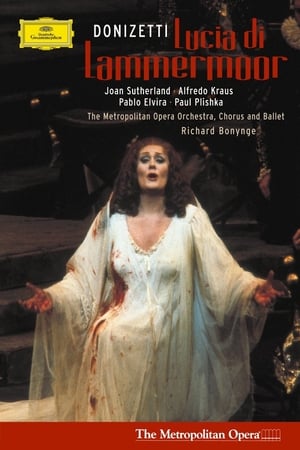
This telecast offers a rare opportunity to see the legendary Joan Sutherland in the role that first catapulted her to international stardom. She drove audiences wild by the way her opulent voice caressed the music’s long phrases and sprinted effortlessly through the fiendish runs, trills, embellishments and stratospheric high notes. One of the glories of the operatic world, her portrayal of Donizetti’s hapless heroine is a multifaceted and moving characterization. The incomparable tenor Alfredo Kraus is Edgardo, the man Lucia loves but cannot have. (Performance taped November 13, 1982. Broadcasted September 28, 1983.)