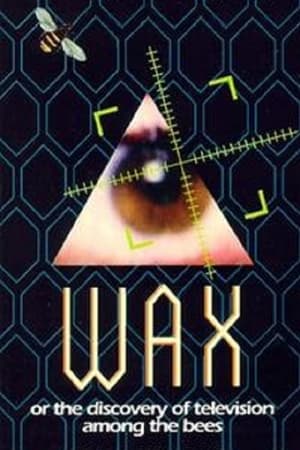
Antony Balch tackles key themes and ideas from the writing of William S. Burroughs in a unique, cinematic style.
Shot on 16mm celluloid across parts of New Zealand and Samoa, interdisciplinary artist Sam Hamilton’s ten-part experimental magnum opus makes thought-provoking connections between life on Earth and the cosmos, and, ultimately, art and science. Structured around the ten most significant celestial bodies of the Milky Way, Apple Pie’s inquiry begins with the furthest point in our solar system, Pluto, as a lens back towards our home planet and the ‘mechanisms by which certain aspects of scientific knowledge are digested, appropriated and subsequently manifest within the general human complex’. Christopher Francis Schiel’s dry, functional narration brings a network of ideas about our existence into focus, while Hamilton’s visual tableaux, as an extension of his multifaceted practice, veer imaginatively between psychedelic imagery and performance art.
In this surrealist vignette-based film, a goldfish makes conversation with various objects. A TV becomes a writer, a triangle learns it is not a hexagon, and a goldfish sees themself without an audience. // \ / \ \\ \ / \ / /\/ /// \ / \ \\ \ / \ / /\/ /// \ / \ \\ \ / \ / /\/ /
A computer program named A.D.O.M tries to create a living being that will help to release both of them from their void. This film was created exclusively with stock video and royalty free music. Stock Elements from pixapay.com Music from filmmusic.io "The Descent" by Kevin MacLeod (incompetech.com) License: CC BY (creativecommons.org/licenses/by/4.0/)
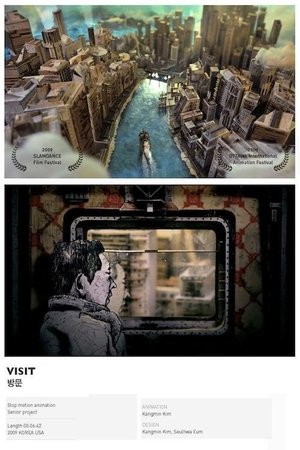
Visit He visits a city. The city already forgot him. The city is still sinking in his dream. The flicking segments of real life and illusion. Only the lighthouse has his memory. But the memory will may be vanished.
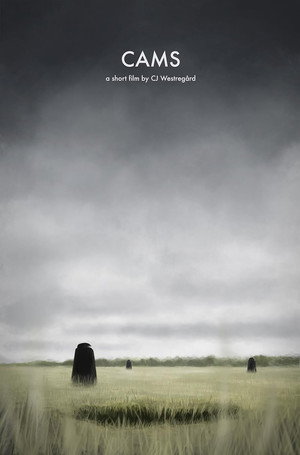
The image pans slowly around a coastal moor, a neighborhood of silent villas and empty streets, a forest path in fading summer light. There are no witnesses to tell the stories of how it all ended. All manifestations of human activity have ceased, giving way to the crackling and bustling of nature. In this world, which at first seems only to reflect a recent emptying, black things move about, as if dying echoes of a cataclysm too terrifying to narrate.
A story of broken humanity following the invasion of a technologically superior alien species. Bleak, harrowing, and unrelenting, the humans must find enough courage to go on fighting.
A Japanese salaryman finds his body transforming into a weapon through sheer rage after his son is kidnapped by a gang of violent thugs.
Science fiction is a rare genre in the otherwise rich and diverse history of Egyptian mainstream cinema. One exception is the film "The Master of Time", directed by Kamal El Sheikh in 1987. In this film, the main character, a scientist named Mr. Kamel, is obsessed with the idea of immortality. Through radical editing, Lebanese artist and filmmaker Rania Stephan captures the quintessence of this obsession. In her film, she eliminates all fictional elements from the original and retains only the transition shots featuring doors, gates, and all forms of crossing and passing through.
Circuit bent gain controller run into a CRT TV
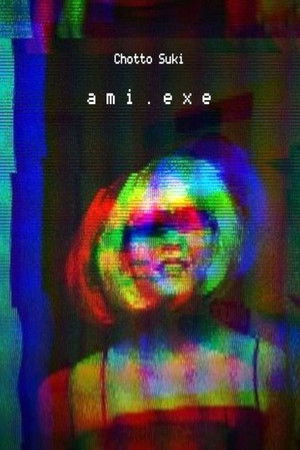
Wanderings of the young Ami in the streets of Kabukicho, Tokyo.
ANA is: a) An investigation of a cyber-sect linked to the disappearances of several women online. b) A moodboard of the aesthetization of self-destruction. c) A found footage documentary about today's subcultures.
A short film recounting the travels of a lonely astronaut confronted by the unknown. Unfolding as a mystery, it becomes a carefully subtle, autobiographical examination of the feeling of loneliness and the existential issue of not understanding life on earth and ones place among it.
In Germs, female stereotypes, pseudoscience and promised happiness clash with violent consequences.
Europe, 2028. A humanlike creature washes ashore, carrying with him a motionless body he calls his mother. He is on a mission of some kind, reporting on the dwindling human activity in an increasingly automated world.
Poetic sci-fi film as an homage to Cinema, Cocteau, Goodis and to American B-series of the 1940s. Constructed exclusively on photograms in black and white and freely inspired on Jean-Luc Godard's Alphaville.
An experimental journey through a year in the life of the director, using his always playing playlist to cross the boundaries of fiction and documentary. Through scenes of both comedy and tragedy, realistic documentary footage and experimental sequences of the director's environment and daily life we get a sometimes estranging image of a young man and also an intriguing insight in his mindset and how this translates to the imagery on screen.
“I don’t believe in love because I’ve never seen it,” responds a young woman to an unseen interviewer in the first few minutes of the movie. This bleak portrait of loneliness and social exclusion is set on the edge of a desolate swamp where an aging clown and his daughter are struggling to survive. The location could be the end of the world, a place where hope has vanished along with a belief in the afterlife and the existence of God. The two unfortunates live together without the likelihood of change, as fear, aggression, and anger take hold of them – but they also experience sudden moments of tenderness.
Artist Statement: "Lovesick" is an abstract analysis of idealization, objectification, and the Other; a dark fantasy peering into how we view and explore the complex darkness of human sexuality.
A dying woman participates in an experiment which makes unexpected changes to her body.