Jellyfish blooms are making headlines around the world. This is due to the damage they cause to tourism, fishing and our health. How can these creatures, which are over 98% water and have no shell, skeleton or brain, expand so rapidly? Although this is a normal stage in the life cycle of these gelatinous animals, we have to admit that blooms have become much more frequent and massive in recent decades. We're even witnessing jellyfish populations appearing in more and more regions where fish have been replaced by them, such as off the coast of Namibia, in the Black Sea, in the Sea of Japan and in certain areas of the Baltic Sea. What causes this? Why has the role of jellyfish in the ocean been underestimated, even though they outlived the dinosaurs? Are jellyfish on their way to dominating the oceans as they once did? What if they were to be the only ones left?
Mohammed Alsaleh, a young Syrian refugee, is rebuilding his life after being granted asylum in Canada. In Vancouver, he counsels and helps resettle newly-arrived Syrian refugee families so that they may find new homes and begin again.
This film was originally made for the International Conference on Human Settlements (HABITAT) which was held in Vancouver, Canada. Taking as an example the production and marketing of bananas and the prevailing conditions in the world market - dominated by the virtual monopoly of three multinational companies -, it is shown how as a result of this monopolistic domination, the Costa Rican State has stopped receiving equitable taxes for what that, in the end, the housing and public services offered by the country are characterized as those of an underdeveloped society. The attempt made since 1974 by a group of banana-producing countries, aimed at improving sales prices to multinationals and raising taxes; The resulting “banana war” are examples of the enormous efforts that small banana countries have to make to achieve greater justice in the prevailing market conditions.
Stan Lee and Len Wein talk about X-Men & Wolverine.
Narrated by Bill Slater, this short black & white educational film is about sporting and outdoor activities on the majestic Hudson River in New York State.
The giant squid is a creature of legend and myth which, even in the 21st century, has never been seen alive. But now, an international team of scientists thinks it has finally found its lair, 1,000 metres down, off the coast of Japan. This is the culmination of decades of research. The team deploys underwater robots and state-of-the-art submersible vessels for a world first - to find and film the impossible.
Groundbreaking documentary which follows a Japanese-led team of scientists as they attempt to shed light on the mysterious world of deep sea sharks. Only 50 specimens of the newly discovered 'megamouth' have ever been sighted. Over four years, scientists and film crews voyaged in midget submarines into the depths of Suruga Bay and Sagami Bay to film them. Prehistoric 'living fossil' sharks such as bluntnose sixgill sharks, goblin sharks and frilled sharks also lurk in the depths. As part of the investigation, a sperm whale carcass was placed at the bottom of the sea to attract these sharks, which were then studied and observed from the submersible vessels. Revealing in detail the previously unknown behaviour of deep sea sharks, the film unravels another of the intriguing mysteries of our planet's biodiversity.
In the 1968 movement in Paris, Jean-Luc Godard made a 16mm, 3-minute long film, Film-tract No.1968, Le Rouge, in collaboration with French artist Gérard Fromanger. Starting with the shot identifying its title written in red paint on the Le Monde for 31 July 1968, the film shows the process of making Fromanger’s poster image, which is thick red paint flows over a tri-color French flag. —Hye Young Min
Wildnis 2.0 - Die Tierwelt auf Umwegen
This short film from the Perspective series highlights social and economic development in Haiti circa 1957. It depicts customs and traditions used to pass along the history of a people, and offers a look into their daily lives — lives that looks very different from their experiences today.
Haskell Wexler revisits the themes of his previous work "Medium Cool" on the occasion of the Occupy demonstrations in Chicago in 2012.
This 10-minute short documentary exploring the shifting state of the American poultry industry was preserved in 2015 from an original nitrate print. More information is available on the film's page in the National Film Preservation Foundation's website, where this version can be found featuring original music by Michael D. Mortilla.
As one of his generation's quintessential Mad Men, television commercial director Joe Sedelmaier's work was iconic, dynamic, and instantly recognizable--some twenty to thirty years later, people are still wondering 'Where's the beef?” He turned the advertising world on its brain-damaged head by casting offbeat non-actors in still-unforgettable spots. His brilliant, frequently hysterical commercials for Wendy's, Alaska Airlines, Federal Express and others were snappy slices of cultural quirk that tapped into the Cold War-fearing, corporate workaholic zeitgeist of the '70s and '80s with a sense of humor that cracked billions of smiles, sold billions of burgers, and sped up the default rhythm of time-based media.
In the official Church view, homosexual women are regarded as nothing less than the embodiment of "an intrinsic moral evil." These daughters of Eve are the subjects of this documentary. In this enlightening film, the viewer shares the pain and heartache of these women as they struggle for knowledge, courage and self-affirmation.
Twenty-four images of a camera running in the woods, a moonlight and a cemetery through improvised gestures, mechanical abstraction and saturated colors
Singapore’s coastlines are always in flux - a delicate dance between the receding tides and the rising earthmovers. 'seaward' drifts through the peripheries of this very landscape, offering a quiet meditation on the life that endures at the edges of a changing island.
Take a thrilling journey to four of the greatest national treasures of Europe and Africa. Walk along the misty shores of Ireland's rocky northern coast to experience the legendary Giant's Causeway. Search for elusive mountain gorillas in Uganda's lush Impenetrable Forest. Climb the stunning snow-capped peaks of Italy's timeless Alps to discover the regal ibex in Gran Paradiso National Park. Behold the spectacle of thundering herds of migrating wildebeest, zebra and gazelle on Africa's fabled Serengeti Plains.
In his first public endurance feat, David Blaine was buried underground in a plexiglas coffin underneath a 3-ton water-filled tank for seven days and nights, surviving on nothing but liquids.
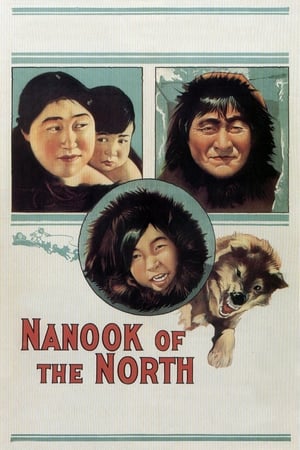
This pioneering documentary film depicts the lives of the indigenous Inuit people of Canada's northern Quebec region. Although the production contains some fictional elements, it vividly shows how its resourceful subjects survive in such a harsh climate, revealing how they construct their igloo homes and find food by hunting and fishing. The film also captures the beautiful, if unforgiving, frozen landscape of the Great White North, far removed from conventional civilization.
This films reveals the extraordinary variety of life found in the vast blue expanses of the open ocean. Here, all the action takes place in a 10 metre deep band of water, just under the surface. Many species use this section of water to migrate and hunt while others use ingenious ways to stay hidden where there appears to be no shelter.