Madrid, Spain. A mutilated man, a war veteran, walks, leaning on a crutch, through the stadium of the Ciudad Universitaria, a place that still preserves in walls and buildings the terrifying traces of one of the bloodiest battles of the Spanish Civil War.
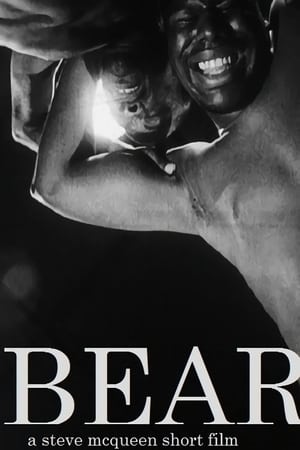
Bear (10 minutes, 35 seconds) was Steve McQueen's first major film. Although not an overtly political work, for many viewers it raises sensitive issues about race, homoeroticism and violence. It depicts two naked men – one of whom is the artist – tussling and teasing one another in an encounter which shifts between tenderness and aggression. The film is silent but a series of stares, glances and winks between the protagonists creates an optical language of flirtation and threat.
The Boyg is the voice within that whispers go around, preventing you from facing yourself, suffocating progress and initiative. A six minute visual and musical remix of Ibsens Peer Gynt, Norwegian Folklore, Edvard Griegs composition, paralyzing panic attacks and The Great Boyg itself who finds us all.
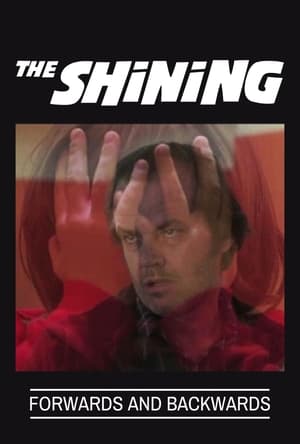
An experimental film comprised of Stanley Kubrick's THE SHINING played forwards and backwards at the same time on the same screen, creating bizarre juxtapositions and startling synchronicities.
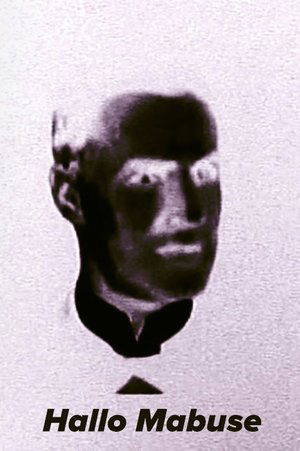
Hallo Mabuse captivates through its reduction, in which a conspiratorial narrative takes place, but even more so, the images themselves appear ambiguous, obscure, untrustworthy. A nod of the head, which seems treacherous in its mechanical repetition, meets the profile of a bearded man who does not appear to react at all in a suggested counter shot. The slight flickering of the image further intensifies the impression of an illicit agreement, of witnessing a crooked handshake. The ringing of the unseen telephone and the constant ticking of a clock lend the events a limited temporality. Something is running out, and in doing so, is also already reaching its end, a ghostly final act, which is anticipated by an explosion and breaks off with the sound of a falling guillotine.
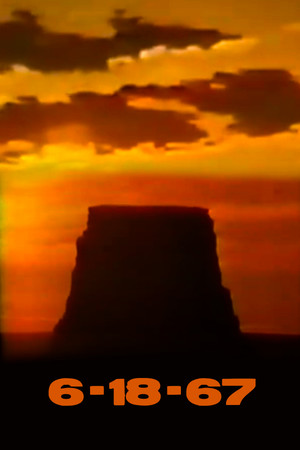
Filmed during the production of the Columbia Pictures western "Mackenna’s Gold," this short work presents a non-narrative visual study of the Arizona desert. Rather than documenting the film set itself, "6-18-67" assembles landscape images, time-lapse photography, and ambient sound into an abstract record of place and duration.
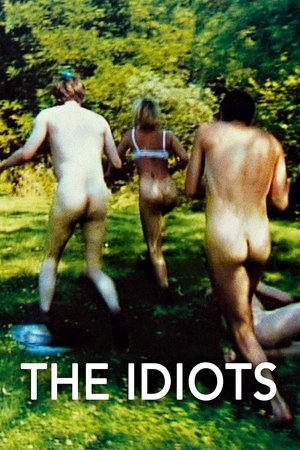
A group of perfectly intelligent young people decide to react to society's cult of aimless, non-creative and non-responsible form intellect by living together in a community of 'idiots'. Their primary activity becomes going out into the world of 'normal' people and pretending to be mentally incompetent. They take advantage of this situation to create anarchy, and, by every possible means, to make those around them miserable.
In the small town of Kansk, the Krasnoyarsk Territory many years in a row there is an international festival of short experimental films, which has a strong reputation throughout the world. "Russia as a dream" is an international project, shot by a team of authors and united directors, artists, poets. Each of the guests of the 14th International Kan Video Festival held in 2015 was invited to participate in the creation of a general film, the theme of which was the relationship of man and landscape, civilization and nature, reality and sleep.
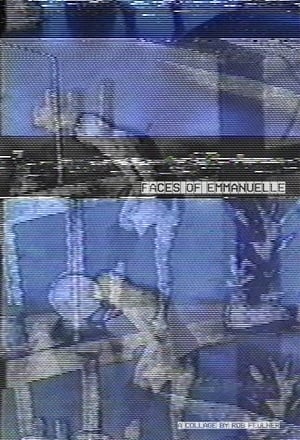
An exploration of the VHS medium and the subterranean trash which thrived in it. Using source material from Emmanuelle 6, this DVD-R/VHS further blurs the line between low and high art. Beautiful cinematography coupled with smut. Strategic pauses and tracking errors guides the viewer to discover the true depth and sadness of the seemingly one-dimensional Emmanuelle. Soaring arpeggio synths and pulsating rhythms by Rob Feulner. The utter destruction of arguably the most beautiful film never seen, lost and forgotten on the shelf of your local video store, behind the cowboy doors or dangling beads. Written off as pornography by most, written off as too soft by creeps. This is the plight of Emmanuelle.
A short film by John G. Avildsen.
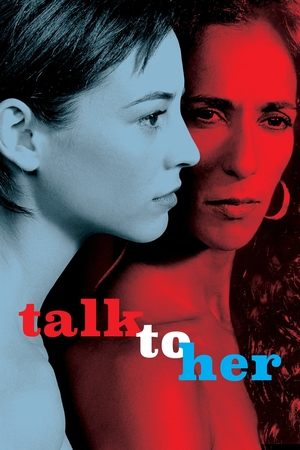
Two men share an odd friendship while they care for two women who are both in deep comas.
This is an interesting little documentary about the Nova Scotia College of Art and Design, which was apparently one of the global hotbeds of experimental/avant garde art- particularly video art- back in the 70's & 80's. MacGillvary interviews a number of the artists that were formative to the program. Many of whom would go on to become teachers at the school.
Exploring the musical concept of "release," this film is a haunting found-footage study in the plurality of visual and auditory meanings of the term. A series of collaborative works pairing artists working in visual and auditory mediums, the Études meditate on individual musical concepts through experiments with sound and film. Étude 1a: Release (I) is the first in this series and is directed by filmmaker Russell Sheaffer and composer Aaron Michael Smith.
The passing time is displayed as a series of still frames, or a rapid sequence of moments, ever flowing like the waves that break on the shore, like a repeated chant with no beginning, middle or end.
Freely adapted from a story by Marcel Schwob in 'Screw imaginary' and deeply focused on the thought of Georges Bataille, the film wants to give substance to Clodia tragic affair, the Roman noblewoman loved by Catullo and made him immortal in his ways, with the Lesbia pseudonym.
The film is a stage play hybrid showcasing dark and absurd sketches based on contemporary Hungarian news of the 2000's with campy, senseless musical interludes in-between. Highly experimental in nature that - like Marmite - will split its' crowd into ones that'll love it and others that'll loathe it. There's no middle grounds here. The topics included are: The Hungarian Olympians' doping scandal, political terrorism, the national elections... and more.
The second part: Brakhage’s layering of images spends less time with images of war, and begins filtering in scenes of Vienna and his home in Colorado. He sets up a comparison between “Kubelka’s Vienna” and his own.
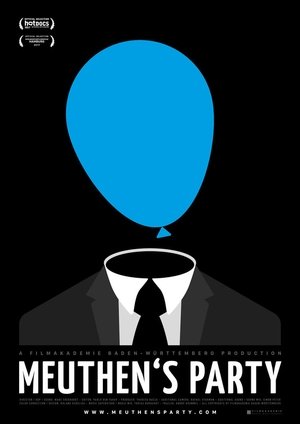
MEUTHEN'S PARTY unmasks the rise of the provincial politician Dr. Jörg Meuthen who doesn't shy away from spreading racist sentiments with a smile on his face.
A young model falls victim to a sadistic cult of sexual slavery, snuff tapes and black magic.
A chemical love story.