The film deals with the process of globalization based on the thought of geographer Milton Santos, who through his ideas and practices, inspires the debate about Brazilian society and the construction of a new world. Santos discusses his views on the importance of respecting difference and his belief that an alternative globalisation model could wholly enfranchise all citizens of the world. An illustrious presence in 20th century social sciences, the man dubbed as ‘geography’s philosopher’ eloquently elucidates a developing world perspective on the global age.
A documentary about a 78-year-old Indian woman in New York who is the world's most passionate theatergoer. Nicki Cochrane has been seeing a play every day for more than 25 years, acquiring free tickets using a variety of ingenious means.
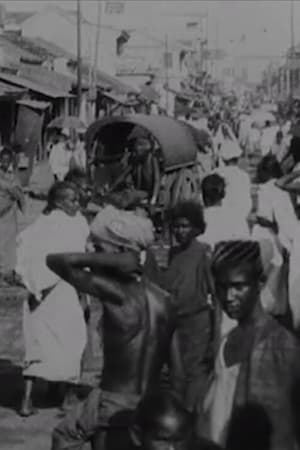
Life on the road in India, showing the traffic, people and animals.
Hindu temples at Benares and Belur and the mythologies associated with them.
In a cluttered news landscape dominated by men, emerges India’s only newspaper run by Dalit women. Armed with smartphones, Chief Reporter Meera and her journalists break traditions on the frontlines of India’s biggest issues and within the confines of their own homes, redefining what it means to be powerful.
Shot over three years, Pariah Dog paints a kaleidoscopic picture of the city of Kolkata, seen through the prism of four outsiders and the dogs they love. These men and women have found meaning and purpose in their shared mission to care for neglected street dogs, who have existed in the towns and villages of India for thousands of years. For some this mission is enough, for others, dreams of a better life are always near.
This Traveltalk series short visits a few locations where the centuries-old traditions of ancient India are kept alive in contemporary times.
To the city come men, women, fruits, flowers, vegetables, goats and sheep – all ready for consumption. It is the process of consumption/exploitation that forms the core of the film.
In a poetic hour and a half, director Mani Kaul looks at the ancient art of making pottery from a wide variety of perspectives.
The Unreserved is an inquiry into the lives of passengers who use the Unreserved Compartment, the cheapest way to travel across India on the Indian Railways system. The film portrays the passengers’ aspirations, efforts and opinions through conversations and personal stories.
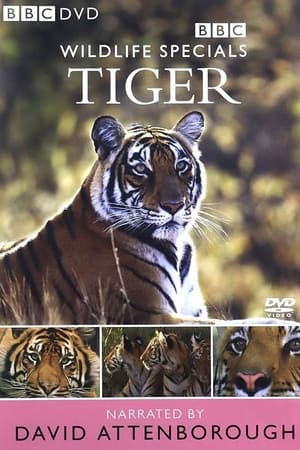
Journey across India, a breath taking land shaped by a myriad of cultures, customs and traditions. Come face to face with the Bengal Tiger and explore the work of this majestic creature with stunning clarity. Soar over blue-hazed Himalayan peaks and sweep down towards the thundering Indian Ocean as we celebrate the power and beauty of India's greatest ambassador - the mighty Bengal Tiger.
"Fascinating India" spreads an impressive panorama of India’s historical and contemporary world. The film presents the most important cities, royal residences and temple precincts. It follows the trail of different religious denominations, which have influenced India up to the present day. Simon Busch and Alexander Sass travelled for months through the north of the Indian subcontinent to discover what is hidden under India’s exotic and enigmatic surface, and to show what is rarely revealed to foreigners. The film deals with daily life in India. In Varanasi, people burn their dead to ashes. At the Kumbh Mela, the biggest religious gathering of the world, 35 million pilgrims bathe in holy River Ganges. This is the first time India is presented in such an alluring and engaging fashion on screen.
Film showing the Viceregal party entering Delhi on lavishly decorated elephants, as part of the Coronation durbar of 1903.
Richly detailed amateur ethnographic film on the agrarian economy and society in rural Punjab.
This portrayal of the rhythm of life and work in a gigantic textile factory in Gujarat, India, moves through the corridors and bowels of the enormously disorienting structure—taking the viewer on a journey of dehumanizing physical labor and intense hardship.
Once facing extinction, Asia's last wild lions live dangerously close to India's villages.
Jhalana’s refuge, India's urban leopard habitat, is controlled by the strong and experienced Bahadur. But his dominance is being challenged – by his son, Rana! Once a quiet youngster, Rana has grown into an ambitious young male. But in the animal kingdom, power is not inherited – it is fought for with strength and persistence. Rana is not content with just securing his place; he wants more. To fulfill his ambitions, he forms a bond with one of his father's females, and what begins as a simple interaction soon turns into a powerful partnership. The aging Bahadur has held his territory for six years and will not tolerate his son's claim. Rana faces a decision: retreat or fight. But Rana follows his instincts.
Man-pulled rickshaw, which have served Kolkata for over eight decades face virtual extinction as a result of legislation introduced by the State Government in 1981. This would rob over 100,000 people of a living. The film analyzes the critical situation, and on the basis of concrete facts and figures, questions whether such a step would be fruitful at all. The image of a man pulling a man is a depressing and a negative one - but not more negative than that of the image of a man going without food.
RROMANI SOUL traces the true origin of the Rroma people. Through rituals, song and dance we follow emblematic figure and "Queen of the Gypsies" Esma Redzepova to Macedonia, south of France and finally to India. The film reveals for the first time ever that the true and unique origin of the Rroma is Kannauj in Uttar Pradesh, India.
Lord Lytton takes up the post of Governor of Bengal.