In Edo-era Japan, a ukiyo-e artist languishes in his master’s shadow. Creatively stifled, he finds consolation in the company of a prostitute, and becomes entangled in a love triangle. A mystery emerges involving two portraits and the sudden disappearance of the artist Sharaku. Helmed by Cannes-selected director Tatsuji Yamazaki, the film employs kabuki-inspired sequences and stylised sets.
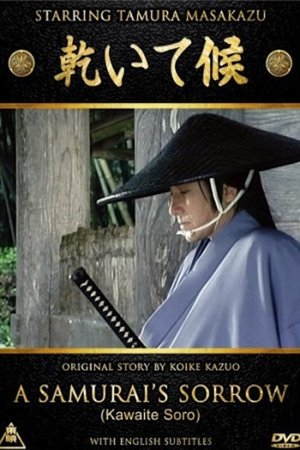
While on his journey through the countryside of Japan, Shingo encounters many people whose lives have been affected by his actions. Though the many duels he fought were intended to bring justice to those who sought to do evil, he is faced with the knowledge that his victories have also caused suffering amont the family members of his victims-leading him to question his life's philosophy. This superb film is the final chapter in this part of Shingo's story. A fitting tribute to his quest to be the supreme swordsman.
After seeing her husband off to work, the young author identified only as Yoshiko sets off to read the large collection of letters she received from other young authors. These are often letters containing samples of their work for critique. One large envelope contains a letter. The letter-writer does not provide his name. The letter is a confession of crimes. The letter-writer has no family or friends, and claims to be "ugly beyond description". He is a chair maker and loves his work and all the chairs he creates, even going so far as to claim some sort of intangible connection to his work.
Chiyoko's mother died when she was young. Since that time, Chiyoko has closed her heart to others. After her pet dies, Chiyoko feels loneliness. Her mother liked the Italian movie "La Strada." Due to movie study club senior, Masamune, Chiyoko is able to watch the Italian movie "La Strada," which her mother liked. Chiyoko soon acts in a movie directed by Masamune.
A man brutally murders a married couple and leaves the word “ikari” (“rage”) written with their blood. The killer undergoes plastic surgery and flees. At three different locations in Japan, a male stranger appears. People suspect that the stranger might be the murderer.
Based on 16-year-old writer Sarie Hinakura’s award winning story Jellyfish is centered around two adolescent girls disconnected from their immediate environment of school and mates. They first get together while staring into a jellyfish tank at a local aquarium. The relationship that ensues eventually faces tension from the divergent personalities of the two protagonists, one of whom explores a heterosexual relationship with a fellow student. Jealousy and the wrath of a lover spurned are inevitable spillovers.
The evening before Christmas eve, Vilde is hanging out with her friends at the central station, when she learns that her mother has been in an accident. She is forced to contact her biological father, but wants to run away to Tokyo.
Set in the 19th century, "Moeyo Ken" follows the life of Toshizo Hijikata. He was the vice-commander of the Shinsengumi and fought against the Meiji Restoration.
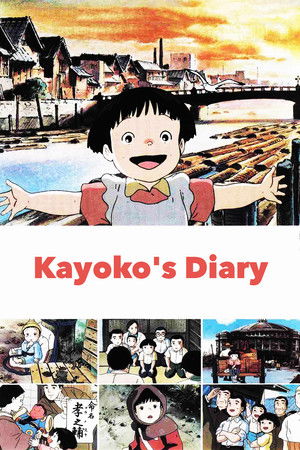
"You have to think about whether they're really your friends," Johnny's dad says when Johnny talks to him about the grief his pals have been giving him lately. The other boys haven't exactly tried to understand why Dad opened up his family's home to Miyeko, a survivor of the Hiroshima Atomic bomb. Although she is only in America a short time to have surgery on her badly scarred face and arm, her visit reveals just how many ignorant and intolerant attitudes still exist 10 years after the war's end. But Johnny, who also resents Miyeko at first, becomes one of her fiercest defenders after he makes the effort to look past her outward appearance. Only then can the scars begin to heal.
Kakekomi tells the stories of Edo women in the 1800s that escape abusive husbands and lovers by taking refuge in Tokeiji, a monastery in Kamakura.
After her husband's death, Mrs. Hata desperately needs help on her cucumber farm. Rinko' mother wants her to spend the summer helping Mrs. Hata, her life-long friend. But 12-year-old Rinko sees Mrs. Hata's traditional Japanese ways as being backward and "crazy." When she gives in to her mother's request, she discovers Mrs. Hata is kind and courageous, fighting to save her farm. Before summer ends, RInko comes to appreciate and defend "crazy" Mrs. Hata.
After the attack on the Chief Cabinet Secretary, the next duty of the fourth office will be to guard the National Assembly building. In the midst of security, Ogata keeps Inoue away from the main conference hall and puts his well-thought-out plan into action, and the parliament building is controlled by SPs and terrorists who support the revolution. Inoue notices something strange and starts to fight against the terrorists to stop Ogata.
Yuki is introverted and not very good with love. She has a crush on somebody, but he already has a girlfriend. Kou is in the same art club as Yuki and has feelings for her.
A short film based on the short story "De Binocle" by Dutch writer Louis Couperus. It tells the story of a nervous man who on one evening while going to the opera becomes the victim of his own obsessive thoughts.
Traces the rise of the company Suzuki Shoten from the 1880's to 1919. After the death of her husband, Yoni Suzuki and her general manager built the company from a small sugar importer into Japan's largest trading and manufacturing company.
A woman bears a 13 year grudge with her father over the traditional dance he was performing that caused him to be absent from her mother's death, until they reconnect over the very same dance.
In the year 1868, three young men join the elite Shogitai division of the Shogunate. The Shogitai fights to the end and opposes the dismantling of the feudal military dictatorship known as the Bakufu system.
In a dystopian present, a young Japanese-American man battles the cascading effects of his family's wrongful incarceration in the 1940s.
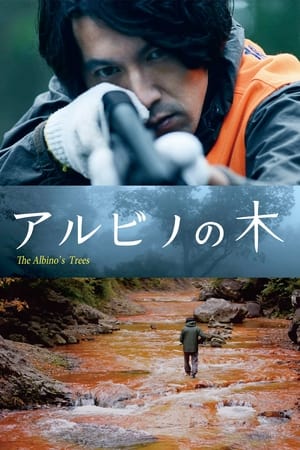
A poignant moral dilemma unfolding against lush mountainous landscapes, The Albino’s Trees follows Yuku (Ryohei Matsuoka), an animal control hunter who takes on a lucrative job to kill a rare white deer considered to be a god of the forest by a nearby village. Though Yuku initially steps up to the task in order to support his mother’s medical bills, his will begins to falter as he gets to know the villagers and the reasons behind their difficult choice to live as outsiders.
Shio Asami (Stephanie) was brought up in a wealthy family whose mother is a prominent opera singer. However, the bankruptcy of her father’s business forced her to give up becoming an opera singer. Moe Midorikawa (Hikari Mitsushima) entrapped Shio and claimed a victory in an opera contest. A competition of two heroines ensues, placing their pride on the line.