What motivates people to organize communal living themselves? What ideals are behind it, how do they finance themselves, and how does life in a community work? Based on six self-managed residential buildings in Austria from the past 40 years, the documentary film "Der Stoff, aus dem Träume sind" (The Stuff Dreams Are Made Of) sets out to find answers. Filmmakers Lotte Schreiber and Michael Rieper tell these six stories by staying very close to the protagonists.
With the construction of the Indian planned city of Chandigarh, the Swiss and French architect Le Corbusier completed his life's work 70 years ago. Chandigarh is a controversial synthesis of the arts, a bold utopia of modernity. The film accompanies four cultural workers who live in the planned city and reflects on Le Corbusier's legacy, utopian urban ideas and the cultural differences between East and West in an atmospherically dense narrative.
The Richardson Olmsted Campus, a former psychiatric center and National Historic Landmark, is seeing new life as it undergoes restoration and adaptation to a modern use.
In 1959 Hiroshi Teshigahara shot the following 16 mm footage of he and his father’s first trip to Barcelona and the outlying Catalonian countryside, including a visit to the home of Salvador Dali in Port Lligat. The footage was recorded without sound.
In the heart of Paris, an entire palace has disappeared. It was the very first residence of the kings of France. Long before Versailles, long before the Louvre, the Palais de la Cité stood on the most prestigious island in Paris, the historic cradle of France, facing Notre-Dame. So majestic in the Middle Ages, this palace has become a ghost of history. Over the centuries, this architectural masterpiece has almost completely disappeared. A trio of experts will resurrect it in 3D. Using science and unprecedented excavations, they will track down the pieces of the puzzle to reconstruct it at its peak in the 14th century, and bring back to life those who inhabited it. From the Romans to the Vikings, from Saint Louis to the cursed kings, all have left clues of this 'Versailles of the Middle Ages'.
In 1967, de Andrade was invited by the Italian company Olivetti to produce a documentary on the new Brazilian capital city of Brasília. Constructed during the latter half of the 1950s and founded in 1960, the city was part of an effort to populate Brazil’s vast interior region and was to be the embodiment of democratic urban planning, free from the class divisions and inequalities that characterize so many metropolises. Unsurprisingly, Brasília, Contradições de uma Cidade Nova (Brasília, Contradictions of a New City, 1968) revealed Brasília to be utopic only for the wealthy, replicating the same social problems present in every Brazilian city. (Senses of Cinema)
On the tiny island of Martha's Vineyard, where presidents and celebrities vacation, trophy homes threaten to destroy the islands unique character. Twelve years in the making, One Big Home follows one carpenters journey to understand the trend toward giant houses. When he feels complicit in wrecking the place he calls home, he takes off his tool belt and picks up a camera.
Viva El Vedado presents the history of the Havana neighborhood of El Vedado from the last quarter of the 19th century through the Cuban Revolution and highlights its varied and outstanding architecture. Known as a cultural center of Havana, Vedado is particularly notable for its unique collection of Cuban architecture of the 20th century. The film’s goal is to introduce its audiences to the neighborhood’s remarkable architecture, its vibrant life, and the need for preserving Vedado as part of Havana’s heritage. It is a glimpse beyond tourist fantasies and stereotypes, a rare view of one of Havana’s most important neighborhoods.
Phillis Wheatley Elementary School was a significant landmark in the Tremé neighborhood of New Orleans, serving as an important educational institution for African-American students for nearly half a century. The school was known for its innovative modern design that was unique to the region, reflecting the area’s cultural and historical roots. However, the school sustained significant damage during Hurricane Katrina and its aftermath in 2005. Despite the damage, the school’s unique design caught the attention of DOCOMOMO Louisiana, an organization dedicated to preserving modern architecture. They advocated for the restoration of the school through adaptive reuse, citing its historical significance and architectural importance. The organization produced this short film, “A Plea for Modernism,” narrated by actor Wendell Pierce, to raise awareness of the school’s cultural and historical value and promote its restoration.
Googie architecture was one of the most visually exuberant and culturally formative design movements of the mid-20th century, yet it remains widely misunderstood. Defined by bold angles, sweeping rooflines, neon signage, and a sense of space-age optimism, Googie transformed everyday buildings into roadside spectacle. Coffee shops, bowling alleys, car washes, banks, and churches were designed not just for function, but to captivate motorists cruising by. Rooted in Los Angeles, the movement drew inspiration from visionary architects such as Frank Lloyd Wright and John Lautner, while firms like Armet & Davis brought futuristic flair to the commercial landscape. Though many original structures have been lost, preservationists now champion Googie as a serious architectural expression—one that captured the aspirations of postwar America and reshaped the visual identity of the modern city.
Le génie romain
A docu-art film about Kyiv and the contemporary problems of the capital. The film raises the issue of the dilapidated state of Kyiv's old buildings and the search for effective mechanisms to preserve the city's architectural heritage.
Architecture in Beirut was the second greatest victim of the civil war, with pages of ancient and modern history erased by the end of the conflict. This documentary interviews citizens calling for a reconstruction plan that would preserve Beirut’s spirit of culture and openness.
Kamenná sláva
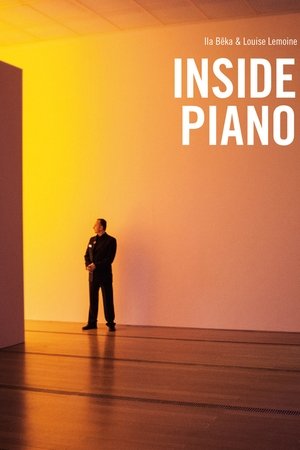
The film juxtaposes/compares two museums: The Museum of Art, Ein Harod, Israel, which Samuel Bickels (1909-1975) built there in 1948, and The Menil Collection in Houston, Texas, built by Renzo Piano (b. 1937) 1986 . The method of natural lighting in Bickels‘s construction was the direct model for Piano, who adopted for his construction at the request of its patroness Dominique de Menil.
Immigrant workers build a shopping mall for the upcoming 1972 Olympic Games in Munich. In 2016, nine people with migrant backgrounds are killed in a racist attack at the same mall.
Through booms and busts, Delft Theatres and its innovative gem The Nordic endured in Marquette, Michigan for almost 100 years. Bernie Rosendahl’s crusade to restore the historic arthouse to its former glory reveals a hidden cinema empire in the Upper Peninsula.
This film features some of the most important living Postmodern practitioners, Charles Jencks, Robert A M Stern and Sir Terry Farrell among them, and asks them how and why Postmodernism came about, and what it means to be Postmodern. This film was originally made for the V&A exhibition 'Postmodernism: Style and Subversion 1970 - 1990'.
Bardejov
In 1935, Frank Lloyd Wright designed a country house for the Kaufmann family over a small stream in Western Pennsylvania. He named it Fallingwater. It, perhaps more than any other building, exemplifies Wright's concept of 'Organic Architecture,' which seeks to harmonize people and nature by integrating the building, the site, and its inhabitants into a unified whole. And today, the iconic image of the house over the waterfall, remains a testament to a great architect working at the height of his career. Highlights include interviews with Fallingwater director Lynda Waggoner and architectural historian Richard Cleary, who explain Wright's concept of "organic architecture" and the qualities that make the structure so exceptional.