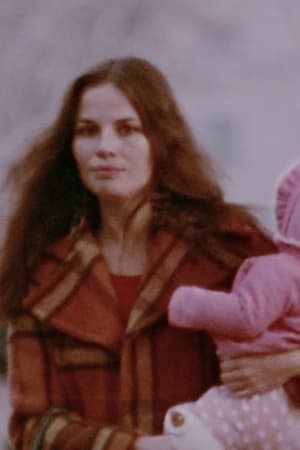
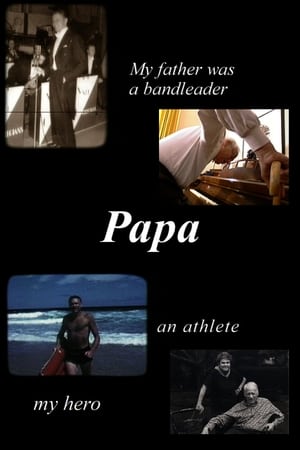
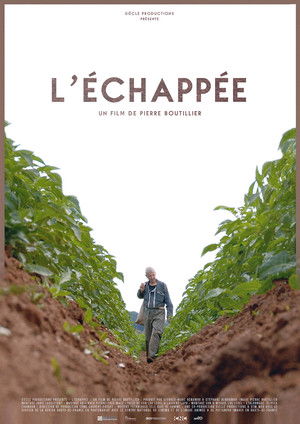
Thomas Haemmerli is about to celebrate his fortieth birthday when he learns of his mother's death. A further shock follows when he and his brother Erik discover her apartment, which is filthy and full to bursting with junk. It takes the brothers an entire month to clean out the place. Among the chaos, they find films going back to the 1930s, photos and other memorabilia.
Draussen bleiben
In Uganda, AIDS-infected mothers have begun writing what they call Memory Books for their children. Aware of the illness, it is a way for the family to come to terms with the inevitable death that it faces. Hopelessness and desperation are confronted through the collaborative effort of remembering and recording, a process that inspires unexpected strength and even solace in the face of death.
After the COVID-19 time, the weather gradually turned cool and the octogenarian couple led a quiet life. The couple realized that there were only three people left in their generation after stumbling upon a photo. So they decided to visit their relative who lived in another city.
An unusual friendship in an agitated political context.
National Film Board of Canada documentary of stories of Acadians (French Canadians from the eastern Maritime provinces). Hundreds of thousands of Acadians emigrated to Louisiana following deportation by the British during the Acadian Expulsion of the mid-18th century, hence the term 'Cajun.'
An Oscar nominated documentary about a middle-class American family who is torn apart when the father Arnold and son Jesse are accused of sexually abusing numerous children. Director Jarecki interviews people from different sides of this tragic story and raises the question of whether they were rightfully tried when they claim they were innocent and there was never any evidence against them.
This documentary explores the history of Canada’s first major migration of non-European and non-white refugees who arrived in 1972 when Ugandan President Idi Amin expelled all South Asians from the country. Their story of struggle and hope became part of Canada’s conversations about refugees and cultural pluralism, and informed the Canadian response to future refugee movements.
In a series of letters to her young son, a mother, soldier and filmmaker documents her thoughts from the Ukrainian frontline.
In rural Kosovo, identical houses are built for family members working abroad, in the hope that they will one day return to settle in their old homeland.
When a Mongolian nomadic family's newest camel colt is rejected by its mother, a musician is needed for a ritual to change her mind.
Before the eyes of the Sudanese Ahmed (25), the war broke out in full force. He decides to flee on foot to the Netherlands alone, to be able to live there in freedom. This documentary shows part of his arduous journey: from the Italian Alps to Ter Apel.
Arctic Tale is a 2007 documentary film from the National Geographic Society about the life cycle of a walrus and her calf, and a polar bear and her cubs, in a similar vein to the 2005 hit production March of the Penguins, also from National Geographic.
What would your family reminiscences about dad sound like if he had been an early supporter of Hitler’s, a leader of the notorious SA and the Third Reich’s minister in charge of Slovakia, including its Final Solution? Executed as a war criminal in 1947, Hanns Ludin left behind a grieving widow and six young children, the youngest of whom became a filmmaker. It's a fascinating, maddening, sometimes even humorous look at what the director calls "a typical German story." (Film Forum)
There is a south-facing house in Gyeonggi Province. In this house, there are four people: my mom, dad, grandfather, and me. They spend their days in their own space. Sounds traverse the house, both from inside and out.
The documentary's title translates as "to be and to have", the two auxiliary verbs in the French language. It is about a primary school in the commune of Saint-Étienne-sur-Usson, Puy-de-Dôme, France, the population of which is just over 200. The school has one small class of mixed ages (from four to twelve years), with a dedicated teacher, Georges Lopez, who shows patience and respect for the children as we follow their story through a single school year.
By means of objects, photos, tapes and films, director Angelika Levi, half-German, half-Jewish, examines the story of her family. The film deals with trauma and the way history is produced, filed away, turned into discourse and ordered on macro and micro levels.
Three generations of the Phadke family live and work together in South Bombay. As they prepare for a family wedding, director Archana Atul Phadke, who is not in any hurry to marry, observes the shifting, often very funny household dynamics, as both her mother and grandmother wonder how they have tolerated their husbands for so long.
La Carpète
In July 1860, the schooner Clotilda slipped quietly into the dark waters of Mobile, Ala., holding 110 Africans stolen from their homes and families, smuggled across the sea, and illegally imported to be sold into slavery. Surviving Clotilda is the extraordinary story of the last slave ship ever to reach America's shores: the brash captain who built and sailed her, the wealthy white businessman whose bet set the cruel plan in motion, and the 110 men, women, and children whose resilience turned horror into hope.