Tongóbriga (El espíritu de un lugar)
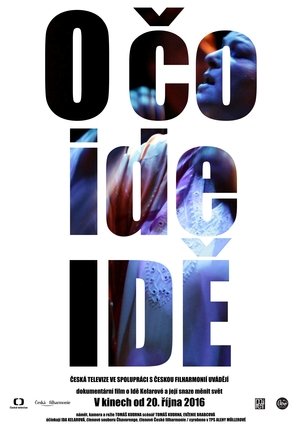
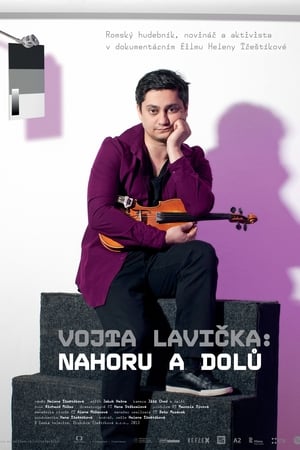
Longitudinal documentary film was shot for past 16 years and the main protagonist is Roman musician and activist Vojta Lavička. Vojta is a master in violin play, who focuses not only on music but also deals with problems of his origin Roman nationality. Vojta is very active in media - he worked in the national radio and television, he worked in the NGO that organize street work for Roman ghettos around the Czech republic, Vojta worked also as a social worker. All together we can watch him struggling with the main topic of his life - his national minority and problems that are caused by living next to Czech majority. Aside this topic films discovers Vojta's private life and his fight for being a good musician and a good man.
13 years ago, director Bob Entrop made the film A piece of blue in the sky, the first film in the Netherlands that depicted the murder of almost 1 million Sinti and Roma during the Second World War. There is a taboo on what happened during the war, you don't talk about it with anyone and certainly not in front of a camera. Requiem for Auschwitz is a sequel, with the most valuable moments from the first film, supplemented with the grandchildren and the creation and performance of the 'Requiem for Auschwitz' by Sinti composer Roger Moreno Rathgeb by the Sinti and Roma Philharmonic from Frankfurt and a Jewish choir in the Berliner Dom in Berlin, during Holocaust Memorial Day. During his visit to Auschwitz in 2020 with four musicians from the Dutch Accompaniment Orchestra, Roger shows them the places that inspired him.
Me sem s-ar tu
Figlio di Giano
Three women with Roma backgrounds each seek their own path to freedom and independence. Ruva was born deaf and fled Kosovo at a young age to escape the culture. Nadita was adopted as a baby and never knew her Serbian biological parents. Cillia lives according to the strict rules of traditional Sinti culture, which sometimes clash with her career as a dancer.
The film is separated into four chapters, each tracking a different group of protagonists who all have one thing in common – they were born deaf. Little Sandra likes to play football and admires Ronaldinho. Marián worships trains and wants to be an engine driver. Teenagers Alena and René are expecting a baby and long for it to be born healthy. The trio of Roman, Kristián and Karmen help their parents by collecting junk to be sold and dream of one day having a house with a flush toilet.
A musical, and also a reflection on watching, on trying to escape an anthropocentric gaze and also on watching itself in cinema. Featuring mares and horses: Triana, Víctor K, Bambi Sailor, San Special Solano, Buck Red Skin, Onkaia, Cool Boy, the donkey Agostino, the mule Guapa. And also Alfredo Lagos, Raül Refree, María Marín, Pepe Habichuela, Virgina García del Pino, María García Ruiz, Pilar Monsell, María Pérez Sanz.
Marin Karmitz, bande à part
Valverde, un año de arcoiris
Is the notion of a real Matrix plausible? An investigation of the technologies that inspire the metaphor of the Matrix trilogy.
The sofa, the fire, the silhouette. A home that disappears in ashes. After thirteen years of mental and physical confinement in that house, another confinement was necessary to face those images. Family photographs (90s-00s) and personal video archive footage filmed in 16mm and MiniDv between March and April 2019 during the move and the burning of the sofa, edited in quarantine, April 2020.
Ever since the first Roma people arrived in Sweden five hundred years ago, they have been discriminated against and persecuted. The lack of knowledge, invisibility and denial of the historical abuses that Roma have been exposed to is one of the many contributing causes of continued marginalization and vulnerability of Roma today. Here, the Roma tell of the abuses and persecutions they experienced during the 20th century. How it felt like as a child being constantly expelled from the camp, not infrequently in the middle of the night, with violence and under gunfire. Soraya Post from the traveling group tells how her mother, as a pregnant 23-year-old, was forced to abort her child in the seventh month. The reason: She was a "gypsy".
The news about the Swedish police's registry of Roma people has generated very strong reactions. In this new documentary we meet some young Swedish Roma people who talk about their feelings and thoughts about the registration.
Documentary about the founding of Ciudad Nezahualcóyotl on the outskirts of Mexico City in the sixties.
A very special trip to one of the most inaccessible sites of the Spanish heritage: the Altamira cave. A guided visit to its impressive painted walls and all its secret nooks and crannies.
Brash, disrespectful, impudence, violent and urgent entertainment called Gore. Gorevision explained and exhibited.
A warm memory of Tucuman childhoods called Tapalín: a clown who shouted "Long live the Homeland!" thirty years ago on TV. Now he lives without frills. It narrates the relationship between Tapalín, the singer Carlos Geomar and César Quiroga who live in the same body.
Ricardinho, el otro Messi (Los Otros)
A look at what happened after Borat: Cultural Learnings of America for Make Benefit Glorious Nation of Kazakhstan was filmed in the Romanian village of Glod. It follows the life of one girl who longs to escape the poverty as foreign lawyers arrive with the promise of suing 20th Century Fox for millions of dollars.