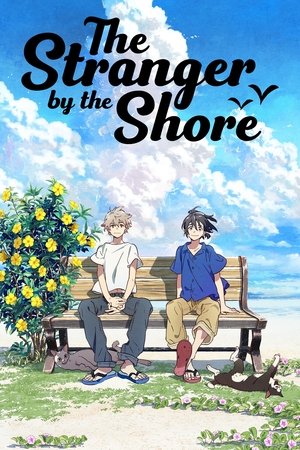
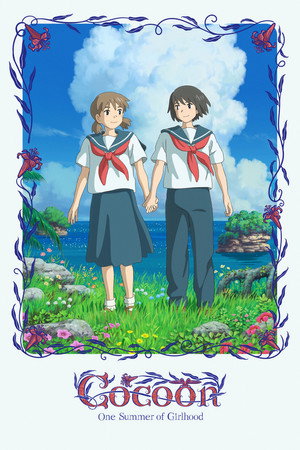
A documentary anime retelling the shipwreck of the freight boat Tsushima Maru, which was carrying 836 schoolchildren home in July 1944 when it was attacked and sunk by an American submarine. Produced by the surviving family members of the Tsushima Maru.
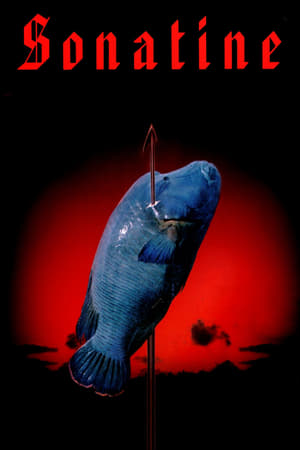
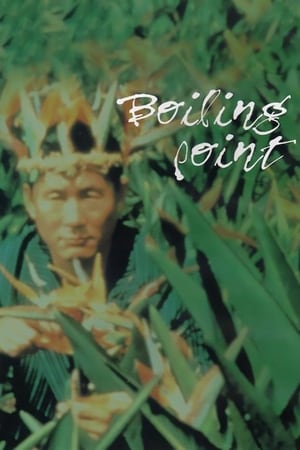
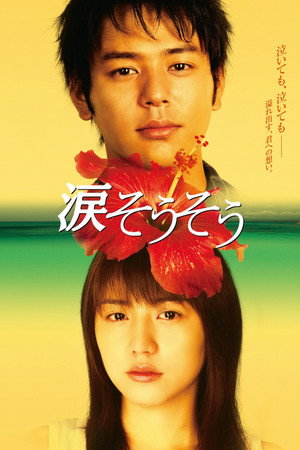
Murakawa, an aging Tokyo yakuza tiring of gangster life, is sent by his boss to Okinawa along with a few of his henchmen to help end a gang war, supposedly as mediators between two warring clans. He finds that the dispute between the clans is insignificant and whilst wondering why he was sent to Okinawa at all, his group is attacked in an ambush. The survivors flee and make a decision to lay low at the beach while they await further instructions.
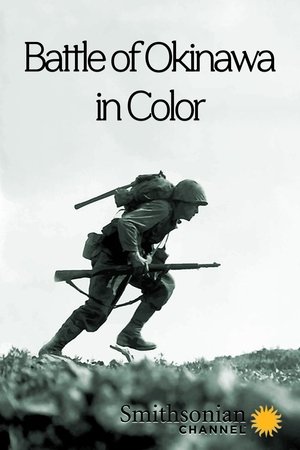
Together with Shimada Akira (Hagiwara Masato), the last appointed governor of Okinawa during the war, Arai Taizo (Murakami Jun), the chief of police of Okinawa Prefecture, goes beyond his duties and strives to protect the lives of the citizens of the prefecture. As the ravages of war intensify, the two, who each carried a heavy cross during the Battle of Okinawa, desperately devote themselves to saving the lives of the Okinawan people, with the belief that "life is precious." A human drama, set in Okinawa at the end of World War II, depicting the preciousness of human life. Directed by Igarashi Sho of One Step on a Mine, It's All Over.
Aoi has dropped out of high school and gives birth to a baby son with her husband Masaya. They live in Okinawa, the Southern island of Japan where they were both born. To make ends meet, she starts working as a night-club hostess. Masaya loses his job and cannot deal with the family’s responsibilities. Their immaturity and dependence aggravate the relationship and continuous fights lead to a social downfall. Aoi’s bond with her son sets her on a path to find solutions.
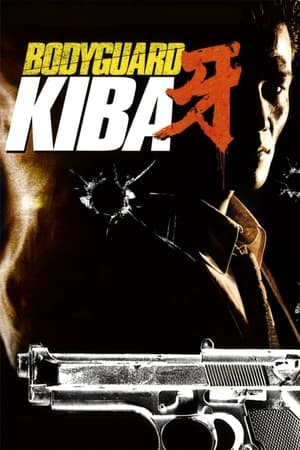
Chiba, looking gnarly, and acting as animalistic as ever, stars alongside Matsukata as violent gangsters battling their way through fight after bloody fight with rival yakuza on the streets of Okinawa.
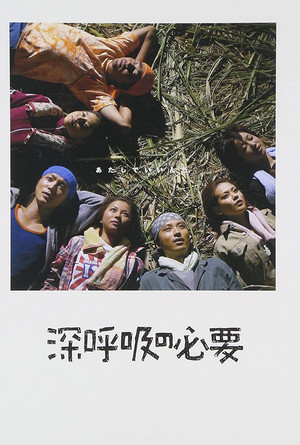
With summer vacation, Chiaki, a high school girl, is just passing each day without getting along well with her boyfriend, Masahiko and her first experience.
An Okinawan photographer, Mao Ishikawa spent her early 20s working as a barmaid in establishments catered specifically to African American GIs stationed in Okinawa. “There was love,” as the tagline reads, her photography book, 『Red Flower – The Women of Okinawa』 captured the diaristic intimacy of friendships, love affairs, and wild nights shared amongst her social circle of that time.
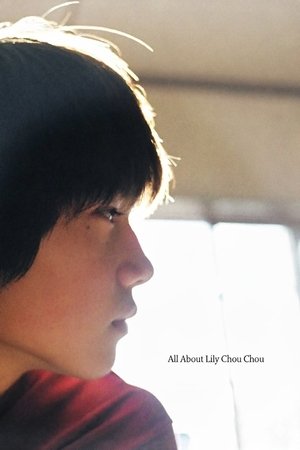
Charts the troubled teenage years of students Yūichi Hasumi and Shūsuke Hoshino, exploring the shifting and complex power dynamics of their relationship against the backdrop of Yūichi's love for the dreamy and abstract music of pop star Lily Chou-Chou.
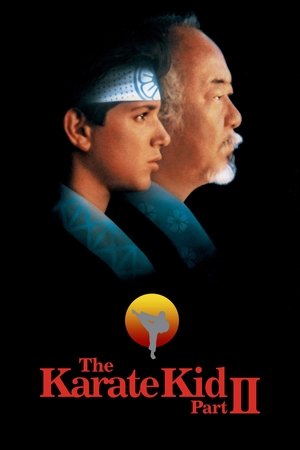
Summoned by his dying father, Miyagi returns to his homeland of Okinawa, with Daniel, after a 40-year exile. There he must confront Yukie, the love of his youth, and Sato, his former best friend turned vengeful rival. Sato is bent on a fight to the death, even if it means the destruction of their village. Daniel finds his own love in Yukia's niece, Kumiko, and his own enemy in Sato's nephew, the vicious Chozen. Now, far away from the tournaments, cheering crowds and safety of home, Daniel will face his greatest challenge ever when the cost of honor is life itself.
In 2010, while covering the issue of the "secret agreement" at the Ministry of Foreign Affairs, the author came across diplomatic documents relating to the reversion of Okinawa and was particularly impressed by the handwritten documents of Kazuo Chiba, then Director of the North American First Division at the Ministry of Foreign Affairs, which, unlike ordinary bureaucrats, "stood out from the crowd and seemed unique". The name of Chiba subsequently appeared in a number of documents left by former Prime Minister Eisaku Sato's secretary, and the author became interested in finding out what kind of person he was.
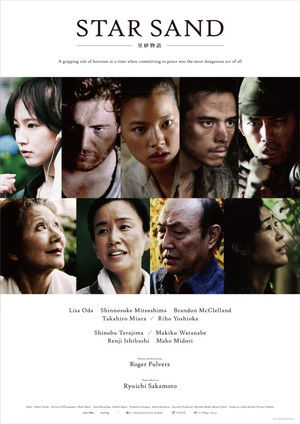
In the closing days of World War II, Japanese-American Hiromi, a girl age 16, encounters an American deserter, Bob, and a Japanese soldier, Iwabuchi, living together in a cave on a small island in Okinawa. The two men are deserters from their armies; yet both vow never to harm another human being again. Hiromi looks after the deserters until another soldier appears and the peace of the cave is shattered. It leads to the death of three of them and a fascinating mystery that isn't solved until the present day.
Major Daniel Kirby takes command of a squadron of Marine fliers just before they are about to go into combat. While the men are well meaning, he finds them undisciplined and prone to always finding excuses to do what is easy rather than what is necessary. The root of the problem is the second in command, Capt. Carl 'Griff' Griffin. Griff is the best flier in the group but Kirby finds him a poor commander who is not prepared to make the difficult decision that all commanders have to make - to put men in harm's way knowing that they may be killed.
In post-WWII Japan, an American captain is brought in to help build a school, but the locals want a teahouse instead.
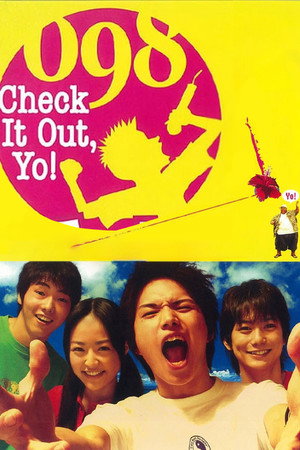
Tomboy Yui (Mao Inoue) brings her 3 male friends along with her to see a live performance of local Okinawan rap group, “Workaholic”. Upon witnessing the crowd reaction, the boys decide to start a rap group of their own to impress chicks—while Toru (Hayato Ichihara) has the added motivation of impressing his older, more sophisticated love interest Nagisa (Ayumi Ito). With only 2 weeks to learn how to play instruments and prepare for their first show, the performance is predictably humiliating. In order to save pride they decide to give it another shot, but this time they ditch the instruments for a sampler and stay truer to themselves. Will Toru be able to capture Nagisa’s heart? Will Yui ever confess her love to Toru or will she just keep practicing her advanced pro wrestling techniques on him instead?
Jimmy Tong is an expert blackmailer and thief who specialises in white-collar crimes. With his side-kick, Jimmy steals a personal diary belonging to a Yakuza leader Ken Sato intending to use its details as a platform for blackmailing and to extort money. Sato agreed to the uneasy deal and made preparations to pay Jimmy his exorbitant demands only for Sato's girlfriend Jenny to betray him and make off with the money to Okinawa.
Director Miho Niikura examines the modern practice of tee (Okinawan karate), and its attractiveness to Westerners—some of whom travel thousands of miles to study the venerable martial art in its birthplace, Okinawa.
An Okinawan woman kidnaps the teenage son of a U.S. Marine convicted of raping her when she was a girl.
An Okinawan prophecy that foretells the destruction of the Earth is seeming fulfilled when Godzilla emerges to return to his destructive roots. But not all is what it seems after Godzilla breaks his ally Anguirus's jaw. Matters are further complicated when a second Godzilla emerges, revealing the doppelgänger as a mechanical weapon.
During World War II, many Japanese immigrants in Santos, Brazil, were forced to move to another place. Matsubayashi draws attention to the fact that 60% of the immigrants were from Okinawa. Based on testimonies from interviewees, this film reveals the hidden historical relationship between Okinawa and Brazil.
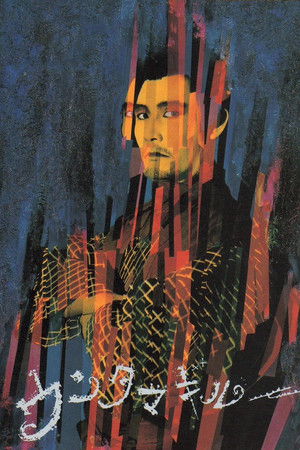
A magical realist story of the legendary Okinawan hero Untamagiru participating in efforts to form an independent Okinawa before the island was returned to Japan in 1972.