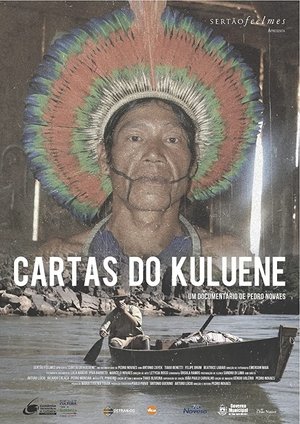
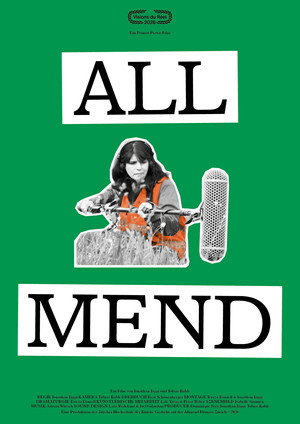
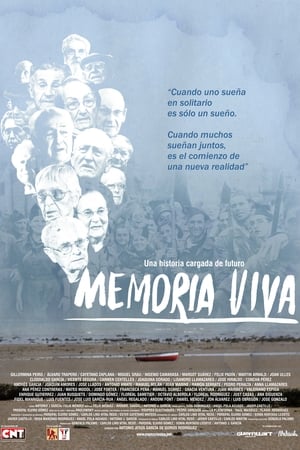
Independent documentary created by group of enthusiast from Russia. It covers the topic of Zapatista uprising in Chiapas, Mexico and struggle of Mexican indigenous peoples for justice, liberty and democracy.
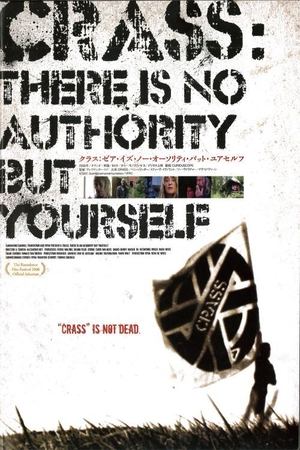
A Dutch documentary about the history of the anarchist punk band Crass. The film features archival footage of the band, and interviews with former members Steve Ignorant, Penny Rimbaud and Gee Vaucher.
A heady, energised mash-up of animation, unseen archive footage and interviews, Rebel Dykes provides an intimate insight into the politically charged, artistically radical anarchist subculture in 1980s London, and the individuals who helped shape and change their world. Bringing together BDSM nightclubs, inclusive, sex-positive feminism, DIY zine culture, post-punk musicians and artists, squatters, activists and sex workers, these rebel dykes went out onto the streets to make their voices heard. [Feature length version of 2016 short of the same name.]
September 11, 1898: The imperial family’s personal physician, Dr. Herman Widerhofer, is deeply shocked by the news that an anarchist has assassinated Empress Elisabeth in Geneva. He then shuts himself up in his private rooms and recalls the empress’ fateful life. We learn the truth about Elisabeth, as the doctor knew more about her than anyone else.
An exploration of the heavy metal scene in Los Angeles, with particular emphasis on glam metal. It features concert footage and interviews of legendary heavy metal and hard rock bands and artists such as Aerosmith, Alice Cooper, Kiss, Megadeth, Motörhead, Ozzy Osbourne and W.A.S.P..
A colorful and provocative survey of anarchism in America, the film attempts to dispel popular misconceptions and trace the historical development of the movement. The film explores the movement both as a native American philosophy stemming from 19th century American traditions of individualism, and as a foreign ideology brought to America by immigrants. The film features rare archival footage and interviews with significant personalities in anarchist history including Murray Boochkin and Karl Hess, and also live performance footage of the Dead Kennedys.
This timely, bold set of one-on-one interviews presents two of the most venerable figures from the American Left—renowned historian Howard Zinn and linguist and philosopher Noam Chomsky—each reflecting upon his own life and political beliefs. At the age of 88, Howard Zinn reflects upon the Civil Rights and anti–Vietnam War movements, political empires, history, art, activism, and his political stance. Setting forth his personal views, Noam Chomsky explains the evolution of his libertarian socialist ideals, his vision for a future postcapitalist society, the Enlightenment, the state and empire, and the future of the planet.
There are plenty of anarchists in the world. Many have committed robbery or smuggling for their cause. Fewer have discussed strategies with Che Guevara or saved the skin of Eldridge Cleaver, the leader of the Black Panthers. There is only one who has done all that, and also brought to its knees the most powerful bank on the planet by forging travellers cheques, without missing a single day of work in his construction job. He is Lucio Urtubia, from a tiny village in Navarra in North of Spain. Lucio, 75, now lives in Paris, still raising anarchist hell.
On September 16, 1920, as hundreds of Wall Street workers headed out for lunch, a horse-drawn cart packed with dynamite exploded in front of Morgan Bank — the world’s most powerful banking institution. The blast turned the nation’s financial center into a bloody war zone and left 38 dead and hundreds more seriously injured. As financial institutions around the country went on high alert, many wondered if this was the strike against American capitalism that radical agitators had threatened for so long.
After a wave of arrests in 1969, Italian anarchist Giuseppe Pinelli allegedly falls out of a police building window while being interrogated. The circumstances leading to his death are re-enacted in three hypothetical versions in this attempt at counter-investigation. Released together with Nelo Risi's 'Giuseppe Pinelli', as 'Documenti su Giuseppe Pinelli'.
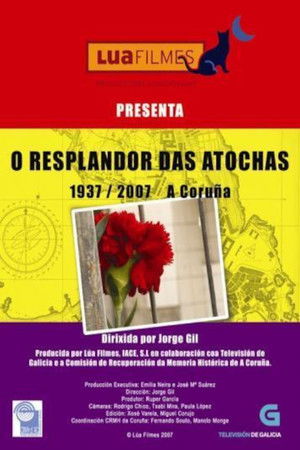
During the Spanish Civil War (1936-1939) and the Second World War (1939-1945), around three thousand people managed to elude their pursuers, and probably also avoided being killed, thanks to the heroic and very efficient efforts of the Ponzán Team, a brave group of people — mountain guides, forgers, safe house keepers and many others —, led by Francisco Ponzán Vidal, who managed to save their lives, both on one side and the other of the border between Spain and France.
Casas Viejas: el grito del sur
Armed based on photography, period films, archival materials and testimonies of survivors, family members and historians, the documentary accurately and exquisitely reconstructs the course of the “expropriating anarchists” in the Río de la Plata and specifically in Montevideo del First third of the 20th century.
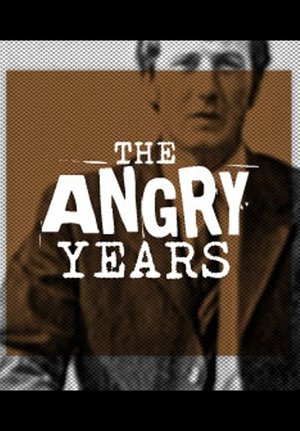
1970 marked the start of a bombing campaign by British urban guerrilla revolutionaries The Angry Brigade. Their targets, a bizarre mix, included the Miss World contest, Ford’s motor factory, the home of a conservative cabinet minister and the Biba department store. Following a two year hunt by the newly formed Special Branch, eight suspects were arrested, and following the longest trial in British criminal history, four young graduates were convicted of the bombings. The Angry Years tells the little known story of the Angry Brigade - contributors include Jake Prescott, ex Angry Brigade member, the journalist Paul Foot and the Special Branch detective credited with tracking the Angry Brigade down.
The German punk band "Terrorgruppe" was found in 1993 and broke up in 2005. The band was essential for the developement of German punk. Songs like "Keine Airbags für die CSU" or "Mein Skateboard ist wichtiger als Deutschland" inspired a whole generation of punks and anarchists. This documentary portraits the band's history from 1993 to 2005.
An experimental documentary exploring the turn-of-century lynching of union organizer Frank Little in Butte, Montana.
An eclectic mix of activists take a stand to protect an old growth forest from logging at Warner Creek in the Willamette National Forest of Oregon, blockading the logging road and repelling the State Police. Over months a community builds around the illegal blockade as it develops into the Cascadia Free State and similar actions spread across the region. Years after its release, Pickaxe has become a classic document of the potential for grassroots direct action to achieve victory against the forces of both government and big business. Lovingly crafted by the participants themselves, the film expertly presents every moment, from confrontation to celebration.
We follow the build-up and training of two opposite Belgian political parties. We see their leaders during meetings, during voting and after when the results of the elections are published.
How to Fix the World? is a comprehensive and informative documentary about direct action in the 1990s and 2000s, directed by Jouko Aaltonen. In the documentary, anarchists, climate activists, and squatters openly describe their experiences and link them to mainstream phenomena in society. A wide range of archive material sheds a light on the history of direct action and activism in the Finnish society.
In the summer of 1959, as a magazine correspondent, writer and filmmaker Pier Paolo Pasolini (1922-75) traveled along the Italian coast. In 1963, he documented the sexual behavior of the Italians. In the winter of 1970-71, he witnessed the hardships of the most impoverished Italian population suffering from the boot of state power. After these three trips, he came to the conclusion that Italian society had changed drastically for the worse over the years.