Maria Callas, the world's greatest opera singer, lives the last days of her life in 1970s Paris, as she confronts her identity and life.
France, 1986. When Hughes, a young man from the French West Indies, discovers the new Freetime ad, it is a shock : France, the country where he was born, to which he owes his life and his identity, considers him a cannibal. This is the start of a radical awareness fueled by anger and frustration.
The brief life of Jean Michel Basquiat, a world renowned New York street artist struggling with fame, drugs and his identity.
September of 1944, a few days before Finland went out of the Second World War. A chained to a rock Finnish sniper-kamikadze Veikko managed to set himself free. Ivan, a captain of the Soviet Army, arrested by the Front Secret Police 'Smersh', has a narrow escape. They are soldiers of the two enemy armies. A Lapp woman Anni gives a shelter to both of them at her farm. For Anni they are not enemies, but just men.
The true story of technical troubles that scuttle the Apollo 13 lunar mission in 1970, risking the lives of astronaut Jim Lovell and his crew, with the failed journey turning into a thrilling saga of heroism. Drifting more than 200,000 miles from Earth, the astronauts work furiously with the ground crew to avert tragedy.
A musical film based on biographical facts about Clara Wieck's love for composer Robert Schumann (1810-1856), her marriage against her will, Schumann's triumph, and his tragic end due to mental illness. The film is beautiful and entertaining, full of noble spirit and beautiful words about art and love, which only conflict in a theoretical context; not least thanks to its solid cast, this film is quite serious and far from kitsch. Completed in 1944, during World War II, the film was rejected by the Nazi leadership, but was eventually released and enjoyed success with an audience already weary of war.
Film about the fictitious adventures of Franz Freiherr von Trenck, who lived during the times of empress Maria Theresia of Austria garnished with espionage and twisted love affairs.
Tells the life story of Danish author Karen Blixen, who at the beginning of the 20th century moved to Africa to build a new life for herself. The film is based on her 1937 autobiographical novel.
During the 1972 Olympic Games in Munich, eleven Israeli athletes are taken hostage and murdered by a Palestinian terrorist group known as Black September. In retaliation, the Israeli government recruits a group of Mossad agents to track down and execute those responsible for the attack.
In April of 1945, Germany stands at the brink of defeat with the Russian Army closing in from the east and the Allied Expeditionary Force attacking from the west. In Berlin, capital of the Third Reich, Adolf Hitler proclaims that Germany will still achieve victory and orders his generals and advisers to fight to the last man. When the end finally does come, and Hitler lies dead by his own hand, what is left of his military must find a way to end the killing that is the Battle of Berlin, and lay down their arms in surrender.
Two families, abolitionist Northerners the Stonemans and Southern landowners the Camerons, intertwine. When Confederate colonel Ben Cameron is captured in battle, nurse Elsie Stoneman petitions for his pardon. In Reconstruction-era South Carolina, Cameron founds the Ku Klux Klan, battling Elsie's congressman father and his African-American protégé, Silas Lynch.
New York Times reporter Sydney Schanberg is on assignment covering the Cambodian Civil War, with the help of local interpreter Dith Pran and American photojournalist Al Rockoff. When the U.S. Army pulls out amid escalating violence, Schanberg makes exit arrangements for Pran and his family. Pran, however, tells Schanberg he intends to stay in Cambodia to help cover the unfolding story — a decision he may regret as the Khmer Rouge rebels move in.
After shooting a gangster in self-defense, Kim Hui Ro takes refuge at a hotel and takes the guest hostages. Realising his position, he invites the press inside and explains why he was driven to his crime.
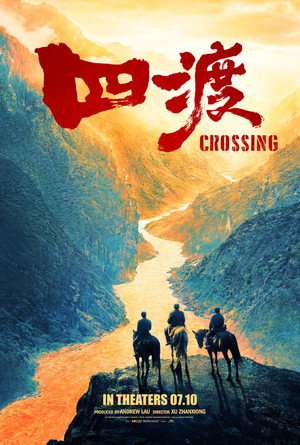
Story of the leading regiment of the First Branch of the Chinese Red Army for Workers and Peasants who defeats a brigade of enemy on the Wu River and conquers the river by 3 days of intelligent combat.
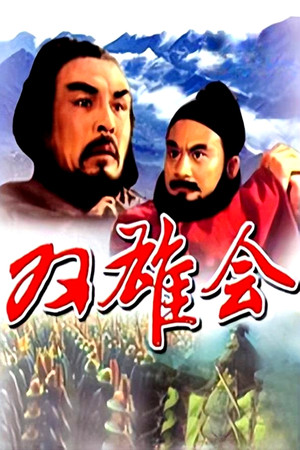
This movie is based on the true story, which happened in Shan-Dong Province of China during World War II. It is based on a collection of memoirs of the guerrilla members. Due to the fact that it happened during World War II and there was not much secrets, this movie is that it was more realistic than other movies in that many real names were used, and the actual site was not changed either like other war movies of the time. The drawback of the movie was that in the latter stage of World War II, the guerrilla force was developed into an impressive 400 plus members from its original beginning of 3, and it launched many major offensives against the enemy, but this part was not shown. The movie only concentrated on the time there were only several dozen members.
ROM people are peculiar, and their identity is lost somewhere in between the past and their roaming through the land. From India to Egypt and from Sweden to Britain the Wandering Kings of the Road are a steady part of human geography, sometimes living slightly outside the law and social acceptance.
Enraged at the slaughter of Murron, his new bride and childhood love, Scottish warrior William Wallace slays a platoon of the local English lord's soldiers. This leads the village to revolt and, eventually, the entire country to rise up against English rule.
Inspired by true events, this film takes place in Rwanda in the 1990s when more than a million Tutsis were killed in a genocide that went mostly unnoticed by the rest of the world. Hotel owner Paul Rusesabagina houses over a thousand refuges in his hotel in attempt to save their lives.
In Warsaw in 1980, the Communist Party sends disgruntled radio reporter Winkel to Gdańsk to dig up dirt on the shipyard strikers - particularly on Maciek Tomczyk, an independent labour union leader whose father was killed in the December 1970 protests. Posing as sympathetic, Winkel interviews the people surrounding Tomczyk, including his detained wife, Agnieszka.