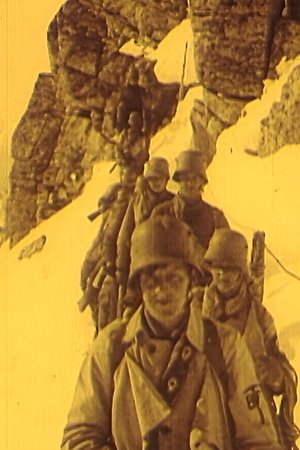
Heroic Struggle in Snow and Ice is a 1917 Austro-Hungarian propaganda newsreel film produced by Sascha-Film for the Imperial and Royal War Press Headquarters. The film is hand-colored and presented in two parts. It depicts the fighting on the Alpine Front between Italy and Austria-Hungary.
The tragic story of the Great War is told through the accounts of the British and Canadian soldiers who were the first and last to die in battle. Private John Parr, a British bicycle scout who was the first British combat casualty on the Western Front, and Private George Price, a Canadian infantryman who was shot and killed just minutes before the Armistice went into effect in 1918
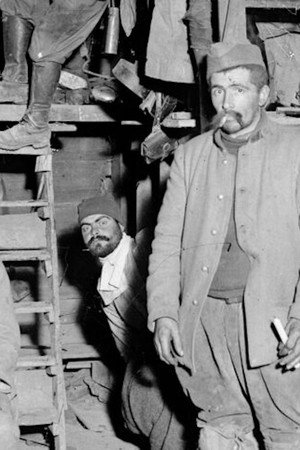
A head on confrontation, no help from their allies, army versus army, nation versus nation. 11 months of fighting, over 2 million soldiers mobilised and 300,000 dead. We look back at this insane battle that was to become the bloodiest chapter of WWI.
On the 23rd August 2004 The Great War Society undertook a charity march in full period uniform to commemorate the 90th anniversary of the opening moves of the Great War 1914-1918 Over the following five days our troops marched from Mons in Belgium to St. Quentin in France in remembrance of the soldiers of the British Expeditionary Force. The march was in honour of the men who fought the famous Fighting Retreat which stemmed the German advance and ultimately turned the tide of the war. Filmed in Super 8 black and white, Brass Monkey is the first documentary by William Hamper
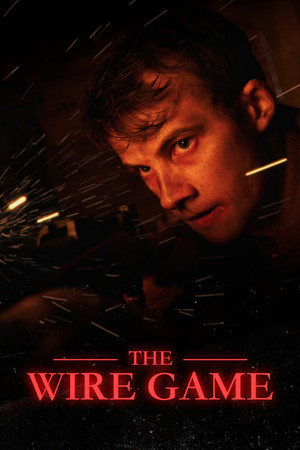
Wounded and left for dead, a British soldier embarks on a daring escape from a booby-trapped German dugout.
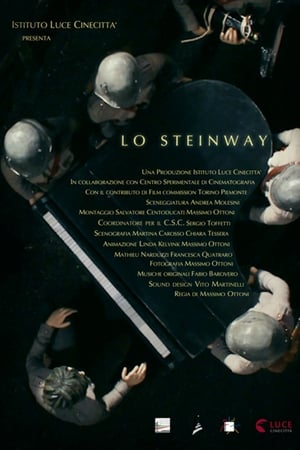
Stop-motion short by Massimo Ottoni. Follows the story of some soldiers during the Great War in an Austrian trench on the Italian front.
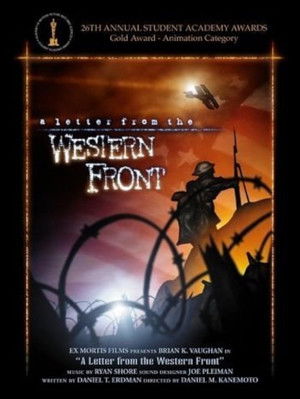
In Belleau Wood, France, during the Great War, a soldier named John writes a letter home to his wife Sara in Milwaukee. He writes that her picture "helps me remember what it was like to be me." He tells her about sorties into No Man's Land, and that they have orders tonight to charge. Then, his letter becomes a report of that charge: toward an armed German soldier who doesn't fire, even when John reaches him and jumps into the trench beside him. What happens next brings silence and an end to the letter.
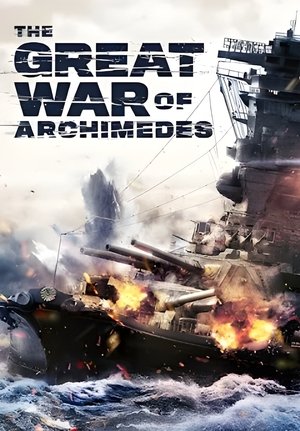
It is the early 1930s and the command of the Japanese Imperial Navy determines to construct the world's biggest and most formidable battleship, Yamato. One of the admirals, Yamamoto Isoroku, disagrees. He recruits the upstart and mathematics' expert Tadashi Kai who discovers there are discrepancies between the official cost estimates and the actual figures. They soon find out that they have stumbled upon a conspiracy.
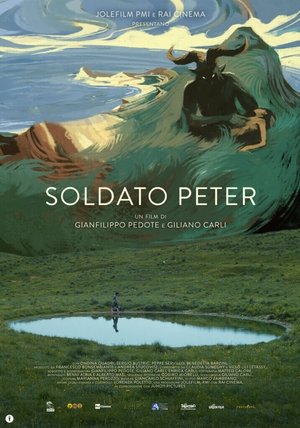
1918, shortly before the end of the Great War, an Austrian soldier passes the barrier of the Italian lines and escapes. He is very young, alone, scared. During his journey in that enemy land, so similar to his own, the thoughts of the terrible experience on the front alternate with childhood memories. Along the way, death takes him and puts him back into the flow of nature, to which he has always felt he belonged.
When the collection of short stories by I.E.Babel "Konarmiya" was published, S.M. Budyonny became one of its first readers. The "horse army" infuriated him. Budyonny called the essays slanderous speculation and threatened to personally hack Babel with a saber. Defending the writer, Gorky wrote: "He showed the fighters of the First Cavalry better, more truthfully than Gogol — Zaporozhtsev." The writer was saved that time. But on May 16, 1939, no one could help Babel anymore. The writer was arrested. He ended up in the most terrible NKVD prison, Sukhanovskaya. Few people managed to get out alive.…
Fernanda Ocaña, a 60-year-old drag artist from Seville, left her hometown at 14 to build a life in Barcelona. Taken in by the iconic Spanish artist José Pérez Ocaña, she immersed herself in the world of show business. Today, she continues to shine as the host of the Bar Ocaña in Plaza Real, welcoming guests with her unmistakable charm.
Short documentary on a central african tribe called 'The Chillouks'.
In the mountains of Colombia's Coffee Triangle, a family faces the shadow of armed conflict. Years later, a son reconstructs the inherited fear, amidst echoes of the past and invisible scars. A sensory journey into memory, where the unspoken still resonates.
Asilo (Prototipo)
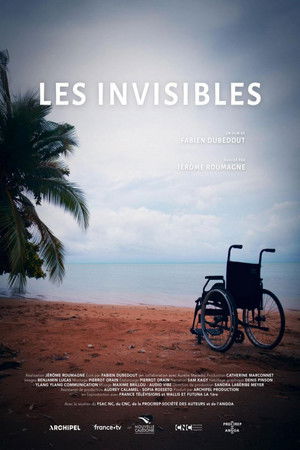
"In Wallis and Futuna, disability has long lived in the shadows. Invisible to the world, those affected were marginalized, deprived of genuine recognition and a place in society. Behind closed doors, shame and fear of judgment mingled with the pain of families convinced that a child with a disability was a curse. Today, these superstitions are gradually fading. But the wounds of the past remain, and the path to acceptance and inclusion is still long. On this archipelago, it is urgent to make up for lost time in terms of recognition, support, and dignity for every person with a disability."
The Dutch director A.H., born in Noord-Brabant, has been experiencing pressure from his family for years to focus more on his Moroccan identity. Aiman does not feel the need, because he considers himself a Dutchman, too. In this personal documentary, he examines the cultural differences between himself and his family, before he will have to cut some knots. Either he conforms to the wishes of his family or he follows his own path, possibly jeopardising the relationship with his parents.
A Panorama investigation. Last August's shooting of a young Catholic, Loughlin Maginn , was the 2,744th murder since the present Northern Ireland troubles began. But it will be remembered as the killing which triggered off a damaging row between the governments of London and Dublin. Maginn was targeted and murdered by Protestant terrorists using an intelligence file leaked from within forces there to prevent such violence. Next month a report on the collusion between Loyalist paramilitaries and dissidents in the army and police will be delivered by a team of English detectives sent to plug the leaks. John Ware reveals disturbing new evidence that the principal source of leaks is from within the locally recruited Ulster Defence Regiment.
For nearly three decades Laura Aguilar has used photography as a tool to speak about people and issues not considered part of the cultural mainstream. Laura Aguilar: Life, the Body, Her Perspective presents personal video essays by the artist, a lecture she gave at UCLA in 2005 that describes her life as a photographer, plus an interview and documentary filmed by Michael Stone. A comprehensive series of slide shows features works from her extensive oeuvre, including Family and Friends, In Sandy’s Room, and Clothed/Unclothed. A bonus CD contains a PowerPoint survey that enables students and educators to study individual images, facilitating discussion of Aguilar’s groundbreaking art.
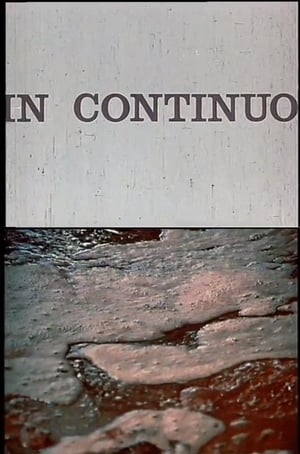
"In continuo" uses slaughterhouse imagery to present the warlike nature of man, first depicting the cleaning and mechanical preparations for the slaughterhouse and then the killing, however, the animal slaughter itself isn’t shown.
An interview with John Sweet, who provides details about the shooting of Powell and Pressburger's 1944 film, A CANTERBURY TALE.