Éclipse 73
A series of programs designed for the adult layman who has a curiosity about the skies and the makeup of the universe in which we live. The terms used during the series are fully explained and materials from a number of great observatories and institutions of learning are used for visual illustration. It begins with the solar system and works outward, stimulating interest in this area and awakening a desire for further study and investigation.
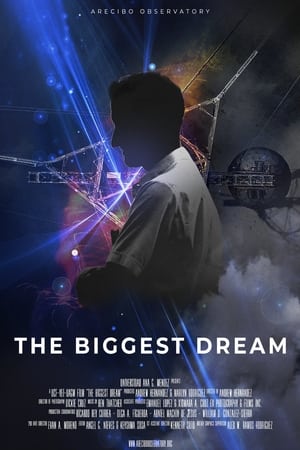
For more than 50 years, we’ve been unsuccessfully searching for any evidence of intelligent extraterrestrial life. But, the discovery of thousands of exoplanets has meant the hope of finding them is higher than ever. If any messages could eventually be decoded and answered in any far, far away star, it could radically transform our consciousness as species and our place in the universe. A message from the stars changes life on Earth… forever.
David Attenborough brings to life, in unprecedented detail, the last days of the dinosaurs. Palaeontologist Robert DePalma has made an incredible discovery in a prehistoric graveyard: fossilised creatures, astonishingly well preserved, that could help change our understanding of the last days of the dinosaurs. Evidence from his site records the day when an asteroid bigger than Mount Everest devastated our planet and caused the extinction of the dinosaurs. Based on brand new evidence, witness the catastrophic events of that day play out minute by minute.
Since it explored Pluto in 2015, the New Horizons spacecraft has been zooming toward NASA's most distant target yet. Join the mission team as the probe attempts to fly by Ultima Thule, an object 4 billion miles from Earth.
In an age when misinformation, alternative facts, and conspiracy theories have become mainstream, UFOs have risen to become one of the most-talked about pop culture phenomena. With all of this noise, how can we expect anyone to know how much of this is true? What is in our skies? What do we know, and how do we know it? And most importantly: Are we being visited?
Based on more than two decades of systematic research and cross-cultural comparison by comparative mythologist David Talbott, Remembering the End of the World reconstructs a cosmic drama when planets hung in the sky close to the earth–an epoch of celestial wonder giving way to overwhelming terror. This highly visual presentation offers new answers to enigmas that have baffled experts for centuries. Why did every ancient civilization celebrate a former “Age of the Gods”, an age claimed to have ended in earth threatening disaster? What was meant by the lost “Golden Age?” Why did ancient sky worshipers refer to Saturn as “the sun?” Why was Venus worshiped as the “Mother Goddess?” And why did both Old and New World astronomers celebrate the planet Mars as a great warrior whose battles shook the heavens?
Today we cut the granite with diamond-cut blade as is one of the most difficult rocks to cut due to its hardness.How could the egyptians, if it was them, have achieved those shapes in the sculpture sphinx of Sénousret made of Migmatite material, which is harder than granite? What was that extraordinary tool that made this possible? This example is what disputes all the official theories of egyptology. Dozen of questions now arise. Did the egyptians really have an advance technology that was losted over time? The answer is in this movie.Lucky is to understand that in 2019, we have a chance to learn how the Great Pyramid was built, who built it, and what its hidden behind it. Let yourself go and come discover the biggest mystery of humanity, the New Great Story!
This movie explores the saga of the telescope over 400 years - the historical development, the scientific importance, the technological breakthroughs, and also the people behind this ground-breaking invention, their triumphs and failures.
The film features amazing scenes of places never before seen gathered by key space missions that culminated with groundbreaking discoveries in 2015. It features a spectacular flight though the great cliffs on comet 67P, a close look at the fascinating bright "lights" on Ceres, and the first ever close ups of dwarf binary planet Pluto/Charon and its moons.
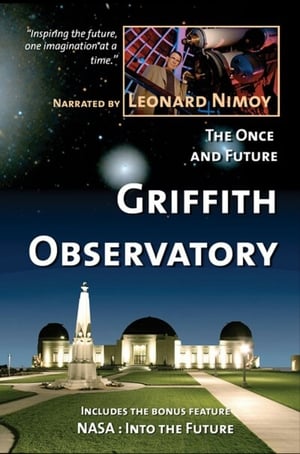
Documentary about the Griffith Observatory, shown at their Leonard Nimoy Event Horizon Theater
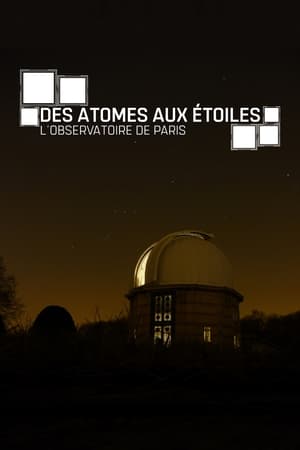
An incredible travel through space and time between the walls of the Paris Observatory, which is celebrating its 350th birthday. Place of discoveries such as speed of light or Neptune’s existence, it is still today one of the oldest operating observatories and the greatest hub in the world for astronomy and astrophysics researches, second only to Harvard.
For two and a half years we followed the scientific team of the NASA Lucy Mission a mission that will unveil the origins of the Solar System and shared with them the many challenges they had to overcome such as a countdown to launch on time the building of the huge solar arrays or a pandemic.
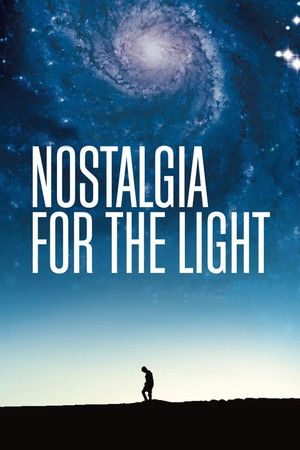
In Chile's Atacama Desert, astronomers peer deep into the cosmos in search for answers concerning the origins of life. Nearby, a group of women sift through the sand searching for body parts of loved ones, dumped unceremoniously by Pinochet's regime.
The first feature from Alison McAlpine is a dialogue with the heavens—in this case, the heavens above the Andes and the Atacama Desert in northern Chile, where she alights on the desert- and mountain-dwelling astronomers, fishermen, miners, and cowboys who live their lives with reverence and awe for the skies.
This feature-length documentary is a portrait of eclipse chasers, people for whom solar eclipses - among nature's more spectacular phenomena – are a veritable obsession. The film follows 4 of them as they travel incredible distances to witness the last total eclipse of the millennium as it sweeps eastward across Europe to India. At various points along the way enthusiasts Alain Cirou in France, Paul Houde in Austria, Olivier Staiger in Germany and Debasis Sarkar in India offer their impressions of the historic event.
Svalbard is a norwegian archipelago in the Arctic Ocean where the world's northernmost city is situated. It is a place where the underground, terrestrial and spatial universes blend into each other starting from a coal mine up to Venus.
CERN and the University of California-Santa Barbara are collaborating in the search for the elusive substance that physicists and astronomers believe holds the universe together -- dark matter. Where is this search now in the realm of particle physics and what comes next?
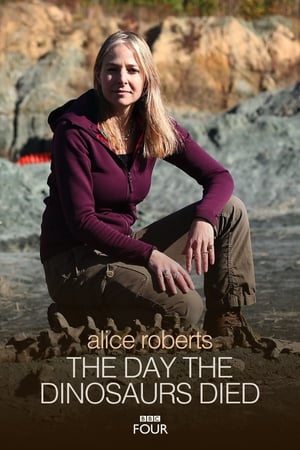
Investigates the greatest vanishing act in the history of our planet - the sudden disappearance of the dinosaurs 66 million years ago.
Chaco Canyon, located in northwest New Mexico, is perhaps the only site in the world constructed in an elaborate pattern that mirrors the yearly cycle of the sun and the 19-year cycle of the moon. How did an ancient civilization, with no known written language, arrange its buildings into a virtual celestial calendar, spanning an area roughly the size of Ireland?