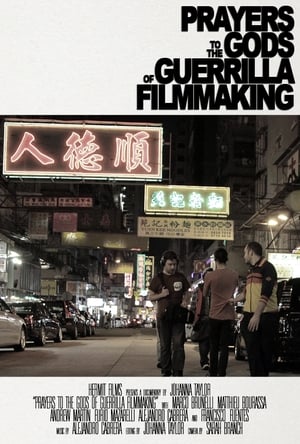
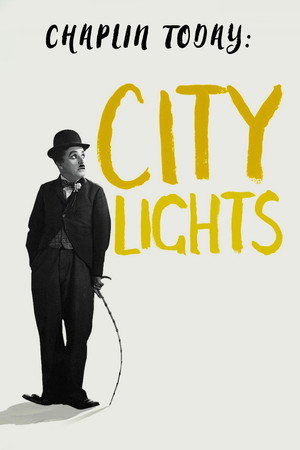
A low budget, comedic documentary following a young man trying to take a deeper look into water, its purpose, and how we, as a society have chosen to use it.
The shooting diary of a film shot in France and in the United States. Using photos of Paris and of New York City, excerpts of his former films, statements by friends of his and shooting sequences of the film itself, tormented filmmaker Marcel Hanoun has made a heterogeneous and unclassifiable film about the difficulty of filming.
Acclaimed Finnish director Rauni Mollberg made several scandalous yet widely appreciated films. Former co-worker Veikko Aaltonen’s eye-opening documentary The Dinosaur looks at the relentless, often disturbing directing techniques behind Mollberg’s art and success.
When World War II broke out, John Ford, in his forties, commissioned in the Naval Reserve, was put in charge of the Field Photographic Unit by Bill Donavan, director of the soon-to-be-OSS. During the war, Field Photo made at least 87 documentaries, many with Ford's signature attention to heroism and loss, and many from the point of view of the fighting soldier and sailor. Talking heads discuss Ford's life and personality, the ways that the war gave him fulfillment, and the ways that his war films embodied the same values and conflicts that his Hollywood films did. Among the films profiled are "Battle of Midway," "Torpedo Squadron," "Sexual Hygiene," and "December 7."
A bunch of British working class amateur filmmakers with nothing left to lose tackle one of Hollywood's greatest musicals in order to save their beloved Club. Britain’s oldest amateur filmmaking club struggles to survive, as its members grow old amid flickering memories and hardships. In the northern industrial town of Bradford, England, a handful of diehard amateur filmmakers desperately cling to their dreams, and to each other, in this warm and funny look at shared artistic folly that speaks to the delusional dreamer in us all.
A feature-length documentary on the life and work of Wisconsin grindhouse cinema auteur Bill Rebane, featuring historians, critics, and filmmakers, plus cast and crew members who worked with Rebane himself.
A documentary on the life and career of filmmaker Edward D. Wood Jr., with clips from his films and interviews with the cast and crews of some of his films.
The residents of a small Vermont town don't know what hit them when a beleaguered Hollywood film crew brings a chaotic shoot to their quaint village.
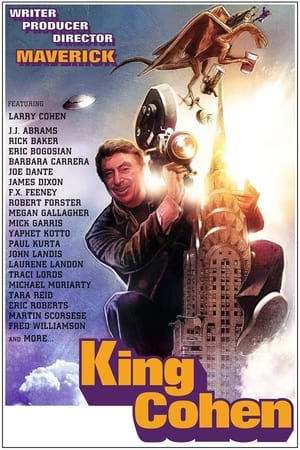
A feature-length documentary focusing on the acclaimed work and eclectic career of maverick filmmaker Larry Cohen, writer-director of "Black Caesar," "It's Alive," "God Told Me To," "Q," "The Stuff," and many more.
The story of the making and subsequent success of The Day of the Beast, the Spanish cult film directed by Álex de la Iglesia and released in 1995.
Dinosaurs Vs. Apes: DINOSAUR MOVIES and HOLLYWOOD GOES APE! have been hailed as the definitive documentaries on the prehistoric and anthropoid creatures that have appeared on the silver screen. Filled with rare movie clips, behind-the-scenes footage and interviews.
Making-of documentary about Lino Brocka's 1975 film "Manila in the Claws of Light," featuring interviews and behind-the-scenes footage.
A budding director endeavors to research a merciless gangster for making a film on gangsterism. But his secret attempts to conduct the research fail when he gets caught for snooping.
Pixar director Peter Sohn takes viewers on a humorous personal journey through the inspiration behind Disney and Pixar’s feature film “Elemental.” “Good Chemistry: The Story of Elemental” traces his parents’ voyage from Korea to New York, explores his dad’s former grocery shop in the heart of the Bronx, and delves into his choice of a career in animation, rather than the family business.
As artificial intelligence becomes ever more sophisticated, the film industry is split between enthusiasm at what the technology can achieve and concern over the future for human workers in the industry. Will actors and actresses be replaced by machines? An overview on the coming wave of AI in cinema.
A free and intimate portrait behind the scenes of Valeria Bruni Tedeschi's creation. In front of the camera, she transmits to today’s young actors the memory of the 1980s.
A young director intent on making "the greatest color crime movie ever" can't seem to finish his script--he has a beginning and an end, but he can't quite figure out the middle. The daughter of his landlord, excited to have a real "movie person" living nearby, tries to help by putting him in touch with a man who wants to collaborate on a script--the strange "Dr. Jolly"
How are the sex scenes filmed? What tricks are used to fake the desire? How do the interpreters prepare and feel? Spanish actors and directors talk about the most intimate side of acting, about the tricks and work methods when narrating exposed sex. In Spain the general rule is that there are no rules. Each film, each interpreter, faces it in very different ways.
In one of those wonderful coincidences of history, lumière, the French word for “light,” was also the last name of brothers Auguste and Louis, whose brilliant invention, the cinematograph, helped to inaugurate the most beloved art form of the last 130 years. Institute Lumière director Thierry Frémaux uses Lumière, Le Cinema! to guide the viewer through over a hundred shorts—some famous, some forgotten, some never before seen—directed by Lumière and company. In the process, Frémaux illuminates how the brothers employed the camera as a creative instrument as they (and their operators) mastered framing, staging, and subject selection for quotidian and exotic microdocumentaries as well as the first ever fictional motion pictures. The result is not only a glorious re(telling) of the genesis of cinema but a profound meditation on the beautiful world captured—and the mysterious world imagined—by the Lumières.
In 1964, Henri-Georges Clouzot's production of L'Enfer came to a halt. Despite huge expectations, major studio backing and an unlimited budget, after three weeks the production collapsed. This documentary presents Inferno's incredible expressionistic original rushes, screen tests, and on-location footage, whilst also reconstructing Clouzot's original vision, and shedding light on the ill-fated endeavor through interviews, dramatizations of unfilmed scenes, and Clouzot's own notes.