A poetic journey through the inner world of a grieving filmmaker who tries to find solace in talking to her ghost. Different stages of grief are visually linked to seasonal changes in nature. The filmmaker finds reflections of her mindscape in the surrounding scenery and wildlife.
IJswee is a documentary film about an ice club, a village and the warm winters. In the film we follow Oringers, the inhabitants of Odoorn, through the winter. The Oringers all experience IJswee in their own way. You will also see the Icecounter (Rafael van der Ziel), who builds ice sculptures and drinks frozen milk. You see the Drenthe countryside changing with the weather. You see animations, archive material and you hear the mysterious sounds of IJswee in the music of Wietse de Haan. And there are two trumpet players, who welcome winter with their music and say goodbye to it.
Hlavátky
Tippi is no ordinary child. She believes that she has the gift of talking to animals and that they are like brothers to her. 'I speak to them with my mind, or through my eyes, my heart or my soul, and I see that they understand and answer me.' Tippi is the daughter of French filmmakers and wildlife photographers, Alain Degre and Sylvie Robert, who have captured her on film with some of Africa's most beautiful and dangerous animals. Tippi shares her thoughts and wisdom on Africa, its people and the animals she has come to know and love. Often her wisdom is beyond her years, and her innocence and obvious rapport with the animals is both fascinating and charming.
An intimate view of the panorama of African wildlife, giving a sense of what it is really like to be there, and in a dramatic climax makes a poignant plea for conservation. Filmed in Zaire, Kenya and Tanzania, the film takes the viewer from deep inside an anthill, to the majestic giraffes suckling their young. African storms, dung beetle ritual dances, duels for supremacy, feeding time, and playtime all end as the animals disappear one by one while the sound of a rifle shatters the existing magic of life. Winner of the Academy Award for Documentary Short Subject, 1976.
The summits and sheer mountain ridges of Austria’s "Little Siberia" funnel the freezing air from snow-covered peaks into a gigantic hollow – a high-level plateau at 1,000 metres from which it cannot escape: Lungau is Austria’s coldest region. Creeks and streams start higher here, and create bogs, moors and countless alpine lakes. Summer is short but lively, as eagles rear their precious young and ermines eat their fill before the sparse winter returns, while black alpine salamanders give birth to live miniature versions of themselves beneath the tree-line.
A document on the importance of forests to the national economy. It represents forests not only as a rich storehouse of wood, but also as an important factor for continuous water supply, as they regulate the water cycle and prevent both droughts and floods.
Scientists have discovered and investigate the reason behind the behavior of sharks swimming around in gangs even though they are viewed as solitary predators.
Three farming families in Hanyuan, China, strive to give their children a good life in the midst of an ecological crisis, as widespread use of pesticides leads to a dramatic decline in bees and other pollinating insects in the valley.
A documentary that leads the audience from Namibia to Kilimanjaro to explore the African wildlife.
Rocks, dunes, sand and dust - large areas of Namibia in southwest Africa are characterized by deserts. Riverbeds full of sand meander through these inhospitable regions. Some of these only have water once every few years when enough rain has fallen in the mountains and the water rushes to the coast - but most of the time the river courses have dried up. And yet they are crucial for the survival of many living beings.
What happens when a world that relies on traffic and the logistics that allow it comes to a standstill? What happens when sickness and even death are taken from us?
From 1968 to 1972, photographer and filmmaker Bob Campbell documented the activities of Dian Fossey as she developed a cross-species bond with Rwandan mountain gorillas. Campbell shot 70,000 feet of film, but only a fraction of his material was edited into the lecture presentation that preceded Fossey's Gorillas in the Mist. This program compiles highlights from the previously unreleased footage, offering an unforgettable glimpse into the gorilla community and Fossey's relationship with it. Her methods may not entirely jibe with those of modern conservationists, but there is no denying the profound impact of her work on current research and eco-activism.
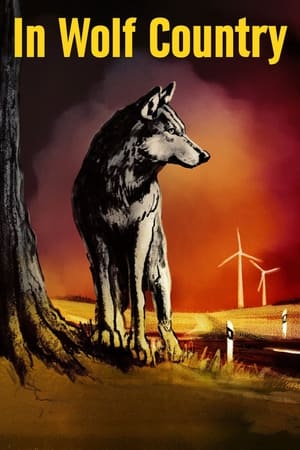
About the mexican wolf in northwest Chihuahua, the search for its conservation among local communities, landowners, and the Livestock Assurance Fund.
One of the most mysterious animals to inhabit the jungle is the pygmy hippopotamus - up to 300 kg in weight, just 2 meters long, and 80 cm tall, and a true loner. Since its discovery in 1844, generations of researchers have attempted to study it in the wild - but in vain. Although it proved possible to catch a few specimens for zoos, no one ever got to see them before they were already inside the trap. They eluded the gaze of the researchers like phantoms under the protection of the enchanted forest. These are the first ever pictures of pygmy hippopotami in their natural surroundings - the rain forest of West Africa. Set amid stories about their habitat, the film allows a first impression of this timid creature's life. While their ten-times heavier relatives are loud and gregarious and live in open stretches of water, the pygmy hippopotamus moves furtively through the thick undergrowth.
Longyearbyen, Svalbard, is the northernmost settlement in the world. About 3000 polar bears and 400 snow scooters outnumber its 2700 inhabitants. It is a place where you can actually see climate change and social diversity.
What strange forces saved one isolated section along the Upper Mississippi River from the repeated crushing and scouring effects of glaciers during the last two million years? And what pre-Ice Age throwbacks survived here in this unique geologic refuge that holds more Native American effigy mounds, petroglyph caves, strange geological features, and rare species than anywhere in the Midwest? These questions and more are answered in this captivating new documentary. A team of scientists embarks on a journey of exploration to expose both the science and threats behind three unique features of the zone - rare plants and animals, odd geological phenomenon, and striking remnants of a Native American pilgrimage like no other.
A bare-knuckled critique of corporate America told through the powerful true story of a toxic CEO who evolves from a profits-over-people, philandering executive to an unorthodox leader, populist messenger, and mentor to American influencers. It’s a story of growth, redemption and the impact of self-awareness on leadership and life.
City of Wax is a 1934 American short documentary film produced by Horace and Stacy Woodard about the life of a bee. It won the Oscar at the 7th Academy Awards in 1935 for Best Short Subject (Novelty). Preserved by the Academy Film Archive in partnership with the UCLA Film and Television Archive in 2007.
Minuta ticha