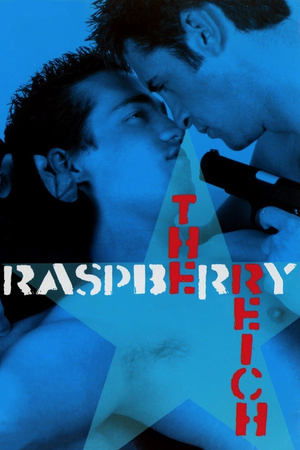
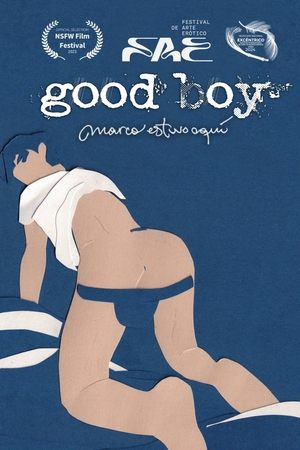
Gudrun has modeled her amateur German terrorist group after the 1970s Red Army Faction (Baader-Meinhof Gang). She attempts to imitate her heroes by kidnapping the son of a wealthy industrialist and hopes to negotiate leftist demands from the father. When Gudrun’s not spouting leftist verses (including during a hilariously brilliant fuck session), she’s trying to convince her all-male gang to abandon their heterosexuality, which she believes is the result of mass delusion.
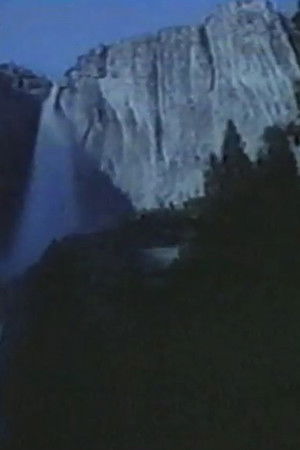
This experimental film was created via one pass through the camera without special visual effects. Each frame of the film was taken at night via a long time-lapse ("time-exposure") which created the actual images, and each frame of film was taken after a period of time from the previous frame, creating the movement of the images. What looks like the sun in some shots is actually the moon, over-exposed to allow the capture of the much-dimmer stars in the sky. Longer exposures for each frame can make a night-time shot look like a day-time shot, except that you can still see stars moving in the sky. This film won a CINE Golden Eagle.
Cioranian hand
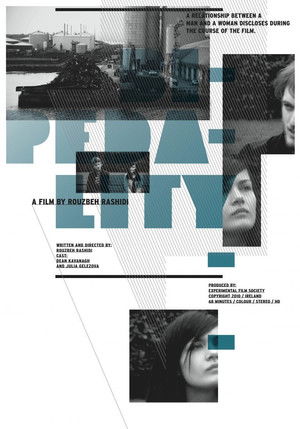
A relationship between a man and a woman discloses during the course of the film.
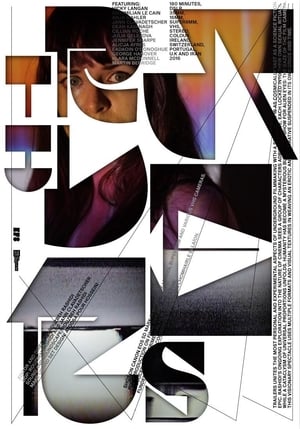
TRAILERS unites the most personal and experimental aspects of underground filmmaking with a scope that is as cosmically vast as a science fiction epic. Rashidi’s ongoing exploration into the nature of cinema sees a group of characters adrift in space, each locked into their own sexual rituals while a cataclysm of universal proportions unfolds. Humanity has become a mysterious burlesque show for alien eyes: the gaze of the film camera. This visionary spectacle uses multiple formats and visual textures in weaving an erotic anti-narrative suspended in its own space and time.
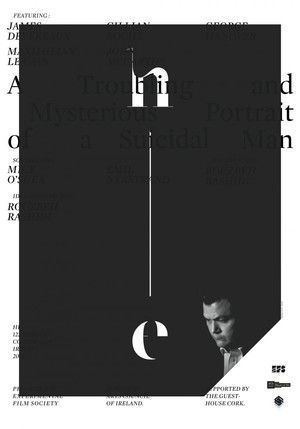
HE, the third work in the ongoing collaboration between Rouzbeh Rashidi and actor James Devereaux, is a troubling and mysterious portrait of a suicidal man. Rashidi juxtaposes the lead character’s apparently revealing monologues with scenes and images that layer the film with ambiguity. Its deliberate, hypnotic pace and boldly experimental structure result in an unusual and challenging view of its unsettling subject.
Self Decapitation is a Janus-headed self-portrait by Rouzbeh Rashidi and Maximilian Le Cain in which death and desire each take possession of this film in two parts. The ambiguities of inhabiting a human body are conjured by way of film technology in its faults, faulty memories and false promises. There is no escape from its haunting – except perhaps to haunt it in turn…
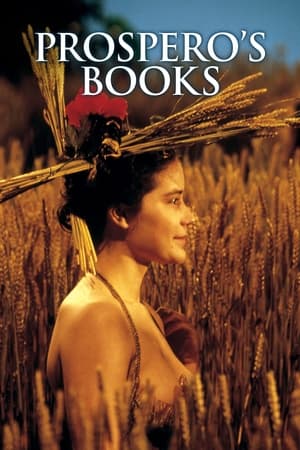
An exiled magician finds an opportunity for revenge against his enemies muted when his daughter and the son of his chief enemy fall in love in this uniquely structured retelling of the 'The Tempest'.
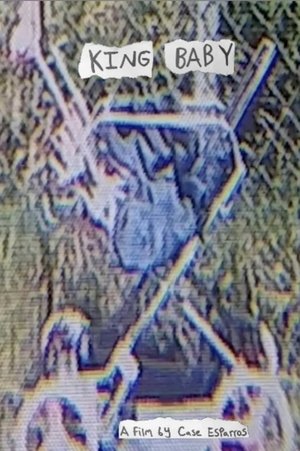
A collage storybook retelling of the Jesus Christ story with Digital, Super 8, 16MM, and VHS, primarily set within a decaying and run-down world and divided into three acts. Accompanying the film's images is distilled church music provided by various noise artists. This is the first feature film from Los Angeles experimental filmmaker Case Esparros and was released in 2019.
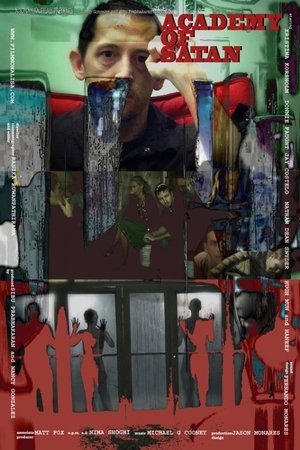
Misha, Dalton, Jaxon, Hamlet, and David are young aspiring actors who move to Hollywood to follow their dream, but wind up testing their fate with consequences beyond their wildest imagination. Each of the actors have been hand picked by 'The Master'. A dark, mysterious teacher who promises to teach them the ultimate secret to success. Without knowing it, the young faithful dreamers are set to the test of their lives. They are hypnotized, mentally and physically abused and brainwashed as The Master slowly steals away any human instinct and empathy from them and applies a strange animal behavior instead. He calls it his unique acting technique. But in spite of all their hopes, dreams and aspirations The Master is never planning on giving them the secret to success. He has his own dark agenda. He is the hungry wolf in the jungle waiting for the right moment to prey on little girls. Just like the fairy tale of 'Little Red Riding Hood'.
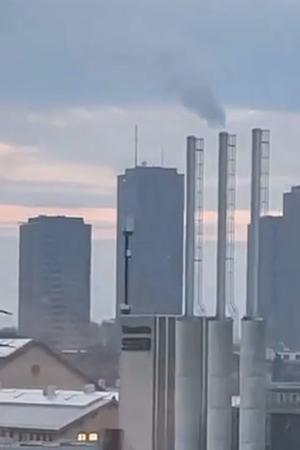
A camera rotates around the same four towers. Seasons, weather conditions and the positions of the camera change over the course of the film. The sound goes round in circles and drifts in variations.
The Tsunami uses environmental metaphor to capture the escalating violence against women crisis in Australia and globally. The normalisation of misogyny and the pervasive harm to women are central themes, reflecting the anger and frustration born from centuries of oppression. The fury of regressing, particularly during disturbing political regimes, and the profound sense of loss fuel its message. It aims to highlight the urgent need for change and the relentless courage required to speak out against patriarchy and entrenched power structures. Produced, written and directed by Nikki Teeuw.
Thirty-six layers of water aligned to create a perfect circle. 1 of 2
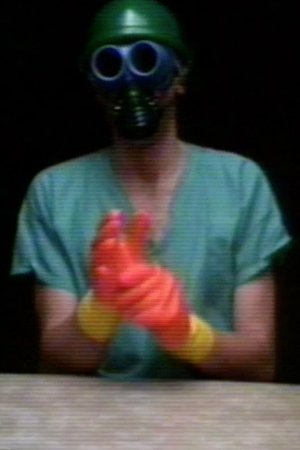
Protective Coloration shows Fisher seated at a mottled table. He wears short-sleeved hospital garb, surgical green ‘scrubs’. Nose-clips block his nostrils while a mouth-guard that looks like fake lips covers his mouth. Over the course of 11 minutes he masks his face and covers his hands with bright gear in colours that accumulate to resemble those of the standard reference chart: he puts on orange eye-caps, then a yellow bathing cap; covering his nose and mouth and the gear already there, he dons a black gas mask; a silky black sleeping mask voids his already covered eyes, a cyan blue bathing cap caps the yellow; yellow rubber gloves snap on his hands and forearms; puts on cyan eye goggles, then struggles with yet another bathing cap, hazmat orange, over the other two. A silvery transparent shower cap tops the caps, itself topped by a plastic green helmet. Finally heavy-duty magenta gloves hide most of the yellow rubber. Preserved by the Academy Film Archive in 2008.
Begotten is the creation myth brought to life, the story of no less than the violent death of God and the (re)birth of nature on a barren earth.
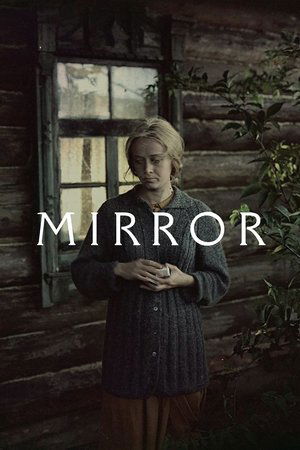
A dying man in his forties recalls his childhood, his mother, the war and personal moments that tell of and juxtapose pivotal moments in Soviet history with daily life.
The author's erotic imagination is mixed between desire and magazine clippings, and the trade of collage becomes a ship that travels from outer space to the city itself.
Exploring love's complexities, an experimental film captures a woman's brief yet significant journey, prompting her to break free and embrace newfound liberation
Juan Daniel's memory doesn't belong to him anymore. After an amnesiac accident at the beginning of 2009, he started watching home-videos and having reminiscent dreams in the need of reconstructing his memory and identity. Months later, he found himself with too many celluloid, analog and digital memories, three generations' eyes captured by different formats. This is the neurological experience Juan Daniel suffered.
An intimate reading experience of voice messages from my grandmother‘s sleepless moments. A portrait of personal memory as it is reimagined and lingers for an instant. My phone camera documents wandering figures by a lakeside at night. Across from the lake, the sight of the dissolving cityscape appears to be both infinitely close and extremely remote. This film attempts to reconstruct the forgotten and the marginalized parts of individual beings in the scope of time. The film explores what’s beyond the visual expression and flows out of the flat screen to co-inhabit the space of the audience’s reality. The viewers would find themselves roaming through the ontological existence of film, confronted with sound, light, darkness, time and rhythms, transitioning between positive space and negative space, and approaching the very ambiguity of memory.