Des Carpes et des Éléphants
A series of disconnected, minimalist vignettes often featuring Raynal herself, deliberately repeating actions and dialogue to challenge traditional storytelling. The film explicitly seeks to deconstruct cinematic meaning and the conventional portrayal of women in film, serving as a radical, self-aware diary film.
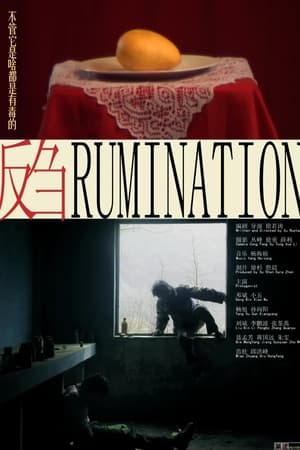
A man is tormented by the devastating loss of his pregnant beloved, whose presence lingers everywhere, haunting him relentlessly. Reality and memory intertwine, shattering his mind and plunging him into an endless abyss of isolation and sorrow
Considered to be artist Martin Blaszko's only incursion into film. Through the experimentation with various film techniques, the artist speaks of the laws of geometry which are an important part of his work, and other obsessions of his, such as, bipolarity, the monumental, and the city as a source of aesthetic emotion.
The project explores urban edges as they correspond with the marginality of social groups who inhabit them. Distance, the anonymity of the architectural setup, decay, but also movement and interaction are subjects of a raw sketch that seeks to integrate a discussion about space and segregation into the discourse of the Common Good. The audio-visual language of the film uses a transparency and starkness of approach to reflect its subject matter. The fusion of architectural lines with sound through unexpected correspondences and synchronizations aims to generate a new kind of intermedial proposition.
A young woman in Japan returns to her homeland in the remote woods of Sweden after a traumatic event. There, a life-threatening winter accident puts her in hazama — the Japanese concept of the in-between space — forcing her to confront the ultimate choice between life and death.
A trans woman stuck in a shadowy nightmare dimension stumbles upon a cryptic old Maiden, who may be her only way of escaping this terrifying (un)reality.
Two friends in an elevator discuss their thoughts on immortality, God, and music.
Intended as a call to action, this UNICEF-sponsored film juxtaposes the fears experienced by children around the world as a means of awakening audiences to the struggles seen abroad.
After losing the people and purpose that once kept him going, Rio drifts through life with little hope for the future. Everything begins to change when he meets Anna, a cheerful young woman who encourages him to see beauty in the ordinary. When hope finally begins to bloom, an unexpected turn of events challenges everything they have learned about life, loss, and the courage to keep moving forward.
Time plods along in spattered irregularities as anger and depression coalesce in confusing amalgamations.
Jean-Claude Rousseau's Jeune femme à sa fenêtre lisant une lettre is not only his first medium-length film, but a chance to discover this filmmaker whom Jean-Marie Straub has called, along with Frans Van de Staak and Peter Nestler, the greatest working in Europe. With this newly restored print there is also a possibility to discover the relationship between Rousseau's art of filming and Jan Vermeer's famous painting. As Prosper Hillairet wrote in 1988, four years after Rousseau had finished Jeune femme ... (for the first time as we know today): «Without adopting the usual systematic spirit and form of cinéma structurel, Rousseau presents us with simple images and leaves it at that. Keeps the image in hand. A minimalist and ascetic expression of cinema: a shot that lasts.»
Platitudes begin at peaks then rapidly descend and dismantle in order to ascend more acutely until they repeatedly and successively overwhelm.
A person shaken by the catastrophes of the world cannot let go of their chaotic thoughts until they find a bond that was once lost.
An endearing light comedy about a woman who spontaneously becomes a resident of Venice after her family left her behind. While enjoying the wonderful people she meets she achieves a new life and the first time independent of her family.
Magnetic Scramble is the first video work by Toshio Matsumoto. Here, the artist manipulates television images (of student demonstrations against the U.S.-Japan Security Pact) by holding a magnetic coil next to the monitor. Matsumoto later incorporated this piece into a scene of his film Funeral Parade of Roses (1969).
The family of a wealthy businessman gather to celebrate his 60th birthday. During the course of the party, his eldest son presents a speech that reveals a devastating secret that turns the night into a battle of truth and denial.
A woman and her daughter struggle to make their way through the aftermath of the Balkan war.
A young painter battling depression finds solace in her art and alcohol, but her inner thoughts eventually surface, forcing her to confront them. Through this introspection, she undergoes a transformative journey.
A young woman raised in the US returns to her birth country in Eastern Europe after a devastating tragedy. Questioning her sanity and her sexuality, she starts believing she possesses supernatural powers.